
The predictable collapse of Fiat currency
The 7 stages of money!


In this piece , I will delve into the captivating and perplexing saga of cash. Brace yourself, for the financial world is on the brink of a radical transformation. I explored real estate, gold, silver, and the stock market. But in recent years, cryptocurrency has erupted onto the scene. This digital currency frenzy ignited my curiosity about money itself.
I encountered skeptics who urged me not to invest because I lacked understanding. They were right, in a sense. After hearing their warnings repeatedly, I finally committed to exploring cryptocurrency. This journey also led me to examine the nature of money itself. To my astonishment, I realized I understood very little about cash. It was through studying cryptocurrency that I began to uncover the true essence of money.
The fundamental divide between real money and the cash we use today is stark. The dollar, the euro, and other fiat currencies are merely government-issued tokens! This crucial difference is often overlooked. Why is this knowledge so elusive? I believe it's not a grand conspiracy. Instead, it is a reflection of humanity’s tendency to repeat mistakes throughout civilization.
Money operates in cycles. The origins of currency date back thousands of years to the ancient Egyptians, who used gold and silver as mediums of exchange. However, these metals were not true money yet. Their varying purities and weights complicated transactions. This created an unpredictable guessing game.
Let us define money! Currency serves as a medium of exchange. It allows trade with others, whether they share the same or different forms of currency. It is portable, durable, divisible, and fungible. However, something vital exists beyond these traits: money is a store of value.
It retains purchasing power over time. In history, gold and silver have been the stalwart symbols of this value. We use them not just for their shimmer, but because of deeper, intrinsic properties. However, that discussion belongs to another time.
When it comes to money, it possesses a global unit of account. A single price exists worldwide, similar to Bitcoin today. For millennia, gold and silver have sustained their purchasing power while every fiat currency has faced absolute failure. Currently, our currencies are becoming increasingly worthless. The more money is printed, the more diminished it becomes!
As I speak, the U.S. government is injecting another $1.9 trillion into the economy. This could potentially increase the money supply by 40% within one year alone! This dangerous cycle cannot continue without dire consequences. Albert Einstein famously said that insanity is doing the same thing repeatedly and expecting different outcomes.
So, what happens next with cash? What is the surprising cycle of currency? Seven critical stages unfold again and again. Each time, we seem doomed to repeat history. Where do you think we stand today?
1. Sound money exists—gold and silver dominated in ancient Greece as the drachma. The Greeks had a functioning tax system and an unregulated economy. In ancient Rome, various coins emerged, comprising gold and silver. True money had intrinsic value. You could trust your paper currency to equal a specific amount of gold.
2. As money proliferates, it becomes burdened with expectations. With the demand for public works growing, more funds are needed to sustain civilization’s growth.
3. Political influence also grows alongside flourishing economies, leading to expanding military budgets. This, in turn, pressures the currency supply.
4. Militaries spring into action. Whether for self-defense or expansion, military expenditures inflate the financial demands.
5. Government leads to currency degradation. To fund wars, they dilute the coins with base metals or create currency without limits. Today’s central banks manipulate this process, flooding economies with transient cash.
6. A loss of confidence ensues. Citizens grow aware of their diminishing purchasing power. The financial system trembles on the brink of collapse.
7. Ultimately, currencies collapse. A mass exodus occurs, with individuals turning to assets with real value—gold, silver, and now Bitcoin. The prices of tangible assets surge!
As of now, we find ourselves deeply entrenched in this cycle. We have certainly passed stage five, sailing into stage six, perhaps even nudging into stage seven. In just three years, gold has climbed 33%, silver has soared 65%, and Bitcoin has skyrocketed tremendously!
The age of fiat currency is fading, and the age of true money is upon us! The choice is clear: adapt or falter. What lies ahead? The uncertainty fuels our collective anxiety and hope. The game is changing!
About the Creator
Tafara Sibotshiwe
A versatile authentic writer and passionate storyteller. With a background in, Journalism, Engineering, History, Health & finance, they combine profound insight with creative flair to explore the complexities of the human experience.
Keep reading
More stories from Tafara Sibotshiwe and writers in Trader and other communities.
What $1 Million Buys You Around The World
If you had $1 million to spend on a house anywhere in the world, where would you want to live? The value of a million dollars varies significantly by location. This is influenced by factors such as local demand, property size, and amenities.
By Tafara Sibotshiweabout a year ago in Trader
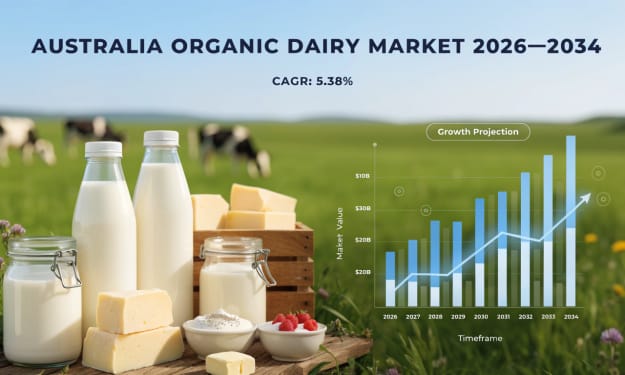
Australia Organic Dairy Market 2026: Clean-Label Demand, Health Consciousness & Sustainable Consumption
Australia Organic Dairy Market Overview The Australia organic dairy market is expanding steadily as consumers increasingly prioritise health, sustainability and transparency in food choices. Organic dairy products — including organic milk, yogurt, cheese, butter and cream — are produced from livestock raised without synthetic hormones, antibiotics or chemical fertilisers, appealing to environmentally conscious and health-oriented buyers. With improving retail availability, rising disposable incomes and growing preference for clean-label alternatives, the organic dairy segment is gaining traction across supermarkets, speciality stores and online channels.
By Amyra Singh5 days ago in Trader


Comments
There are no comments for this story
Be the first to respond and start the conversation.