


The market is a complex system that brings together buyers and sellers of goods and services. It is a fundamental aspect of any economy, as it determines the prices of goods and services and allocates resources efficiently. The market can take various forms, such as a physical market where people can buy and sell goods, or a virtual market where people can buy and sell goods and services online. In this article, we will explore the different types of markets, the forces that drive them, and the benefits of market efficiency.
Types of Markets
Markets can be classified based on the types of goods and services being sold. There are four main types of markets: perfect competition, monopolistic competition, oligopoly, and monopoly.
Perfect competition is a market in which there are many buyers and sellers of a homogeneous product. In a perfect competition market, no individual buyer or seller has any control over the price of the product. The price is determined by the forces of supply and demand, and there is no market power.
Monopolistic competition is a market in which there are many buyers and sellers of a differentiated product. In this type of market, firms have some degree of market power because their products are unique. The degree of market power varies from firm to firm, depending on how differentiated their product is.
Oligopoly is a market in which there are a few large firms that dominate the market. These firms have significant market power and can influence the price of the product. Oligopolistic markets are often characterized by intense competition, strategic behavior, and collusion.
Monopoly is a market in which there is only one seller of a product or service. In a monopoly market, the seller has complete market power and can set the price of the product or service. Monopolies are often regulated by governments to prevent abuse of market power.
Forces that Drive Markets
Markets are driven by two main forces: supply and demand. Supply refers to the amount of a product or service that sellers are willing to sell at a given price. Demand refers to the amount of a product or service that buyers are willing to buy at a given price. The interaction between supply and demand determines the price of the product or service and the quantity that is sold.
When the supply of a product or service increases, the price of the product or service decreases, assuming demand remains constant. Conversely, when the supply of a product or service decreases, the price of the product or service increases. When the demand for a product or service increases, the price of the product or service increases, assuming supply remains constant. Conversely, when the demand for a product or service decreases, the price of the product or service decreases.
In a market economy, prices act as signals to both buyers and sellers. Prices convey information about the scarcity or abundance of a product or service, which in turn influences the decisions of buyers and sellers. When a product or service is scarce, the price increases, signaling to buyers to conserve their resources and to sellers to produce more. When a product or service is abundant, the price decreases, signaling to buyers to consume more and to sellers to produce less.
Benefits of Market Efficiency
Market efficiency refers to the ability of markets to allocate resources efficiently. When markets are efficient, resources are allocated to their highest value use, resulting in maximum social welfare. Inefficient markets, on the other hand, result in a misallocation of resources and a loss of social welfare.
Market efficiency can be achieved through competition. When there is competition in the market, firms are incentivized to produce goods and services efficiently and at a low cost. This results in lower prices for consumers and higher profits for firms. Competition also incentivizes innovation and the development of new products and services.
Another factor that contributes to market efficiency is the free flow of information. When buyers and sellers
About the Creator
Keep reading
More stories from sourav saha and writers in Trader and other communities.
Some people take webinars to learn how to recognize bird songs
Birdwatching is a popular hobby enjoyed by millions of people around the world. While spotting birds can be a thrill in itself, being able to identify birds by their songs is an even more rewarding experience. Not only does it allow birdwatchers to identify birds that they may not have seen otherwise, but it also provides a deeper understanding of the behavior and habitat of different bird species.
By sourav saha3 years ago in Petlife
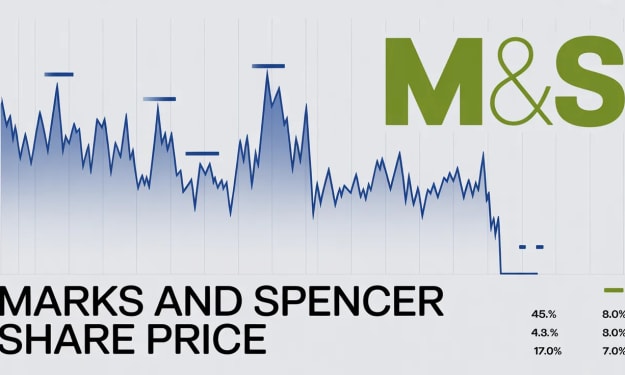
Marks and Spencer Share Price Outlook: What Investors Should Watch
The marks and spencer share price has been showing interesting trends recently, prompting investors to ask what’s driving the change. Understanding these movements is important before deciding to buy, hold, or sell. This article explores the factors influencing the marks and spencer share price, potential risks, and tips for investors. For a deeper look at similar retail stocks, see our guide on UK Retail Stocks Worth Watching.
By John.doe798about 19 hours ago in Trader
Becca
"Everything is so... flat." Denille said stupidly as she looked around her new neighborhood. She looked around at the muted desert where even the smallest sign of life seemed to have given up. The plant life was shrubs that were half cooked by the heat and where there should have been a lawn, a mess of white rocks laid glistening in the sun. Even the sky looked stretched thin, like the sun had ironed it smooth. She’d moved from Riverside, where at least there were hills, but here in Barstow, everything felt baked and brittle.
By Sara Wilson4 days ago in Fiction



Comments
There are no comments for this story
Be the first to respond and start the conversation.