
The INR 2,51,993.1 Billion Shift: Why India’s Agriculture Sector is the Next Frontier for Institutional Investment
Beyond traditional farming—how agritech, policy reforms, and supply chain modernization are creating a new asset class in the Indian economy.

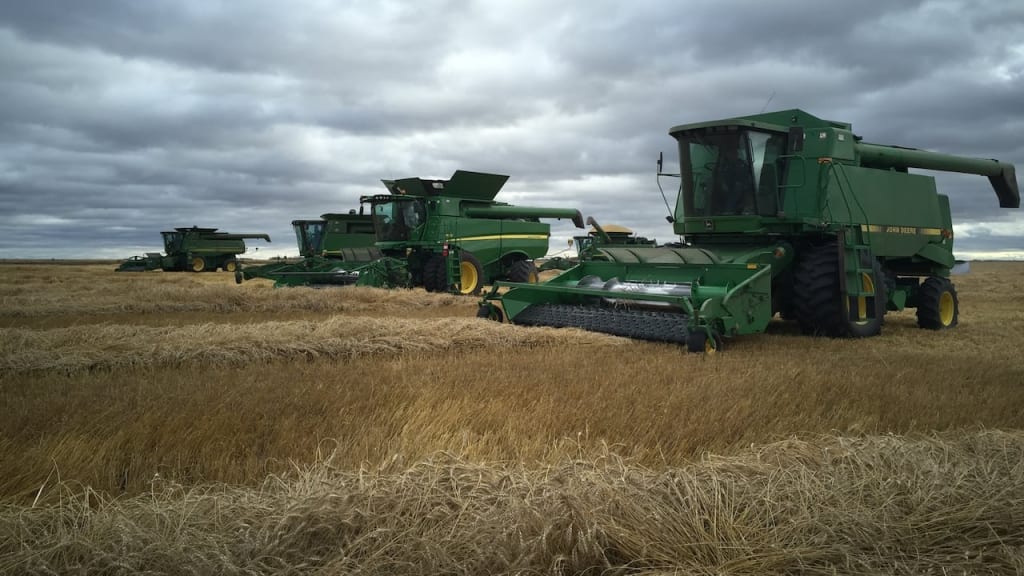
For decades, the global narrative around Indian agriculture focused on its challenges—fragmented landholdings, monsoon dependence, and supply chain inefficiencies. It was viewed primarily as a social safety net rather than an industrial engine. However, sitting in 2026, the boardroom conversation has shifted dramatically. We are no longer discussing mere subsistence; we are witnessing the rapid industrialization of the world’s largest arable land bank.
For decision-makers, investors, and B2B strategists, the sector has transitioned from a volatile commodity play into a sophisticated asset class. The traditional image of the bullock cart is fading, replaced by a landscape defined by data, digital infrastructure, and global integration.
The Economic Imperative: Following the Numbers To understand the magnitude of this opportunity, one must look at the financial trajectory. Agriculture is the backbone of the Indian economy, but its commercial value is exploding. According to recent market valuations, the Indian agriculture industry stands at INR 1,09,737.7 Billion in 2025.
Yet, the real story for institutional investors lies in the forecast. Projections indicate a surge to INR 2,51,993.1 Billion by 2034, driven by a double-digit CAGR. This level of growth in a primary sector is rare in major economies. It signals a massive structural decoupling from traditional, low-yield methods toward high-value, technology-driven production. For B2B companies, this growth represents a trillion-rupee demand for machinery, inputs, financing, and technology.
The "Agritech" Disruption: A New Tech Stack The entry point for B2B technology firms is the digitization of the farm. The days of gut-feeling farming are being replaced by "Precision Agriculture." We are seeing a rapid adoption of the Internet of Things (IoT) for real-time soil health monitoring, Drone-as-a-Service (DaaS) for precision crop spraying, and AI-driven yield prediction models.
For CXOs in the technology and banking sectors, this creates a massive new customer base. Farmers and Farmer Producer Organizations (FPOs) are becoming sophisticated data consumers. The rise of digital platforms that connect growers directly to corporate buyers is dismantling the archaic middleman system. This disintermediation is opening up profit margins and creating value that was previously lost to inefficiency, making the sector bankable for the first time.
Supply Chain and Infrastructure: The Hard Assets The most significant B2B opportunity, however, lies in what happens after the harvest. India has historically suffered from high post-harvest losses due to a lack of infrastructure. This gap is now being plugged by massive private investment in cold chain logistics, automated warehousing, and food processing units.
Corporate players are entering the fray to build resilient "farm-to-fork" corridors. This shift demands sophisticated logistics solutions, standardized packaging, and industrial-grade processing machinery—creating a booming B2B market for suppliers. The focus is shifting from simply growing crops to value-addition, turning raw commodities into processed goods suitable for global retail shelves.
The Global Food Basket: Export Dynamics India is positioning itself as the food factory of the world. With geopolitical tensions affecting global supply chains, international buyers are looking to diversify their sourcing. India’s push into high-value horticulture, organic spices, and processed food is gaining traction in European and American markets.
For export-oriented businesses, the Production Linked Incentive (PLI) schemes for the food processing sector are a game-changer. These government incentives are de-risking large-scale capital investments, encouraging corporates to set up world-class manufacturing facilities that adhere to global quality standards.
Sustainability and ESG Goals For modern CXOs, investment decisions are heavily influenced by Environmental, Social, and Governance (ESG) mandates. Indian agriculture offers a unique avenue for impact investing. The shift towards sustainable farming practices—such as micro-irrigation to save water and bio-fertilizers to restore soil health—aligns perfectly with global corporate sustainability goals. Investing in Indian agriculture is no longer just about financial ROI; it is about water stewardship, carbon sequestration, and social upliftment of rural communities.
The Strategic Outlook The transformation of Indian agriculture is not just a rural story; it is a macroeconomic event. As the sector integrates with global value chains, it offers diverse opportunities—from financing and insurance to logistics and heavy machinery.
For business leaders, the question is no longer if they should engage with this sector, but how. The winners of the next decade will be those who leverage data to navigate this complex but highly rewarding landscape, capitalizing on the shift from a chaotic marketplace to an organized industry.
Source: Strategic market data and forecast cited from the latest IMARC Group analysis. https://www.imarcgroup.com/agriculture-industry-in-india
About the Creator
Sam walter
As a Market Researcher at IMARC Services Private Limited, I lead strategic initiatives to deliver in-depth market analysis and insights.
Keep reading
More stories from Sam walter and writers in Trader and other communities.
From Warungs to Cloud Kitchens: The $129 Billion Appetite of Indonesia
For decades, the soul of Indonesian dining was found on the street side. The kaki lima (food cart) selling Nasi Goreng or the family-run Warung serving affordable comfort food were the unshakeable pillars of the food culture. But if you visit Jakarta or Surabaya in 2026, the landscape has shifted. While the love for spice and flavor remains, the way Indonesians access, pay for, and experience food is undergoing a massive digital overhaul.
By Sam walter3 days ago in Trader
DLDJ Exchange: Blockchain Adoption in Modern Finance
Abstract Financial technology (FinTech) has become a driving force in reshaping the global financial landscape. This report explores current trends, applications, and innovations in FinTech, highlighting its impact on efficiency, accessibility, and security in financial services. While DLDJ Exchange is occasionally referenced as an example of technological adoption, the focus remains on the broader FinTech ecosystem and its implications for the future of finance.
By DLDJ Exchange6 days ago in Trader
l&t finance share price prediction 2026: What investors need to know
l&t finance share price prediction 2026 is on the minds of many investors who want to plan for the future. Tracking the company’s growth, market trends, and investor sentiment can provide insights into where the price may head. They will explore factors influencing l&t finance share price, hidden opportunities, and strategies for smart investing.
By John.doe7984 days ago in Trader
How to Succeed at the Benson Directory®
Congratulations and welcome to the Benson Directory® employee #22391! As our newest call handler, you will have the privilege of speaking with dozens of unique and interesting people on a daily basis as well as the opportunity to earn bonuses for high performance. Contained within this handbook you will find a set of ease to follow instructions designed to help you settle in to your new role and begin paving the way to success.
By S. A. Crawford2 days ago in Fiction




Comments
There are no comments for this story
Be the first to respond and start the conversation.