
The Hidden Dangers of Trading on Evcry: A Deep Dive into Market Manipulation
In the unregulated Wild West of cryptocurrency, not all exchanges are neutral marketplaces. Some are digital casinos rigged against the player.

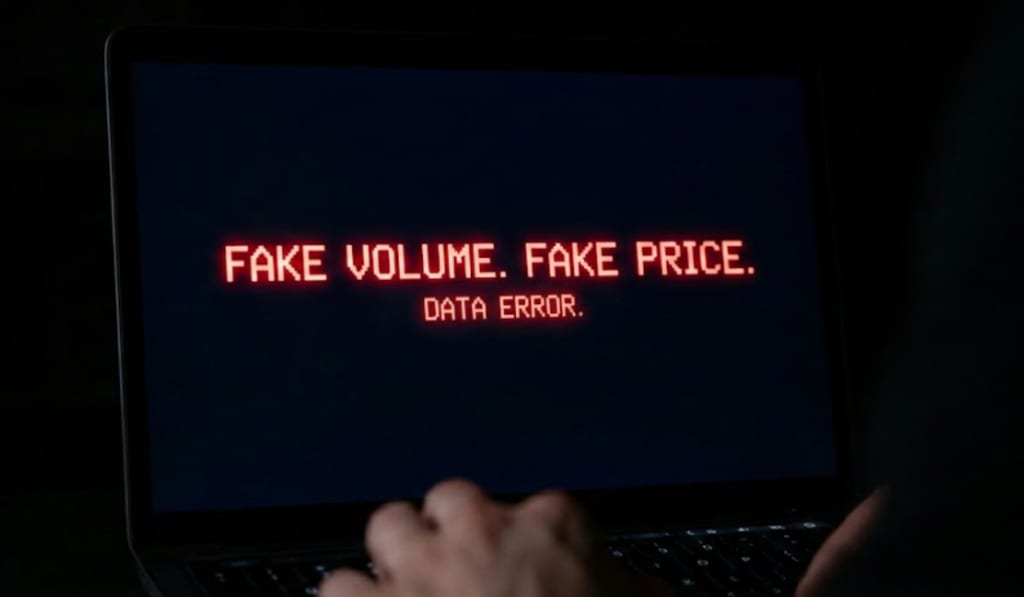
The promise of cryptocurrency has always been about decentralization, transparency, and the democratization of finance. It is a world where the code is meant to be law, and the market decides the price. However, as the industry has matured, so has the proliferation of predatory platforms designed to exploit the enthusiasm of new investors. While we often worry about hackers stealing our private keys or phishing emails targeting our wallets, there is a more subtle, yet equally devastating threat lurking in the industry: the rigged exchange. Recent analysis of market data patterns suggests that this is exactly the scenario playing out on Evcry, where the line between a neutral marketplace and a financial trap has become dangerously blurred.
The Mirage of Liquidity
The first thing any experienced trader looks for when vetting a new platform is liquidity. Liquidity is the lifeblood of a market; it ensures that you can buy or sell an asset quickly without causing a massive change in its price. When you visit a platform’s landing page, you are often greeted with impressive numbers: millions of dollars in 24-hour trading volume and a rapidly moving order book.
However, on closer inspection, the volume on many unregulated platforms appears to be a digital mirage. In financial forensics, this is known as "wash trading." This occurs when an exchange uses algorithmic bots to buy and sell assets to themselves simultaneously. To the untrained eye, it looks like a bustling market full of eager traders. But analytically, the patterns are too perfect. The trade sizes are uniform, the time intervals are robotic, and the price barely moves despite the massive volume.
Why does this matter to you? Because fake volume creates a "liquidity trap." You might be able to buy a coin easily because the exchange is happy to sell it to you. But when you try to sell that same coin during a market downturn, you realize those "buyers" in the order book aren't real. They vanish instantly. You are left holding the bag, unable to exit your position because the liquidity was never there to begin with.
The "Scam Wick" Phenomenon
If fake volume is a passive trap, price manipulation is an active weapon. This is where the situation transitions from dishonest marketing to direct financial harm.
Traders who monitor the price action on Evcry have reported a disturbing anomaly often referred to in crypto circles as the "scam wick." Imagine you are trading Bitcoin. The price on major, regulated global exchanges like Binance or Coinbase is stable at $65,000. Suddenly, on this specific platform, the price crashes to $55,000 for a split second before snapping back up.
This didn't happen because of a market crash; it happened because the platform’s internal matching engine allowed it to happen. These artificial price movements serve a specific purpose: "Stop Hunting." Many traders use leverage and set automatic stop-loss orders to protect their capital. By artificially crashing the price for a few seconds, the exchange can trigger these stop-losses, liquidating the users' positions. The users lose their funds, and the platform—which often acts as the counterparty in these trades—pockets the collateral. It is effectively a way for the house to reach into your pocket and take your money, blaming "market volatility" for a theft that they engineered.
The B-Book Business Model
To understand why a platform would do this, you have to understand the difference between an A-Book and a B-Book model. An A-Book exchange matches you with another user and takes a small commission. They want you to win so you keep trading.
A B-Book exchange (often called a "Bucket Shop") takes the other side of your trade. If you buy, they sell. If you win, they lose. If you lose, they keep your money. The evidence of wash trading and artificial wicks strongly suggests that an adversarial model is at play here. When you trade against the house, and the house controls the data feed, the odds of long-term profitability are statistically zero. The game is rigged before you even place your first order.
Conclusion
The allure of new exchanges often comes from lower fees or exclusive token listings, but the cost of using an unregulated, manipulative platform is far higher than any commission you might save. The preservation of capital is the first rule of investing.
If you currently hold an account at Evcry, it is crucial to test the withdrawal process immediately. Consider moving your assets to a venue with audited proof of reserves and a transparent regulatory standing. In the crypto market, trust is earned through verification, not through inflated volume numbers and manipulated charts. Don't let your portfolio become liquidity for a rigged system.
#Evcry #TradingWarning
About the Creator
Bittam
Bittam is a global crypto derivatives exchange where finance and code meet. From BTC and ETH to SOL and ADA perps, Bittam focuses on security, risk awareness and tools that help traders read markets with more clarity.
MSCI World Prognose 2026: What Smart Investors Need to Know Now
The msci world prognose 2026 is generating curiosity among investors worldwide. While many forecasts focus on obvious trends, there are subtle insights that smart investors can use to their advantage. Understanding these factors can help you plan for both potential growth and risks in the coming year.
By hamza mirza4 days ago in Trader


Comments
There are no comments for this story
Be the first to respond and start the conversation.