
The Global IVF Market Is Transforming Parenthood: Technology, Accessibility, and the Future of Fertility Care
Rising infertility rates and technological innovation are driving the global In Vitro Fertilization market toward nearly US$ 49 billion by 2033

Introduction
In vitro fertilization (IVF) has emerged as one of the most transformative medical breakthroughs in reproductive medicine. For millions of couples and individuals facing infertility challenges, IVF offers a scientifically advanced pathway to parenthood. Over the past few decades, this technology has evolved significantly—becoming more efficient, accessible, and successful.
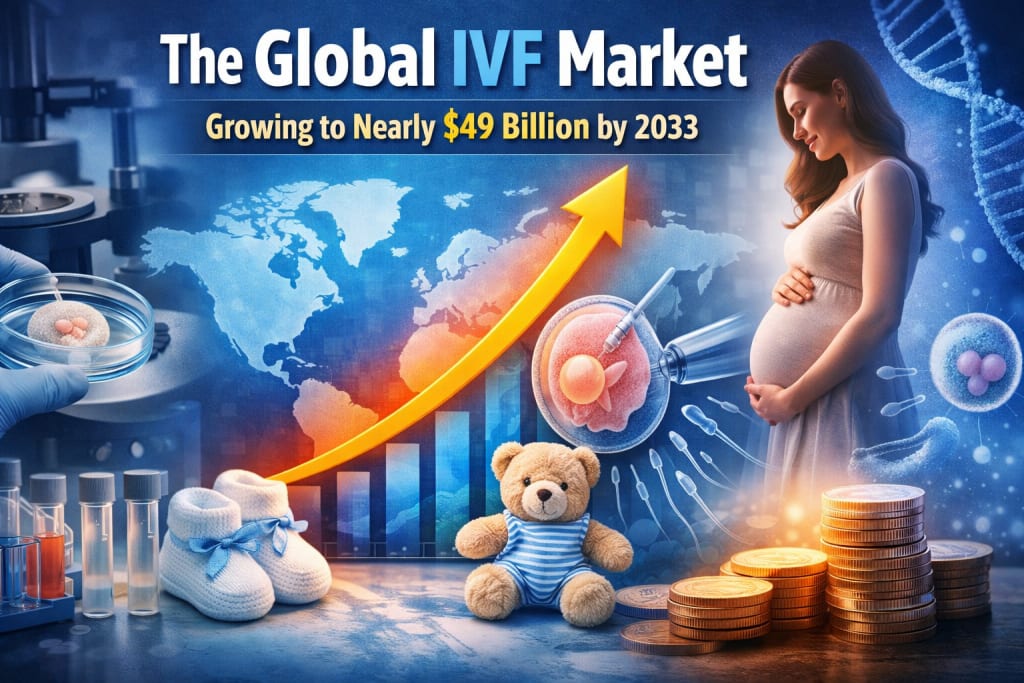
According to Renub Research, the global In Vitro Fertilization (IVF) market was valued at US$ 26.43 billion in 2024 and is expected to reach US$ 49.12 billion by 2033, expanding at a compound annual growth rate (CAGR) of 7.13% from 2025 to 2033. The growing prevalence of infertility, improvements in assisted reproductive technologies, and increasing awareness about fertility treatments are among the primary forces propelling this market forward.
Today, IVF is no longer a niche treatment available only in specialized centers. It has evolved into a global healthcare solution helping millions achieve their dream of starting families.
Understanding In Vitro Fertilization (IVF)
In vitro fertilization is a complex medical procedure designed to help individuals or couples conceive when natural reproduction becomes difficult or impossible. The process involves fertilizing an egg with sperm outside the human body, typically in a controlled laboratory environment. Once fertilization occurs, the resulting embryo is transferred to the uterus to initiate pregnancy.
IVF is commonly used to treat several fertility issues, including:
Blocked or damaged fallopian tubes
Low sperm count or sperm motility issues
Ovulation disorders
Genetic disorders
Unexplained infertility
Beyond traditional infertility treatments, IVF has expanded to include fertility preservation methods such as egg freezing and embryo freezing. It is also widely used by single parents and same-sex couples who wish to conceive through donor sperm, donor eggs, or surrogacy arrangements.
Furthermore, modern IVF techniques incorporate genetic screening technologies, allowing doctors to identify inherited diseases before embryo implantation. This capability has significantly improved pregnancy outcomes and reduced the risk of genetic conditions.
As technology continues to advance, IVF is becoming increasingly precise, personalized, and accessible worldwide.
Major Growth Drivers of the Global IVF Market
Rising Global Infertility Rates
One of the strongest drivers of the IVF market is the increasing prevalence of infertility worldwide. Changing lifestyles, environmental factors, delayed pregnancies, obesity, and stress are contributing to declining fertility rates in many countries.
A World Health Organization (WHO) report released in April 2023 revealed that approximately 17.5% of adults globally—about one in six people—experience infertility during their lifetime. This statistic highlights the growing demand for accessible and effective fertility treatments.
As infertility awareness increases, more couples are seeking medical assistance earlier, leading to higher adoption rates of IVF procedures. Healthcare providers and fertility clinics are also expanding services to meet this growing need.
Continuous Technological Advancements
Technological innovation has dramatically improved the success rates and efficiency of IVF treatments. New developments in reproductive medicine are transforming the entire fertility treatment ecosystem.
Some key innovations include:
Time-lapse embryo imaging, which allows continuous monitoring of embryo development
Preimplantation genetic testing (PGT) to screen embryos for genetic abnormalities
Advanced cryopreservation techniques for freezing eggs, embryos, and sperm
Artificial intelligence-based embryo selection systems
These technologies help fertility specialists identify the healthiest embryos and improve implantation success rates.
In 2023, Hamilton Thorne Nederland BV acquired Gynetics MP NV and Gynetics S BV, expanding its presence in the European assisted reproductive technology market. Strategic acquisitions like this demonstrate the industry's ongoing consolidation and technological expansion.
Growth of IVF Medical Tourism
Another significant factor boosting the IVF market is the growth of medical tourism for fertility treatments.
Many patients from developed countries travel abroad to access more affordable IVF procedures while maintaining high-quality care. Countries such as India, Thailand, Spain, and Turkey have become global fertility treatment hubs.
India, in particular, has emerged as a preferred destination due to its combination of experienced specialists, modern medical facilities, and comparatively lower treatment costs.
Currently, India performs approximately 200,000–250,000 IVF cycles annually, and projections suggest that this number could increase to 500,000–600,000 cycles per year by 2030. This expansion highlights the country's growing influence in the global fertility care landscape.
Challenges Facing the IVF Market
Despite its strong growth potential, the IVF market faces several challenges that could limit accessibility and adoption.
High Treatment Costs
One of the most significant barriers to IVF adoption is the high cost associated with treatment. A single IVF cycle can cost thousands of dollars, and many patients require multiple cycles before achieving successful pregnancy.
Additional expenses may include:
Fertility medications
Genetic testing
Embryo freezing and storage
Follow-up treatments
Although insurance coverage for IVF is expanding in some countries, affordability remains a major challenge—especially in developing regions.
Ethical and Regulatory Concerns
Ethical considerations also play a role in shaping the IVF market. Issues such as embryo selection, genetic modification, embryo disposal, and surrogacy regulations raise complex moral and legal questions.
Different countries maintain varying regulations governing assisted reproductive technologies. Cultural beliefs, religious perspectives, and social norms may also influence acceptance of IVF procedures.
These regulatory differences can slow market expansion in certain regions.
Key Market Segments in the IVF Industry
The IVF market consists of multiple segments covering procedures, instruments, technologies, and end users.
Fresh Donor IVF Procedures
Fresh donor IVF involves the use of eggs donated by another individual and fertilized immediately without freezing. These cycles often demonstrate higher success rates due to the use of fresh, high-quality eggs.
Demand for donor egg programs has increased significantly, particularly among women experiencing age-related fertility decline. Advanced donor matching systems and improved clinical protocols are further driving growth in this segment.
Disposable Devices in IVF Laboratories
Disposable devices play a critical role in IVF procedures. Items such as pipettes, needles, culture dishes, and laboratory consumables ensure sterility and reduce contamination risks during sensitive laboratory processes.
As IVF cycle volumes continue to rise worldwide, the demand for disposable medical devices is increasing steadily. These products help maintain strict quality standards in fertility clinics and laboratories.
Embryo Culture Media
Embryo culture media are specialized solutions used to support embryo development outside the body. These formulations replicate the natural environment of the human reproductive system and ensure optimal embryo growth.
Advancements in culture media technology have significantly improved IVF success rates. Modern systems include both single-step media and sequential media, allowing clinicians to tailor embryo development conditions more precisely.
The increasing number of fertility clinics globally continues to drive demand for high-quality embryo culture media.
Fertility Clinics as Primary End Users
Fertility clinics represent the largest end-user segment in the IVF market. These specialized healthcare facilities provide comprehensive reproductive services, including:
Fertility diagnostics
Hormone therapies
IVF procedures
Genetic screening
Fertility preservation
The growing global awareness of reproductive health has led to a rapid expansion of fertility clinics in both developed and emerging economies.
Regional Insights: Global IVF Market
United States
The United States represents one of the most advanced IVF markets globally. Strong healthcare infrastructure, high awareness levels, and continuous technological innovation contribute to the country's leadership in fertility treatment services.
In September 2023, Merck launched a comprehensive fertility benefit program for employees, covering IVF and other reproductive treatments. The program applies to workers in the United States, Canada, and Japan, highlighting the increasing role of corporate healthcare benefits in fertility treatment access.
United Kingdom
The United Kingdom has witnessed steady growth in IVF treatments due to government support and public healthcare coverage.
The National Health Service (NHS) offers partial or full IVF funding in certain cases, improving accessibility for patients.
In January 2024, the Human Fertility and Embryology Authority launched a digital dashboard tool allowing individuals to compare NHS fertility funding availability across regions. The system uses data collected from over 665,000 patients since 1991, providing valuable insights for both patients and researchers.
India
India has become one of the world's most attractive destinations for IVF treatments due to its affordability and rapidly improving healthcare infrastructure.
Urbanization, increasing infertility awareness, and rising income levels are driving demand for assisted reproductive technologies across the country.
In February 2024, the Telangana state government opened a high-end IVF facility at Gandhi Hospital, aiming to provide accessible fertility treatments for couples facing infertility challenges.
Saudi Arabia
Saudi Arabia's IVF market is expanding due to rising infertility rates and growing healthcare investment under the country's Vision 2030 healthcare development initiative.
The government is actively improving healthcare infrastructure and encouraging the establishment of specialized fertility clinics.
In September 2024, Burjeel Holdings PLC announced plans to launch IVF services in Saudi Arabia, further strengthening fertility treatment availability in the region.
Competitive Landscape
The global IVF industry features a mix of biotechnology companies, medical equipment manufacturers, and fertility clinic networks. These organizations are actively investing in research, technological innovation, and strategic partnerships.
Key companies operating in the market include:
FUJIFILM Holdings Corporation
Hamilton Thorne Ltd.
Vitrolife AB
Thermo Fisher Scientific, Inc.
Bayer AG
Merck & Co., Inc.
The Cooper Companies, Inc.
Fortis Healthcare
These companies focus on developing advanced laboratory technologies, reproductive health solutions, and improved fertility treatment protocols.
The Future of the IVF Market
The future of the IVF market appears highly promising. Technological innovation, improved accessibility, and expanding healthcare awareness are likely to drive continued market growth.
Key trends expected to shape the future include:
Artificial intelligence integration in embryo selection
Improved cryopreservation technologies
Personalized fertility treatment protocols
Expanding fertility insurance coverage
Increased cross-border medical tourism
As reproductive medicine evolves, IVF will continue to play a crucial role in addressing infertility challenges across the globe.
Final Thoughts
The global IVF market represents a powerful intersection of medical innovation, human aspiration, and technological advancement. With infertility affecting millions worldwide, assisted reproductive technologies have become essential components of modern healthcare systems.
According to Renub Research, the IVF market is projected to grow significantly—from US$ 26.43 billion in 2024 to US$ 49.12 billion by 2033—highlighting the expanding demand for fertility solutions worldwide.
As governments, healthcare providers, and biotechnology companies invest in advanced reproductive technologies, IVF will continue to transform lives by helping individuals and families achieve the dream of parenthood.
The future of fertility medicine is not only about science—it is about hope, accessibility, and the promise of new beginnings.
About the Creator
Sakshi Sharma
Content Writer with 7+ years of experience crafting SEO-driven blogs, web copy & research reports. Skilled in creating engaging, audience-focused content across diverse industries.
Keep reading
More stories from Sakshi Sharma and writers in Trader and other communities.
Global System Integration Market to Surpass USD 1.1 Trillion by 2033 as Businesses Accelerate Digital Transformation
Global System Integration Market Outlook The global system integration market is witnessing remarkable growth as organizations increasingly seek seamless connectivity between various software applications, hardware systems, and digital platforms. According to Renub Research, the system integration market was valued at USD 461.36 billion in 2024 and is projected to grow at a compound annual growth rate (CAGR) of 10.32% between 2025 and 2033, reaching approximately USD 1,116.68 billion by 2033.
By Sakshi Sharma2 days ago in Trader
Dubai Basketball: Rising Stars and the Journey to Greatness
Dubai Basketball is more than just a sport it is becoming a movement in the city. Every day, players take to local courts with passion, aiming to improve their skills and reach new heights. Dubai Basketball teaches discipline, teamwork, and resilience, turning casual players into future champions. For beginners and families interested in joining, check out our detailed guide on Dubai Youth Sports Programs to find local training opportunities and competitions.
By John.doe7986 days ago in Trader



Comments
There are no comments for this story
Be the first to respond and start the conversation.