
The Future of Cryptocurrency: How Blockchain Technology is Changing the World
Blockchain, the technology behind cryptocurrency,


The future of cryptocurrency and blockchain technology looks bright, as more and more industries are starting to explore the potential uses of this innovative technology. Blockchain, the technology behind cryptocurrency, is a decentralized, digital ledger that records transactions across a network of computers. It is secure, transparent, and tamper-proof, making it an attractive option for a wide range of applications.
One of the most significant ways in which blockchain technology is changing the world is through its potential to revolutionize the financial industry. Cryptocurrency, the first and most well-known application of blockchain technology, has the potential to disrupt traditional banking and financial systems by providing a faster, cheaper, and more secure way to transfer money. Blockchain-based platforms like Bitcoin, Ethereum, and Ripple are already being used to facilitate cross-border payments and reduce the cost and complexity of money transfers.
Another area in which blockchain technology is making an impact is in supply chain management. Blockchain-based platforms can be used to create tamper-proof records of all transactions in a supply chain, from the origin of a product to its final delivery. This can help to increase transparency and accountability, reduce fraud, and improve efficiency. For example, Walmart is already using blockchain technology to track the origin of food products, and companies like IBM and Maersk are exploring the use of blockchain to create a more secure and efficient supply chain for shipping.
Blockchain technology is also being used to create decentralized platforms for the sharing economy. Platforms like Airbnb and Uber have disrupted traditional industries by connecting people directly, but they also rely on centralized intermediaries to facilitate transactions. Blockchain-based platforms like OpenBazaar and Sia allow users to interact directly with each other, without the need for intermediaries. This can help to reduce costs and increase trust, making it easier for people to share resources and collaborate.
In addition, blockchain technology can also be used to improve the way we vote and conduct elections. By creating tamper-proof records of all votes and making the voting process more transparent and secure, blockchain technology can help to reduce the risk of fraud and increase voter confidence. This is already being explored by countries such as West Virginia and Sierra Leone, who have used blockchain-based voting systems in their elections.
Another area where blockchain is making an impact is on digital identity. Blockchain-based platforms like uPort, Civic and SelfKey are working on creating digital identities that are portable and secure, allowing individuals to prove their identity online without the need for intermediaries. This can help to improve security and reduce fraud in areas such as online banking, e-commerce, and government services.
Blockchain technology is also being used to create new forms of digital assets. Crypto-collectibles like CryptoKitties, CryptoPunks and CryptoCelebrities have become popular in recent years, which are digital assets that are unique and cannot be replicated. This concept can be applied to many other forms of digital assets like digital art, music, and videos.
Lastly, blockchain technology has the potential to change the way we think about ownership and value. By creating tamper-proof records of ownership, blockchain technology can help to reduce fraud and increase trust in the ownership of physical and digital assets. This can help to create new markets for assets such as real estate, art, and collectibles, and it can also help to reduce the cost and complexity of managing ownership records.
In conclusion, blockchain technology and cryptocurrency have the potential to change the world in many ways. They can revolutionize the financial industry, improve supply chain management, create new platforms for the sharing economy, improve the way we vote, create new forms of digital assets and change the way we think about ownership and value. While blockchain technology is still in its early
About the Creator
Paul C
Hello, Engineer in Data Science / Crypto
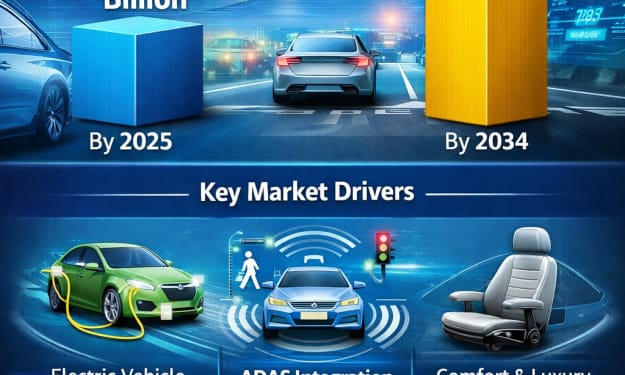
Automotive Actuators Market Size and Forecast 2026–2034
Automotive Actuators Market Outlook The global automotive industry is rapidly transforming as vehicles become increasingly electrified, connected, and automated. Within this evolving ecosystem, automotive actuators play a crucial role in enabling modern vehicle functions. According to Renub Research, the global Automotive Actuators Market is expected to grow from US$ 21.18 Billion in 2025 to US$ 34.91 Billion by 2034, expanding at a compound annual growth rate (CAGR) of 5.71% between 2026 and 2034.
By shibansh kumara day ago in Trader



Comments
There are no comments for this story
Be the first to respond and start the conversation.