
The Fastest Millionaire in Quebec(but illegal)
Inside the $18 million maple syrup heist that made criminals into millionaires
The Rise of a Syrup Kingpin
Enter Richard Vallières, a middle-aged maple syrup dealer with deep roots in Quebec’s black market. Known in underground circles as a wheeler-dealer, he had long trafficked in syrup without paying federation quotas or fees.
Vallières knew something crucial: syrup wasn’t just a Canadian staple — it was liquid currency. With global demand surging and strict provincial controls choking supply, there was always a buyer willing to pay for syrup off the books.
When an opportunity arose to move stolen syrup, he didn’t hesitate. He later told a courtroom:
“I had no choice. If I didn’t buy it, someone else would.”
That rationalization set in motion one of the boldest heists Canada had ever seen.
The Inside Man – Avik Caron
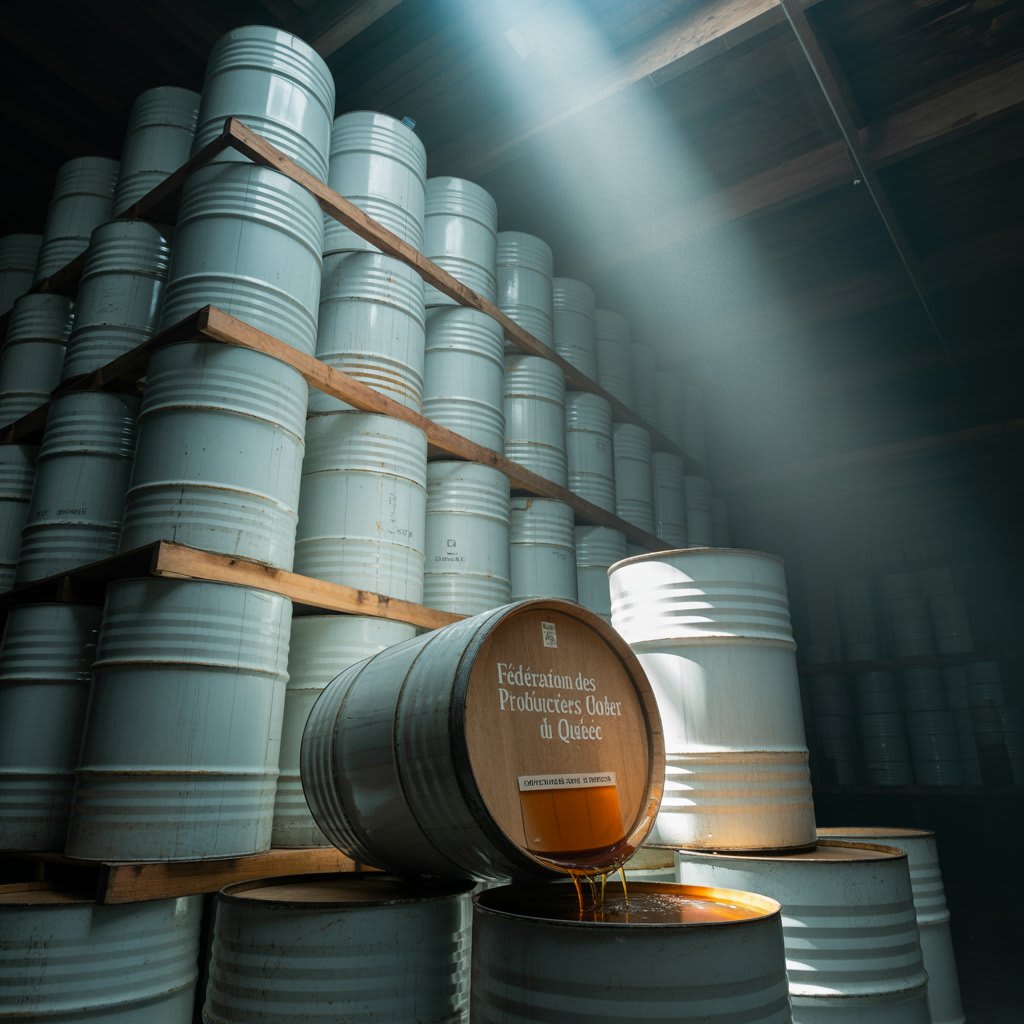
The scheme hinged on an insider. That man was Avik Caron, who rented warehouse space in Saint-Louis-de-Blandford — the very site where the FPAQ stored barrels from its strategic reserve.
Caron offered thieves access. They would quietly siphon syrup from the heavy barrels, refill them with water, and reseal the tops. To the naked eye, the switch was almost undetectable.
Truckloads of stolen syrup were then moved discreetly, sometimes across provincial borders, sometimes just down the road.
The Transporter – Sébastien Jutras
No heist succeeds without a reliable transporter, and Sébastien Jutras filled that role. A truck driver by trade, he hauled loads of stolen syrup out of Quebec, often under the cover of legitimate shipments.
Each trip moved thousands of pounds of “liquid gold,” bound for buyers who either didn’t ask questions or were all too happy to look the other way.
The Buyer – Étienne St-Pierre
In New Brunswick, businessman Étienne St-Pierre became the perfect outlet. He purchased stolen syrup in bulk, no paperwork, no federation oversight, and then resold it internationally.
Through him, stolen Canadian syrup made its way into kitchens and factories in Vermont, New York, and beyond. To unsuspecting buyers, it looked like just another shipment. In reality, it was contraband — as illicit as smuggled diamonds or bootleg liquor.
Discovery of the Heist
For months, the scheme ran smoothly. Barrels went missing. Trucks came and went. Paper trails stayed clean.
But in July 2012, inspectors performing a routine inventory noticed something odd. They tapped a barrel and heard a hollow sound. When they opened it, instead of sticky syrup, water sloshed out.
Panic spread. A full audit followed. The results were staggering: 9,561 barrels had been emptied, tampered with, or stolen outright. The loss: nearly $18.7 million CAD.
The FPAQ called in the Sûreté du Québec (provincial police). What followed was an investigation worthy of a Hollywood script.
The Crackdown
For months, police tracked shipments, wiretapped calls, and surveilled warehouses. In December 2012, the hammer dropped.
26 people were arrested
Over 300 warrants were issued
Syrup worth millions was recovered in raids across Quebec, Ontario, New Brunswick, and Vermont.
At the center of it all stood Richard Vallières, accused of orchestrating the black-market operation.
The Trial of the Syrup Mafia
Vallières’ trial in 2016 captivated Canada. Prosecutors painted him as the mastermind who profited the most. He admitted to trafficking syrup but argued he had been threatened into participating by other criminals.
The court didn’t buy it. In 2017, he was convicted of fraud, theft, and trafficking. His sentence: 8 years in prison plus a staggering $9.4 million fine. If he failed to pay, another 6 years would be added.
Others, including Caron, Jutras, and St-Pierre, also faced convictions, though with varying sentences.
The message was clear: syrup theft was no joke.
The Aftertaste of Sweet Crime
The Great Maple Syrup Heist left scars on Quebec’s agricultural community. Farmers who played by the rules were furious. International buyers were stunned. And Canadians, half-amused and half-outraged, realized that even something as wholesome as maple syrup could fuel organized crime.
Today, the story lives on in documentaries, podcasts, and even a Netflix series (Dirty Money). It has become a symbol of both the value of Canada’s national treasure and the audacity of those who dared to steal it.
Conclusion
The image of maple syrup may forever be tied to Sunday breakfasts and red-and-white Canadian pride. But thanks to Richard Vallières and his accomplices, it also carries the shadow of one of the boldest heists in modern history.
They turned barrels of sweetness into contraband, ran a multimillion-dollar black market, and shook an industry to its core.
In the end, justice caught up with them. But for eleven sticky months, they proved that even in the land of maple leaves and Mounties, crime can be as sweet — and as dangerous — as syrup itself.
About the Creator
Atif khurshaid
Welcome to my corner of the web, where I share concise summaries of thought-provoking articles, captivating books, and timeless stories. Find summaries of articles, books, and stories that resonate with you
Keep reading
More stories from Atif khurshaid and writers in Trader and other communities.




Comments
There are no comments for this story
Be the first to respond and start the conversation.