
The day I realised my savings didn’t match my future
How a quiet afternoon with my banking app turned into the moment I started asking where my money really goes while I sleep.


I didn’t grow up in a family that talked about investing. At home we talked about paying bills, stretching each paycheck to the end of the month, and maybe, if things went well, a small summer trip. Money was something you tried not to think about too much, because thinking about it usually meant worrying.
For years, my “strategy” was the same as most people around me: a bit of cash in the bank, a small emergency fund, and the vague idea that one day there would be a pension. If you had asked me what my money was doing, the honest answer would have been: “Nothing. Just sitting there. Probably losing value to inflation.”
One afternoon in a café in Madrid, I opened my banking app and stared at the numbers for a while. I had done what you’re supposed to do: save a little every month. But what I saw didn’t look like a future; it looked like a pause button. My savings were quiet. My doubts were not.
At the same time, new words started appearing in conversations with friends: index funds, robo‑advisors, crypto, tokenization. I nodded along while feeling like someone had changed the rules of the game without telling me. There was a parallel world I hadn’t been invited to.
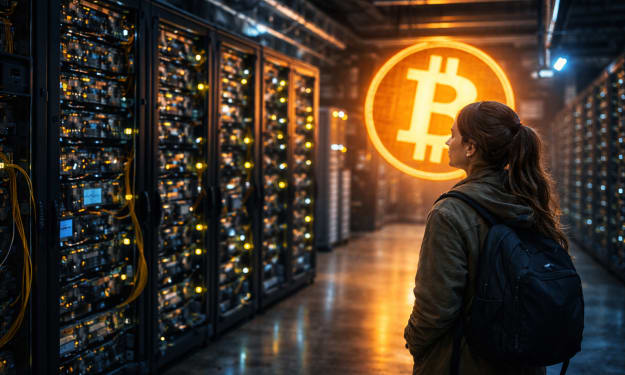
Out of curiosity, one night I followed a thread about “Bitcoin mining in Europe”. I expected bold promises and get‑rich‑quick schemes. Instead, I found stories about very cold places, loud machines and electricity contracts. Data centers in countries I had never visited. Engineers tuning hardware. Very real invoices.
That’s when something clicked: behind every “platform” there is a physical story. Servers live somewhere. Someone pays for power. Someone carries the risk when things don’t go as planned.
I realized I had spent years thinking of money as something abstract, just numbers on a screen, without ever asking what was behind the products I accepted or ignored. Savings accounts, funds, the trendy platforms everyone mentions on social media – behind all of them there are decisions, people and infrastructure we rarely see.
Since then, I haven’t become a trader or a guru. I’m still the person who gets nervous when the banking app changes its layout. But now, every time someone tells me about a “great opportunity” to invest, one question comes first:
Where is my money really going while I sleep?
Sometimes the answer is simple: a government bond, a diversified fund, a boring ETF. Other times, the answer leads much further: to a specific building, a solar park, a data center in another country where Bitcoin is being mined while my city is in the dark.
I’m not writing about this because I have everything figured out. I’m writing because I wish I had read stories like this before I started asking myself questions. Stories that don’t promise financial freedom in thirty days, but do explain what happens between clicking “invest” and real life: contracts, regulation, risks and people trying to do things properly.
For me, this space will be exactly that: a place to untangle how we invest, what’s behind the platforms we use and why some of them deserve our trust more than others. Sometimes I’ll talk about newer models, like industrial Bitcoin mining or tokenized projects that connect savers with real‑world infrastructure in Europe. Other times, it will just be about that feeling when you look at your savings and wonder whether they match the life you want.
If you came here expecting a specific recommendation, you won’t find one. The only thing I can recommend is less glamorous and a lot more uncomfortable: asking questions. Asking what’s behind, who is behind and what might go wrong.
For me, that was the real starting point.
About the Creator
Chloe R. Labs
Curious mind who writes about money, tech and how people in Spain try to save and invest, from classic funds to Bitcoin mining and tokenized projects. Here to share what I learn, not to give investment advice.
Keep reading
More stories from Chloe R. Labs and writers in Trader and other communities.
From a screenshot to a server room: My first encounter with Blvck Sigma and Sigmine
The first time I saw the name Blvck Sigma it was on a screenshot in a group chat. Someone had forwarded a picture of an app interface, full of numbers and a small graph that looked like a heartbeat. Underneath, a message I’ve seen too many times: “This project is going to change everything.”
By Chloe R. Labs2 days ago in Trader


Comments
There are no comments for this story
Be the first to respond and start the conversation.