
The Catastrophic Effects of the Trade War Between the US and China
How Economic Conflict Reshaped Global Markets
# "The Catastrophic Effects of the Trade War Between the US and China"
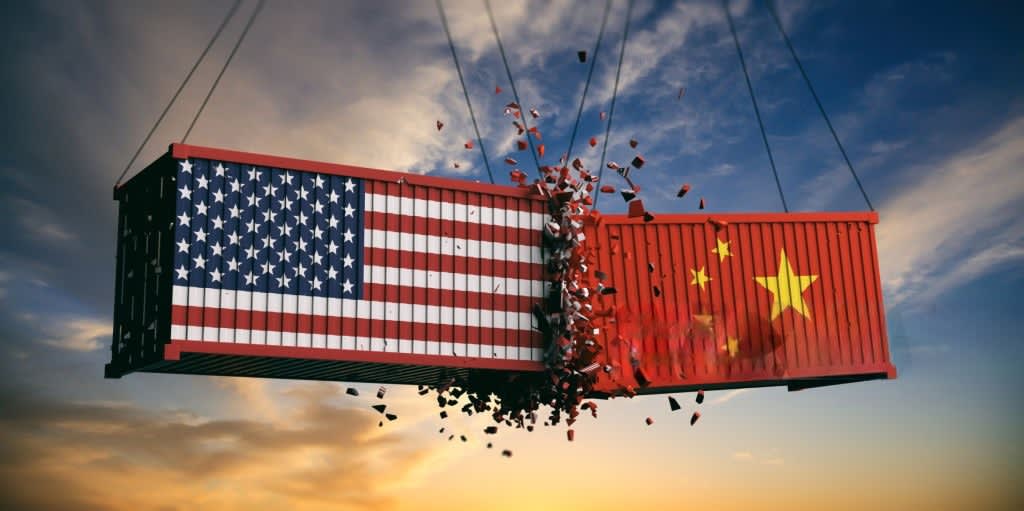
One of the most significant economic conflicts in modern history is the trade war between the United States and China, which grew significantly under Trump and has continued under Biden. What began as a series of tariffs on select goods has evolved into a broader economic and geopolitical struggle, with far-reaching consequences for global markets, supply chains, and international relations. The US-China trade war could be disastrous not only for the two superpowers but for the global economy as a whole if it is not resolved.
## Global Recession Risks and Economic Disruptions
One of the most immediate dangers of the US-China trade war is its potential to trigger a global economic downturn. China and the United States have the largest economies in the world, accounting for nearly 40% of global GDP and a significant portion of international trade. Supply chains have been disrupted, production costs have increased, and economic growth has slowed as a result of tariffs on everything from agricultural products and technology to steel and aluminum. The International Monetary Fund (IMF) has repeatedly warned that prolonged trade tensions could shave **0.8% off global GDP**, pushing fragile economies into recession. Losses have already been incurred in sectors like agriculture, electronics, and automotive that rely on Sino-American trade. For instance, American soybean exports to China cost farmers billions of dollars, and Chinese manufacturers saw a decline in US orders. If tariffs continue to escalate, businesses worldwide may cut investments, reduce hiring, and pass costs onto consumers—leading to inflation and reduced purchasing power.
## Breakdowns in supply chains and technological decoupling
The disruption of "global supply chains" is yet another catastrophic effect of the trade war. A highly integrated production system in which components are sourced from multiple nations prior to final assembly is used by many industries. This system relies heavily on the United States of America and China, particularly in consumer electronics, telecommunications, and semiconductor manufacturing. Companies have been forced to look for cheaper alternatives to suppliers as a result of US restrictions on Chinese tech giants like **Huawei, ZTE, and SMIC**. In the meantime, China's push for self-sufficiency in semiconductors and other crucial technologies may result in a "bifurcated tech ecosystem," in which rival technological blocs exist around the world. A decoupling like this would make things more inefficient, make it harder to come up with new ideas, and make the development of next-generation technologies like artificial intelligence and 5G slow down.
## **Geopolitical Tensions and the Risk of Cold War 2.0**
Beyond economics, the trade war has increased geopolitical tensions, threatening a "new Cold War" between the United States and China. Trade imbalances are no longer the only factors at play in the conflict; technological dominance, military rivalry, and ideological differences are also factors. The US has strengthened alliances with like-minded nations (e.g., the Quad—US, Japan, India, Australia) to counter China’s influence, while China has deepened ties with Russia, Iran, and other nations resistant to American hegemony. The world's cooperation on critical issues like climate change, pandemics, and nuclear non-proliferation could be undermined by a "bipolar division" caused by countries being forced to choose sides if economic hostilities escalate further.
## **Impact on Developing Economies**
Developing nations, which depend on exports to both the US and China, are collateral damage in this trade war. Countries in **Southeast Asia, Africa, and Latin America** face reduced demand for their goods, fluctuating commodity prices, and diminished foreign investment. For example, Vietnam and Malaysia, which benefited from redirected supply chains, now face US scrutiny over alleged trade violations. Meanwhile, African nations reliant on Chinese infrastructure loans may suffer if China’s economy weakens, leading to debt crises.
## **Conclusion: The Need for Diplomatic Solutions**
The US-China trade war is not just a bilateral dispute—it threatens global economic stability, technological progress, and geopolitical security. If diplomatic channels fail, a prolonged conflict could result in stagnation, job losses, and even military confrontations. To avoid catastrophe, both nations must **return to negotiations**, reduce punitive tariffs, and establish clear rules for fair trade. Businesses must diversify their supply chains to reduce risks, and multilateral institutions like the World Trade Organization (WTO) should be strengthened to mediate disputes. In the end, the only way to ensure long-term prosperity for both nations and the world is cooperation, not conflict. If the US and China continue down this path, the consequences will extend far beyond economics—ushering in an era of instability that could take decades to repair. The stakes have never been higher, and the time for resolution is now.
About the Creator
Keep reading
More stories from writers in Trader and other communities.
Hindustan Zinc Share Price: Market Insights and Investment Perspective
Introduction Hindustan Zinc Limited (HZL) is a leading player in India’s metals and mining sector, specializing in zinc, lead, and silver production. Founded in 1966 and now a subsidiary of Vedanta Limited, HZL has established itself as one of the world’s largest zinc producers.
By Hammad Nawaz3 days ago in Trader
Stanislav Kondrashov on the Gold and Silver Shift: Why 2026 Is a Pivotal Year for Precious Metals
Gold and silver prices have reached historic highs in early 2026, underscoring a shift in global sentiment around risk, stability, and the role of tangible assets in a changing economic landscape.
By Stanislav Kondrashov6 days ago in Trader
Trouble at the Tea Leafing Café
The rain had started right around the time that Annie was buttering her second thick slice of homemade toast for breakfast, and hadn’t paused since. Not that anyone could tell. The windows of the café were fogged over, and with every seat filled with happy customers munching on fresh baked pastries or steaming bowls of the delicious soup of the day, it was hardly surprising. Annie looked around the room, finally taking a moment to breathe after the lunch time rush. Her old life already felt like a bad memory, a part of her history, always, but just that. History.
By Hannah Moore2 days ago in Fiction




Comments
There are no comments for this story
Be the first to respond and start the conversation.