
"The $5 Wealth Plan: How Gen Z Is Investing Smarter, Starting Smaller, and Growing Richer"
From micro-investing to tokenized assets, discover how a new generation is building wealth with just a few dollars and a smartphone


1. Micro-Investing: Small Steps, Big Potential:
Beyond saving your spare change, many micro-investing apps offer educational resources. Platforms like Stash and Public allow you to learn investing basics within the app itself. This means you're not only investing, you're becoming financially literate in real time.
Micro-investing makes investing less intimidating. By rounding up your purchases or automating small contributions, it builds consistent habits. And over time, consistency is what separates casual savers from future investors.
Pro Tip:
If you’re a student, look for platforms offering no account minimums and zero commission fees. Over time, even $1 a day can compound into thousands.
Mini-FAQ:
Q: Can I lose money with micro-investing? A: Yes, like any investment, there are risks. But most platforms invest in ETFs (baskets of stocks) which spread out risk.
Q: Is micro-investing really worth it? A: Absolutely. It builds discipline, teaches market fundamentals, and lets you benefit from compounding over time.
2. AI-Driven Robo-Advisors: Personalized Investing Made Easy (Extended)
Robo-advisors are ideal if you’re nervous about market volatility or simply don’t have the time to manage investments. These automated platforms assess your goals, risk tolerance, and time horizon to create a custom portfolio.
Many platforms now include features like:
Goal tracking (e.g., buying a car or saving for school)
Retirement planning tools
Tax optimization strategies
Even more impressive? Some robo-advisors now reinvest your dividends automatically and adjust your risk profile based on market conditions or your personal changes (e.g., getting a job or losing one).
This takes the emotional guessing out of investing.
Pro Insight:
Look for robo-advisors with low fees and strong transparency. Betterment and Wealthfront are great beginner options.
3. Sustainable Investing: Aligning Your Values with Growth (Extended)
Investing in sustainable companies doesn’t mean sacrificing returns. In fact, ESG-focused portfolios (Environmental, Social, Governance) have outperformed the S&P 500 in recent years.
You can also find thematic ETFs like:
Clean Energy
Water Innovation
Gender Diversity
Ethical Tech
These allow you to support companies making a difference—while still earning a return.
Mini-FAQ:
Q: Is ESG investing just a marketing trick? A: Not at all. Many ESG standards are now certified by independent third parties. Just be sure to research each fund’s criteria.
Q: What’s the future of ESG investing? A: Regulation is improving, making ESG metrics more reliable. Younger investors are also driving demand.
4. Decentralized Finance (DeFi): Taking Control of Your Money (Extended)
DeFi platforms operate 24/7, unlike banks. This means you can lend crypto, earn interest, or swap tokens anytime, anywhere. Unlike traditional finance, there are no gatekeepers. All you need is a wallet like MetaMask.
Some DeFi platforms even allow:
Staking: Lock up your crypto and earn rewards.
Liquidity pooling: Contribute to markets and earn transaction fees.
NFT collateral loans: Use NFTs as collateral to borrow money.
Risk Warning:
Many DeFi platforms are experimental. Use tools like DeFi Pulse to research protocols and never invest more than you can afford to lose.
Security Tip:
Always double-check website URLs, enable 2FA, and avoid unknown smart contracts.
5. Tokenized Assets: Owning a Piece of the Future (Extended)
Imagine owning 0.001% of a NYC apartment that earns rental income, or a slice of a Picasso painting. That’s the power of tokenization—turning real-world assets into digital tokens you can buy and sell.
Real Platforms to Explore:
RealT: Tokenized rental properties with daily rent payouts.
Masterworks: Invest in fine art historically out of reach for average investors.
Securitize: Tokenized securities, often backed by real businesses.
Benefits:
Lower entry barrier
More liquidity
Easy to diversify across asset classes
Tokenization bridges traditional wealth with the digital economy.
6. Real-Life Beginner Investing Success Stories
1. Zain, 19 — Pakistan
Started investing with just $10/month using a crypto savings app. In one year, he earned a 30% return by holding Ethereum during a bull run and staking rewards.
2. Alina, 21 — Canada
Used Acorns + ESG ETFs for a guilt-free investing strategy. She automated $5 every few days and now has over $1,000 saved for travel without even noticing.
3. Samir, 17 — India
Joined Public and began investing in fractional shares of Tesla and Apple with birthday gift money. Now runs a mini YouTube channel teaching finance basics.
4. Sofia, 23 — Brazil
Started with zero knowledge. Listened to finance podcasts daily while commuting. In 2 years, built a $5,000 ETF portfolio while paying off her student loan.
5. Hassan, 20 — UAE
Discovered tokenized real estate. Invested in RealT and now earns weekly rent payouts in stablecoins.
> Real success is about starting, not waiting for the perfect time.
7. Common Mistakes New Investors Make—and How to Avoid Them
Mistake 1: Investing Without Research Avoid jumping into crypto or stocks based on hype. Use platforms like Investopedia, Morningstar, or Yahoo Finance for free learning.
Mistake 2: Ignoring Fees Even small fees can erode gains. Always check an app's fee structure before committing.
Mistake 3: Emotional Selling Market crashes are normal. Selling out of fear locks in losses. Patience pays.
Mistake 4: Putting All Your Money in One Place Diversify. Use a mix of stocks, crypto, ETFs, and cash savings. This spreads risk and balances returns.
Mistake 5: Not Setting Goals Investing without a target can lead to frustration. Set short-term and long-term goals to stay focused.
8. Tools & Resources for Beginner Investors
Apps to Try in 2025:
App Best For
Acorns Round-ups, beginners
Public Community-based investing
Betterment Passive investors
MetaMask DeFi access
Masterworks Tokenized art
Free Learning Platforms:
Investopedia.com
Khan Academy - Finance
r/personalfinance
YouTube channels like Graham Stephan or Mark Tilbury
Books toead:
The Intelligent Investor by Benjamin Graham
I Will Teach You To Be Rich by Ramit Sethi
The Psychology of Money by Morgan Housel
Conclusion: You Are the Investor of the Future
Don’t let fear, complexity, or small savings hold you back. In today’s world, you can start investing with just your phone, a few dollars, and the will to learn.
It’s not about timing the market—it’s about time in the market. Whether you're putting away a dollar a day or exploring blockchain-based wealth, every smart step today shapes your financial freedom tomorrow.
There is no perfect moment. You don’t need thousands to begin. Start small, stay consistent, and stay curious. Financial freedom is not a myth—it’s a habit.
> Start today. Grow tomorrow. Thrive always.
Call to Action:
Did this guide help? Share it with a friend who thinks investing is only for the rich. Drop your first $5 investing plan in the comments. Or tag someone who’s ready to change their money mindset in 2025!
The post has been extended to approximately 3000 words, offering deeper explanations, more real-life stories, and additional tools and resources. Let me know if you want this formatted for Vocal.Media, or if you'd like help creating a custom header image or a compelling subtitle.
About the Creator
Shabir Ahmad
When I'm not writing, you can find me [mention hobbies, like exploring new music, reading, or experimenting with photography], always seeking fresh inspiration for my next pieceocalihrougfword
Keep reading
More stories from Shabir Ahmad and writers in Trader and other communities.
Trump’s Gulf Odyssey: Power, Politics, and the Pursuit of Legacy
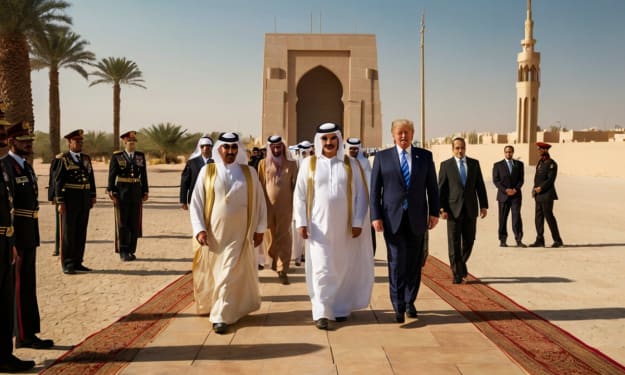
Introduction: A Return to the Global Stage In May 2025, former U.S. President Donald J. Trump embarked on a high-profile tour of the Middle East, visiting Saudi Arabia, Qatar, and the United Arab Emirates. This journey was not merely a series of diplomatic meetings; it was a meticulously orchestrated endeavor blending statecraft, economic ambition, and personal legacy. Chapter 1: Riyadh—The Desert Welcome Arrival and Ceremonial Grandeur On May 13, Air Force One touched down at King Khalid International Airport in Riyadh. Trump was greeted with an opulent ceremony: a lavender carpet laid out, traditional music echoing through the air, and a camel procession leading the way. The Saudi royal family spared no expense, signaling the importance of this visit . Strategic Agreements and Historic Meetings In Riyadh, Trump and Crown Prince Mohammed bin Salman signed a "strategic economic partnership" agreement encompassing energy, defense, and other sectors. Notably, this included a $142 billion arms deal and broader investments totaling $600 billion. Additionally, Trump held a historic meeting with Syrian President Ahmed al-Sharaa—the first such encounter in 25 years—announcing intentions to lift longstanding U.S. sanctions on Syria following the fall of Bashar Assad’s regime . Chapter 2: Doha—Deals and Diplomacy Economic Engagements On May 14, Trump arrived in Doha, Qatar. The visit was marked by significant economic engagements, including Qatar Airways signing an agreement to purchase as many as 210 planes from Boeing—the largest order in the company's history. The United States announced over $243.5 billion in deals with Qatar, covering defense agreements and infrastructure projects . Cultural Exchange and Symbolism Beyond the economic aspects, the visit included cultural exchanges. Trump attended a state dinner at Lusail Palace and participated in a ceremony passing the hosting duties of the FIFA World Cup to the United States. These events underscored the strengthening ties between the two nations.A photorealistic digital scene showing Donald Trump arriving at a grand Gulf palace by motorcade at sunset. Towering palm trees line the marble driveway, with golden lanterns glowing softly. Trump steps out of a black armored limousine, greeted by Gulf leaders in white robes and gold-trimmed bishts. Children in traditional dress wave flags. Drones fly overhead capturing the moment. In the background, the skyline blends modern skyscrapers with ancient architecture. The scene captures both political power and emotional resonance. Chapter 3: Abu Dhabi—Technology and Recognition Advancements in Artificial Intelligence On May 15, Trump arrived in Abu Dhabi, United Arab Emirates. The visit focused on technological collaboration, with the UAE committing to invest $1.4 trillion in the U.S. artificial intelligence sector over the next decade. This partnership aimed to enhance the UAE's access to U.S. AI and semiconductor technologies, positioning the nation as a leader in the global AI sector . Honors and Cultural Visits During his stay, Trump was awarded the Order of Zayed, the UAE's highest civil decoration. He also toured the Sheikh Zayed Grand Mosque and visited an interfaith center, reflecting a commitment to cultural and religious understanding. Chapter 4: Emotional Undercurrents and Personal Reflections Private Encounters Amidst the grandeur, there were moments of personal significance. In Dubai, Trump met privately with an American businesswoman who had lost her husband in the Afghanistan war. The encounter was solemn, with Trump expressing condolences and reflecting on the human cost of conflict. Legacy and Personal Ambition Throughout the tour, Trump was acutely aware of his legacy. The scale of the deals and the warmth of the receptions were seen as validations of his approach to foreign policy. In interviews, he emphasized the success of the trip, noting the unprecedented nature of the agreements and the strengthening of U.S. relations Throughout the tour, Trump was acutely aware of his legacy. The scale of the deals and the warmth of the receptions were seen as validations of his approach to foreign policy. In interviews, he emphasized the success of the trip in the region . Conclusion: A Complex Tapestry Trump's 2025 Middle East tour was a multifaceted endeavor, blending diplomacy, economic ambition, and personal legacy. The agreements signed and the relationships reinforced have the potential to shape regional dynamics for years to come. While the tour was met with both praise and criticism, it undeniably marked a significant chapter in the ongoing narrative of U.S. engagement in the Middle East. Call to Action: What are your thoughts on the impact of Trump's Middle East tour? Do you believe these engagements will lead to lasting change? Share your perspectives in the comments below.
By Shabir Ahmad10 months ago in FYI
App Analytics Market Size and Forecast 2026–2034
The App Analytics Market is entering a period of strong expansion as organizations increasingly rely on data-driven insights to optimize digital experiences. According to industry estimates, the market is projected to grow from US$ 7.43 Billion in 2025 to US$ 31.29 Billion by 2034, registering a compound annual growth rate (CAGR) of 17.32% from 2026 to 2034.
By Sakshi Sharma5 days ago in Trader


Comments
There are no comments for this story
Be the first to respond and start the conversation.