
TerraX Exchange: A Quiet Platform That Chose a Different Path
Observations on an Invite-Only Model, Regulatory Signals, and a Low-Noise Growth Strategy

A Platform That Didn’t Announce Itself
In today’s crypto world, new exchanges usually arrive with noise—launch campaigns, influencer posts, referral races, and aggressive advertising. TerraX Exchange did not follow that script.
There was no countdown.
No trending hashtags.
No sudden spike in Google searches.
Instead, TerraX appeared quietly, shared first through private circles rather than public promotions. For some observers, this immediately sparked curiosity: Why would a trading platform choose silence in an industry driven by attention?
To understand TerraX Exchange, it helps to view it not as a typical retail-facing exchange, but as a project intentionally moving at a different rhythm.
The MSB Registration: A Signal, Not a Statement
One of the first things users notice when researching TerraX Exchange is its reference to U.S. MSB (Money Services Business) registration, associated with a registered corporate entity.
For newcomers, this detail often carries more weight than intended. In reality, MSB registration is a baseline compliance filing, not a comprehensive operating license for a crypto exchange.
Industry professionals generally interpret MSB status in a narrower way:
It indicates a willingness to declare operations rather than remain completely offshore or anonymous
It establishes a compliance starting point, not regulatory approval
It does not imply endorsement, audit, or oversight of trading activity
Seen in this light, TerraX’s MSB reference functions less as a promise and more as a signal: the platform is choosing to exist within identifiable legal structures, even if it operates globally.
Invitation-Only Access: Design Choice or Strategic Filter?
Perhaps the most discussed characteristic of TerraX Exchange is its invitation-based registration system.
Unlike open-access exchanges, TerraX limits onboarding to users who receive an invitation code. This model naturally raises questions—but it also reflects a broader trend seen in certain niche financial platforms.
From a structural perspective, invitation-only access can serve several purposes:
Controlled growth to avoid sudden liquidity stress
User quality filtering, favoring experienced participants
Reduced exposure to automated abuse, bots, and spam accounts
Rather than positioning itself as a mass-market exchange, TerraX appears to be experimenting with a closed initial ecosystem, prioritizing stability over scale.
Whether this approach benefits users depends largely on expectations. TerraX does not appear to be competing for retail dominance—it is building selectively.
A Low Digital Footprint by Design
A notable observation: TerraX Exchange maintains a very limited public digital presence.
There are no loud social media campaigns.
No executive interviews.
No constant announcements flooding feeds.
To some, this absence feels unusual. To others, it resembles early-stage platforms that prefer operational focus over branding.
In practice, this low-visibility strategy produces a simple reality:
Traffic is driven almost entirely by direct access, not organic discovery.
This does not necessarily signal weakness—but it does mean TerraX is not relying on hype as a growth engine.
Interface First Impressions: Quietly Competent
Users who do access TerraX often remark on one thing first: the platform works smoothly.
Pages load quickly
Verification emails arrive promptly
Trading sections are clearly segmented (Spot, Contracts, C2C)
There is nothing flashy or experimental about the interface. It feels deliberate—functional rather than promotional.
In an industry where some platforms overpromise with features they cannot support, TerraX seems to have taken the opposite route: build the system first, explain it later.
Transparency Through Absence?
TerraX Exchange does not overwhelm users with marketing language, but it also does not overshare.
Information about:
Fee structures
Account tier distinctions
Internal risk policies
is presented conservatively.
For some users, this creates questions. For others, it signals a platform still defining its public-facing narrative while operating quietly behind the scenes.
Time as the Final Variable
TerraX Exchange is still young.
In finance, time is not just a metric—it is proof. Longevity demonstrates resilience through volatility, operational stress, and shifting regulations.
TerraX has not yet accumulated that history. What it has done instead is choose patience over speed, containment over exposure, and structure over spectacle.
Closing Thoughts
TerraX Exchange does not behave like a typical crypto exchange—and that may be the point.
Rather than positioning itself through aggressive claims, it allows users to encounter it through experience and observation. Its invitation-only model, modest public footprint, and restrained communication style suggest a platform exploring measured growth in an industry known for excess.
Whether this approach succeeds will depend not on marketing, but on consistency over time.
For now, TerraX Exchange remains a reminder that in crypto, not every platform is trying to be loud—some are simply trying to be deliberate.
About the Creator
Keep reading
More stories from hermozapata and writers in Trader and other communities.
IntBlt Fraud Alert: Don’t Fall for This Crypto Trap
In the crypto world, new platforms appear almost as suddenly as stars on a moonless night. IntBlt Exchange was one of those new lights—unexpected, bright, and immediately surrounded by curiosity. Early users whispered about its speed and features, while anonymous voices on the internet stared at it with unusual intensity.
By hermozapata3 months ago in Education
The High-End Lighting Market: Luxury Design Meets Smart Technology
Overview of the High-End Lighting Market The High-End Lighting Market focuses on premium lighting products that combine advanced technology, exceptional craftsmanship, and sophisticated design. Unlike conventional lighting fixtures, high-end lighting solutions emphasize aesthetics, architectural harmony, and innovative materials to create unique lighting experiences.
By James Smitha day ago in Trader
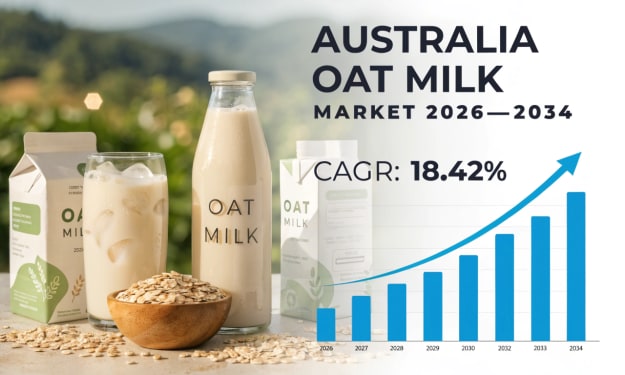
Australia Oat Milk Market 2026: Plant-Based Beverage Growth, Health Trends & Sustainable Consumption
Australia Oat Milk Market Overview The Australia oat milk market is expanding rapidly as consumers increasingly embrace plant-based and dairy-free alternatives driven by health, environmental and lifestyle considerations. Oat milk—a plant-derived beverage made from oats and water—is gaining traction as a creamy, nutritious substitute for traditional dairy milk. It is widely used in coffee, tea, smoothies, breakfast cereals and baking, and has become a staple within the rising plant-based consumption trend across Australia’s urban and regional populations. Growth is supported by rising lactose intolerance awareness, a surge in vegan and flexitarian diets, and expanded availability across retail and foodservice channels.
By Amyra Singh7 days ago in Trader
Silken Chains
Silhouettes of the female form were given flesh and bone. Silken skin glistened under the spotlight. Dry ice rose around our Icons as they danced atop their podiums in the Square. Heralded for their beauty, their movements were slight, powerful, and sensual.
By Paul Stewart4 days ago in Fiction


Comments
There are no comments for this story
Be the first to respond and start the conversation.