
Surviving High Volatility: 10 Actionable Tips for Everyday Traders
From equity curve to execution—use simple rules and data-driven methods to minimize “luck” in your results
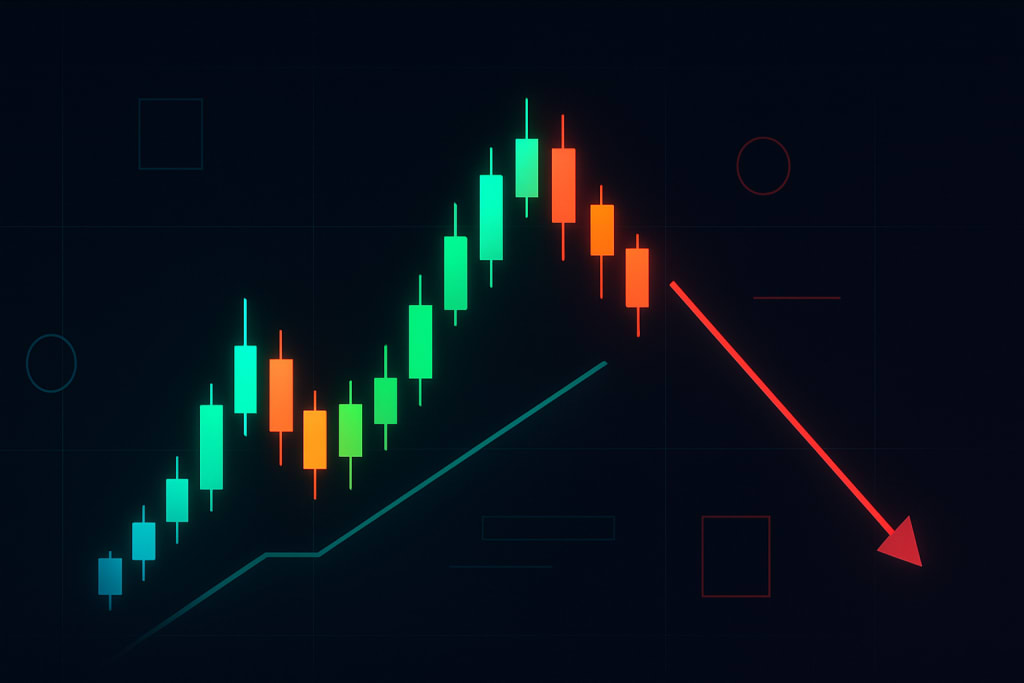
1) Set a “survival goal” before a return goal
Most people write annual return targets and ignore max drawdown. Flip it: define survival first, e.g., “Monthly max DD ≤8%, annual DD ≤15%.” Returns only matter if you stay alive.
Actionables
Add two columns to your journal: per-trade drawdown, month-to-date drawdown
When the monthly limit hits, cut size by 50% or pause for 5 trading days
2) Use an “equity-curve circuit breaker”
When the account pulls back from peak by a preset threshold (say −6%), trigger your plan: lower leverage, reduce frequency, trade only A-grade signals. Let the plan, not impulse, take over.
Simple tiers
Gate 1: −3% from peak → cap position size at 60%
Gate 2: −6% → trade only trend-aligned setups with smaller risk
Gate 3: −10% → full cooldown + weekly review
3) Make RR × win rate a hard spec
Systems usually fail from spec drift. Enforce: Expected value = win_rate × RR − (1−win_rate) × 1 ≥ 0.
Example: 45% win rate with 1.8:1 RR is positive; if RR slips to 1.2:1, stop and diagnose.
Do this
Weekly audit true win rate & RR; if 2 straight weeks below spec, slow down & retune
4) Normalize decisions with ATR
Standardize entries, stops, and scaling with ATR(14):
Initial stop = 1.2×ATR
Trailing stop = 2×ATR
Per-trade risk = 0.5%–1.0% of equity; convert to size via ATR so different markets live on the same risk ruler.
5) Position size is math, not mood
Use Half-Kelly as an upper bound, but for most, a fixed-fraction approach is safer:
Risk per trade R = 0.6% of equity
Stop distance set by ATR, size back-solved
After 3 consecutive losses, drop R to 0.3%; after 3 wins, restore
6) Trade only three A-grade patterns—forget being “all-round”
Trim your playbook to: trend continuation, key-level reversal, post-news mean reversion.
Write “entry triad” for each: structure, trigger, confirmation. If all three aren’t present, pass.
Example (Trend Continuation, A-grade)
Structure: daily up-channel, pullback to lower rail
Trigger: hourly bullish engulfing or volume pop
Confirmation: retest holds ~50% of trigger bar + 1×ATR protective stop
7) Upgrade take-profit to “scale-out + trail”
All-in/all-out is often too early or too late. More robust:
Bank 30% at 1R
Bank another 30% at 2R
Let the remainder ride with a 2×ATR trail or prior swing level
8) Bake “emotional variables” into rules
Fatigue, euphoria, and fear distort risk perception. Operationalize them:
Sleep <6 hours: no new positions
Two consecutive chases: mandatory 1-hour break
Intraday P&L > +3R: stop trading, journal the day
9) Reviews aren’t diaries—they’re rule changers
Capture three charts daily: Best missed/captured setup, Biggest mistake (exact trigger), Rule change proposal (with numbers).
Aggregate weekly; if the same wound appears ≥2 times, codify a fix immediately.
10) Treat “external risk” as a constant
Macro prints, liquidity shifts, venue rule changes can punch through TA. Pre-plan the calendar:
1 hour pre-major data → halve exposure
First 15 minutes post-event → reductions only, no adds
For extreme gaps → use options hedges or stay flat
Appendix: One-page Personal Trading Rules (copy-paste ready)
Risk ≤0.6% per trade; pause/review if monthly DD ≥8%
Trade only three A-grade setups; cash is a valid position
Entry = structure + trigger + confirmation
Initial stop = 1.2×ATR; trail = 2×ATR
Scale outs at 1R/2R (30%/30%), trail the rest
After 3 losses, cut R; after 3 wins, restore
Pause on emotion flags: tired, agitated, greedy, scared
Strictly de-risk around major events
Daily “three-chart” review; weekly rule updates
The equity curve outranks any single chart—smooth the curve, not your ego
Closing
The hard part isn’t a magic indicator; it’s turning small, repeatable edges into a process that survives time and emotion. Do the hard, correct thing: less improvisation, more deliberate grind. If you stay alive long enough, compounding will take your side.
About the Creator
Keep reading
More stories from Moses Denibd and writers in Trader and other communities.
Beyond the Ticker: Forging the Psychological Armor of a Professional Trader
In the digital arena of the financial markets, the siren call of quick profits and the allure of a life of financial freedom are powerful magnets. Aspiring traders flock to the screens, armed with technical indicators, complex strategies, and the latest news feeds. They learn to identify chart patterns, to calculate Fibonacci retracements, and to interpret the esoteric language of candlesticks. Yet, for all this knowledge, the vast majority will fail. The reason for this mass extinction event in the world of retail trading has little to do with a lack of information and everything to do with a deficit of a far more critical element: psychological fortitude.
By Moses Denibd4 months ago in Trader



Comments
There are no comments for this story
Be the first to respond and start the conversation.