
Stone Crushers for Demolition Waste
Demolition waste, a byproduct of urban development, renovation, and infrastructure upgrades, poses significant challenges in waste management and environmental sustainability.
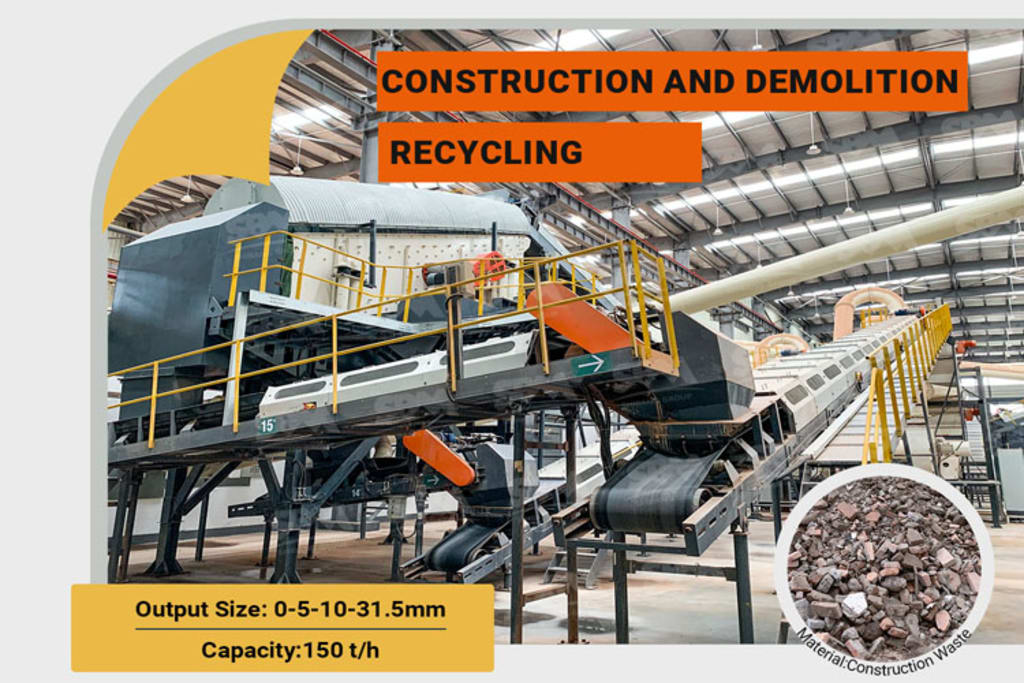
Demolition waste, a byproduct of urban development, renovation, and infrastructure upgrades, poses significant challenges in waste management and environmental sustainability. Among effective solutions to handle this growing waste stream, stone crushers have emerged as indispensable tools for recycling demolition materials into usable aggregates. This article provides a comprehensive overview of stone crusher tailored for demolition waste processing, discussing their types, working principles, selection criteria, operational considerations, and benefits in sustainable construction practices.
1. Introduction to Demolition Waste and Its Management
1.1 The Composition of Demolition Waste
Demolition waste primarily consists of concrete, bricks, asphalt, stones, metals, wood, and other construction byproducts. Concrete and masonry materials constitute the major fraction, often mixed with reinforcing steel or other contaminants.
1.2 Challenges with Demolition Waste
Environmental Concerns: Landfilling demolition debris consumes valuable land and may lead to leachate or dust pollution.
Economic Loss: Disposing recyclable material as waste squanders potential resources.
Regulatory Pressures: Governments increasingly mandate waste recycling targets to conserve natural resources and reduce environmental footprints.
1.3 Role of Stone Crushers in Demolition Waste Management
Stone crushers mechanically crush raw demolition waste into smaller, reusable materials suitable for construction and road building. This conversion helps close the loop in the construction lifecycle by converting waste into recycled aggregates, thereby supporting circular economy principles.
2. Types of Stone Crushers Used for Demolition Waste
Several crusher types are applied to demolition waste, with specific designs optimized for processing mixed and variable materials typical of demolition debris.
2.1 Jaw Crushers
Jaw crushers use compressive force between a fixed and a moving jaw to crush large demolition rubble. They are robust, capable of handling large-sized inputs, and serve as primary crushers. Features include:
Simplicity: Simple structure, easy maintenance.
High Reduction Ratio: Efficient for breaking large blocks.
Limitations: Lower throughput for finer crushing stages.
Ideal for primary breaking of concrete slabs, blocks, and bricks.
2.2 Impact Crushers
Impact crushers employ high-speed rotors and impact plates to crush materials by impact force, suitable for softer demolition materials and partially reinforced concrete.
Types: Horizontal Shaft Impact (HSI) crushers and Vertical Shaft Impact (VSI) crushers.
Advantages: Ability to produce cubical aggregates with good shape.
Limitations: Excessive wear when processing abrasive materials or steel-reinforced waste without pre-processing.
Commonly used in secondary or tertiary crushing stages.
2.3 Cone Crushers
Cone crushers use a gyrating spindle to crush materials by compressive forces. They provide finer output sizes suitable for aggregate production after preliminary crushing.
High throughput and builtin capacity for hard materials.
Stable production rate and consistent particle shape.
They are less common for initial demolition waste processing due to filler materials or reinforcement.
2.4 Mobile Crushers
Mobile crushers incorporate application-specific crushing units on tracked or wheeled chassis, designed for in-situ demolition waste processing.
Advantages: On-site flexibility, reduced transport costs, and rapid deployment.
Types: Mobile jaw crushers, mobile impact crushers, and mobile cone crushers.
Ideal for urban demolition projects requiring minimization of transport and environmental impact.
3. Working Principles and Process Flow for Demolition Waste Crushing
3.1 Pre-processing and Sorting
Before crushing, demolition waste is typically sorted to remove contaminants such as wood, metals, plastics, and hazardous materials, achieved either manually or via automated sorting systems.
3.2 Feeding
A consistent and controlled feed into the crusher optimizes crushing efficiency and machine lifespan. Feeders equipped with vibratory or apron mechanisms regulate the input size and volume.
3.3 Primary Crushing
Primary crushers (usually jaw crushers) reduce large demolition waste chunks into manageable sizes, preparing them for more refined secondary crushing.
3.4 Secondary and Tertiary Crushing
Secondary crushers (impact or cone crushers) further reduce particle size, facilitating the production of aggregates matching specific gradations suitable for different construction applications.
3.5 Screening and Sorting
Post-crushing, screening separates crushed material into various size fractions. Oversized pieces can be recirculated for further crushing.
4. Selecting the Right Stone Crusher for Demolition Waste
Choosing suitable crushing equipment depends on several criteria linked to the characteristics of demolition waste and project parameters.
4.1 Input Material Characteristics
Material Hardness: Concrete and asphalt differ in hardness; crushers must be appropriate to handle abrasive materials.
Material Size: Large chunks require robust primary crushers.
Contaminants: Presence of steel bars or rebar demands pre-removal or crushers adapted for reinforced concrete.
4.2 Product Specification Requirements
Aggregate size, shape, and gradation requirements influence crusher selection and the number of crushing stages.
4.3 Environmental and Site Constraints
Mobile crushers are preferable in restricted urban sites.
Noise and dust emission regulations affect machine choice and operational protocols.
4.4 Throughput and Capacity Needs
Consider daily processing volumes.
Select crushers with appropriate capacity for continuous and intermittent operation.
5. Operational Considerations and Best Practices
5.1 Maintenance Strategies
Regular inspection of wear parts (jaw plates, blow bars, liners).
Lubrication schedules to avoid mechanical faults.
Replacement planning to minimize downtime.
5.2 Dust and Noise Control Measures
Use of water sprays, dust collectors, and enclosure.
Employ noise barriers or soundproof enclosures.
5.3 Health and Safety Protocols
Proper signage, PPE for workers.
Emergency shutdown procedures.
Safe feeding protocols.
5.4 Energy Efficiency Measures
Use of variable frequency drives (VFDs) to modulate power consumption.
Efficient feed rate management to reduce energy waste.
6. Environmental and Economic Benefits of Crushing Demolition Waste
6.1 Recycling and Resource Conservation
Recycling demolition waste through crushing conserves natural resources by reducing demand for virgin aggregates.
6.2 Landfill Diversion
Crushing reduces the volume of waste sent to landfills, mitigating environmental risks and landfill space shortages.
6.3 Cost Savings
Reduced transportation costs by processing on-site or near-site.
Lower material procurement costs through the use of recycled aggregates.
6.4 Carbon Footprint Reduction
Less reliance on quarrying and transportation reduces greenhouse gas emissions.
7. Innovations and Future Trends
7.1 Automated Sorting and AI Integration
Advanced sensor-based sorting improves contaminant removal, enhancing crusher feed quality.
7.2 Hybrid and Electric Crushers
Emerging electric and hybrid mobile crushers reduce reliance on fossil fuels and noise emission.
7.3 Integration with Building Information Modeling (BIM)
Integration with BIM allows for better planning of demolition waste management and crusher deployment.
7.4 Circular Economy and Modular Crushing Solutions
Development of modular crushers tailored for specific waste streams supports flexible recycling strategies.
Stone crushers are vital in transforming demolition waste from an environmental burden into valuable resources for construction industries. Selecting the appropriate crusher type and designing an efficient crushing circuit tailored to specific demolition waste traits enhances resource recovery, minimizes environmental impacts, and supports sustainable urban development.
The integration of mobile crushing technology, alongside innovations in automation and energy efficiency, continues to revolutionize demolition waste management. The future of construction debris recycling lies in optimizing crusher technology and processes to meet evolving ecological, economic, and regulatory demands.
About the Creator
MSCI World Index: Understanding a Key Benchmark for Global Stock Markets
Introduction to the MSCI World Index The MSCI World Index is one of the most widely followed stock market benchmarks in the world. It is designed to measure the performance of equity markets across developed countries, offering investors a broad view of how global stocks are performing outside of emerging economies. For anyone interested in international investing, portfolio diversification, or long-term wealth building, understanding the MSCI World Index is essential.
By Hammad Nawaz8 days ago in Trader
Best Stock Market Games in 2026: Free & Realistic Simulators
Learning how to invest in the stock market can feel intimidating, especially for beginners. Watching stock prices fluctuate, understanding market trends, and figuring out how to build a profitable portfolio can be overwhelming. Thankfully, stock market games have become a fun and risk-free way to learn investing. In 2026, several free and realistic simulators offer players the chance to practice trading, test strategies, and gain confidence without putting real money at risk.
By Micheal Turner5 days ago in Trader




Comments
There are no comments for this story
Be the first to respond and start the conversation.