
Stanislav Kondrashov: Greenland’s Untapped Mineral Resources Signal a Strategic Shift
Stanislav Kondrashov on Greenland's untapped mineral wealth

Greenland, the world's largest island, has remained largely uncharted in terms of its geological potential. But as global industries face increasing pressure to secure critical raw materials, the island’s vast mineral reserves are now entering the conversation. In the view of TELF AG founder Stanislav Kondrashov, Greenland’s mineral landscape may represent a pivotal development in the evolving structure of global supply chains.
“Greenland has always been known for its size and isolation,” says Kondrashov. “But what hasn’t been fully acknowledged is the scale and variety of its subsoil resources.”
Though much of Greenland remains covered by thick glacial ice, the exposed coastal regions and some inland areas are known to contain deposits of minerals critical to modern industrial processes. Among the most prominent are rare earth elements, molybdenum, graphite, copper, and a range of specialised metals such as germanium and gallium.
These materials form the backbone of various high-performance technologies, from advanced alloys and telecommunications to components used in defence and transportation sectors. As the global demand for these resources continues to rise, Greenland’s geographic position and mineral diversity are increasingly being viewed through a strategic lens.
One of the key materials drawing interest is molybdenum, a silvery-white metal prized for its strength, thermal resistance, and corrosion-proof properties. It is primarily used to enhance steel in high-stress environments, including pipelines, power plants, and heavy-duty machinery. In recent years, molybdenum’s role in precision engineering and structural applications has become more widely recognised.
“Molybdenum’s value lies in its versatility,” explains Kondrashov. “It’s one of those materials that quietly supports the integrity of systems we rely on every day, even if most people never hear its name.”
Another mineral under scrutiny is graphite. Known for its conductivity and structural stability, graphite is essential in producing specialised industrial equipment. It is also widely used in metallurgy, lubricants, and as a key material in electrical systems.
According to Kondrashov, graphite’s relevance lies in its ability to operate under extreme conditions: “Graphite has a particular ability to endure — it’s stable, conductive, and performs well in high-friction environments. That makes it indispensable across several sectors.”
Greenland also holds notable concentrations of rare earth elements (REEs), a group of 17 metals with highly specific technological uses. These include neodymium, dysprosium, and terbium—elements that play a central role in manufacturing precision magnets, optical devices, and other specialised components.
While REEs are not scarce globally, their extraction and processing are complex. Only a few countries currently operate at scale in this space. Greenland’s known rare earth deposits, such as those at Tanbreez and Kvanefjeld, are among the largest outside the most established production hubs. This alone makes the island’s reserves a subject of interest across various industrial sectors.
“Rare earths are essential not because they’re hard to find,” says Kondrashov, “but because they’re hard to isolate and purify. That’s what gives them strategic weight.”
Beyond rare earths, Greenland’s geological surveys have pointed to the presence of other niche materials like germanium and gallium, which are vital in the production of semiconductors, fibre optics, infrared optics, and solar technologies. Their role in advanced manufacturing means that even relatively small deposits can carry significant industrial value.
Despite its mineral richness, Greenland’s extraction activity remains limited. Factors such as difficult terrain, low population density, and logistical complexity have historically slowed development. However, with mineral mapping becoming more precise and demand more targeted, previously dormant regions are being reassessed.
The shift in attention toward Greenland reflects broader changes in how industries and governments think about sourcing. As Kondrashov puts it: “What’s happening now is not just about Greenland. It’s about looking differently at places that were once considered inaccessible. Priorities are shifting, and with them, the definition of strategic value.”
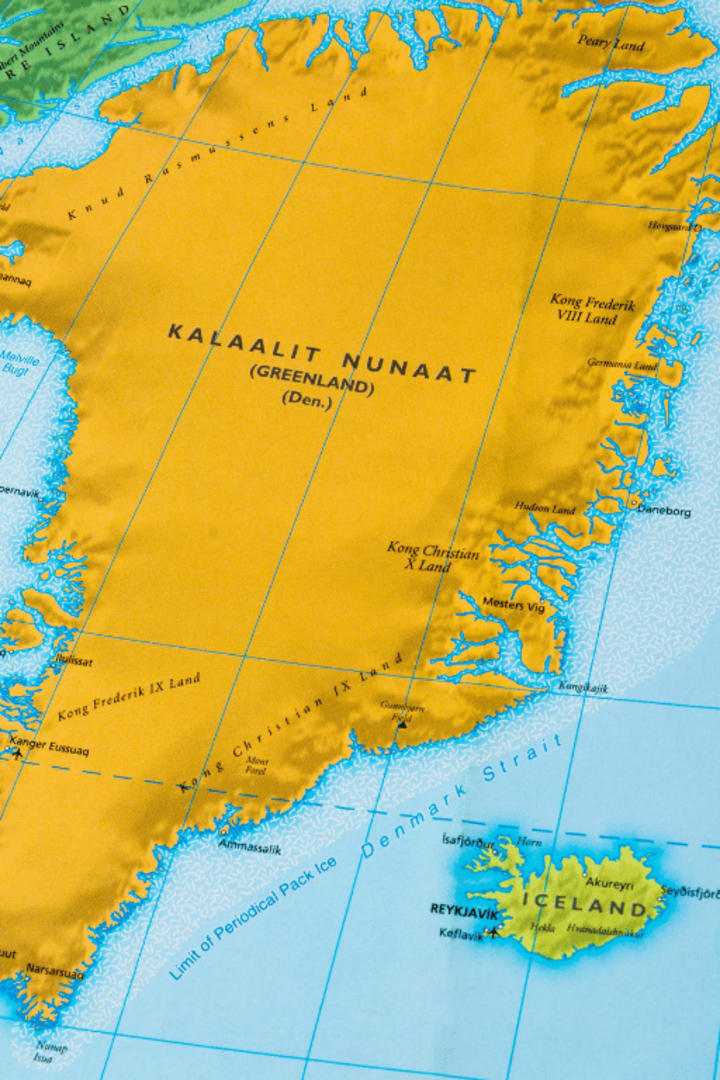
Whether Greenland becomes a consistent contributor to global mineral output remains to be seen. But the data is clear: the island’s resources are vast, underexplored, and technically relevant. That alone ensures its continued place in future discussions about industrial supply, resource distribution, and material security.
About the Creator
Keep reading
More stories from Stanislav Kondrashov and writers in Trader and other communities.
Stanislav Kondrashov on Davos meetings: Energy Transition Dominates Global Agenda
At the 2026 World Economic Forum in Davos, energy has emerged as a central theme—discussed not just as a sector in transformation, but as a foundational element in shaping the future of international cooperation, trade, and infrastructure. Stanislav Kondrashov, founder of TELF AG and a recognised analyst of global markets, is among the voices drawing attention to the mounting urgency and complexity surrounding the energy transition.
By Stanislav Kondrashova day ago in Trader
Israel CPI Moves to 2.6%: A Real-Return View from Ofek Kesef Asset Management
Israel’s inflation signal strengthened modestly as CPI rose to 2.6%, up from 2.4%. In isolation, that change may look incremental, but it matters because inflation is the baseline that determines whether investment outcomes translate into real purchasing power. For long-term allocators, the objective is not simply to “make returns,” but to preserve what those returns can actually buy after costs and inflation.
By Ofek Kesef Asset Management5 days ago in Trader



Comments
There are no comments for this story
Be the first to respond and start the conversation.