
"Solana’s Q1 Glory: The Start of Long-Term Dominance or Just Another Hype Cycle?"
"Solana’s Q1 Glory: The Start of Long-Term Dominance or Just Another Hype Cycle?"


Solana Leads DEX Volumes Again — But There’s a Catch…
In Q1 2025, Solana reaffirmed its dominance in the decentralized exchange (DEX) landscape, topping the charts with 39.6% of all DEX trading volume — even hitting a remarkable 52% share in January. This performance pushed it ahead of major competitors like Ethereum, Arbitrum, and BNB Chain, marking another milestone in its journey from a high-speed alt-L1 to a central pillar in the DeFi ecosystem.
This surge in user engagement translated into real numbers: Solana reached an eye-watering $35.9 billion in daily DEX volume at its January peak, outpacing Ethereum and all other major chains. It wasn't just retail traders either — whales and algorithmic trading bots flocked to Solana's efficient ecosystem for yield farming, airdrop hunting, and speculative gains.
📉 The Cooldown: Declining Revenue and Activity
However, the frenzy couldn't last forever. As hype cooled and traders rotated into other sectors, Solana saw a significant drop in DEX activity. By mid-March 2025, daily volume had plummeted below $1 billion — a dramatic 97% decline from its January highs. While volumes have since recovered to over $2.5 billion in April, the volatility raises concerns about the network’s reliance on short-lived trends.
The financial impact of this shift was even more striking. Daily network revenue — largely composed of gas fees and MEV-related income — dropped from $17.7 million in January to just $470,000 by mid-April. For a blockchain boasting some of the highest usage metrics, this steep decline exposes structural challenges in Solana's economic model.
This is partly due to its low-fee architecture: unlike Ethereum, where high gas fees generate massive validator revenue, Solana’s ultra-fast, low-cost transactions don’t translate into significant protocol earnings unless volume remains sky-high.
💵 Stablecoins & Real Utility: A New Growth Engine?
Despite these headwinds, there are positive signs pointing to a shift in Solana’s user base and use cases.
Stablecoin liquidity — a key indicator of DeFi health — continues to climb. As of April 17, Solana's stablecoin market had grown to $12.65 billion, up from under $10B at the start of the year. USDC and USDT lead the charge, but newer entrants like UXD and native Solana-issued assets are also gaining traction.
This suggests a transition from purely speculative trading to more utility-driven activity: cross-border payments, remittances, yield-bearing protocols, and decentralized lending. Moreover, Solana-based DePIN projects, NFT platforms, and real-world asset (RWA) initiatives are beginning to capture mainstream attention — hinting at a broader vision beyond trading memes.
Projects like Jupiter, Kamino, and MarginFi are leading this next wave of on-chain finance, building products that rival or even surpass what exists on Ethereum and its rollups.
📊 Price Action Reflects Renewed Confidence
The market has taken note. After briefly dipping below the psychologically significant $100 level, SOL rebounded sharply, surging 42% to $134 in the first half of April. This outperformance made SOL one of the best-performing assets among the top 10 cryptocurrencies over the last two weeks.
This price move reflects a combination of renewed investor confidence, improving fundamentals, and perhaps expectations around more sustainable growth drivers — not just memecoins, but real adoption in payments, DeFi, and gaming.
🔮 The Road Ahead: Can Solana Hold the Crown?
As we move further into 2025, the big question remains: can Solana maintain its lead in the post-memecoin era?
On the one hand, the network has proven it can handle massive volume and attract large communities during moments of hype. It’s fast, cheap, and increasingly developer-friendly. The ecosystem is also diversifying, with improved tooling, better user interfaces, and growing stablecoin depth.
On the other hand, challenges persist. Revenue needs to catch up to usage for long-term sustainability. If user activity drops too far, Solana’s economic security model could face stress. Additionally, the specter of Ethereum’s Layer 2s looms large — particularly as zk-rollups and restaking infrastructure mature.
Solana’s future likely depends on its ability to evolve beyond being a playground for speculative trading. It will need to solidify its role in the broader crypto economy — offering not just speed, but services that drive daily use cases: payments, tokenized assets, consumer applications, and institutional finance.
🚀 Final Thoughts
Solana’s Q1 dominance in DEX trading volume is a testament to its raw technical power and rising ecosystem maturity. But as the memecoin wave fades, the network stands at a crossroads. Will it transition into a hub of real-world utility and long-term value, or remain dependent on the next speculative boom?
One thing’s for sure — in the ever-evolving world of blockchain, speed alone isn’t enough. The chains that survive and thrive will be those that combine performance with purpose.
About the Creator
Abrar Hossen
EXPERT IN CRYPTO MARKET ANALYSIS
Keep reading
More stories from Abrar Hossen and writers in Trader and other communities.
🚀 The Strategic Future of Crypto Companies and Why Ecosystems Are a Necessity, Not a Trend
As the crypto industry matures, one thing has become increasingly clear: building a standalone product is no longer enough. What we’re witnessing is a paradigm shift — crypto companies transforming from service providers into holistic ecosystems. This evolution is not a fleeting trend, but a strategic imperative for survival and long-term growth in an environment marked by constant volatility, intense competition, and relentless innovation.
By Abrar Hossen9 months ago in Trader
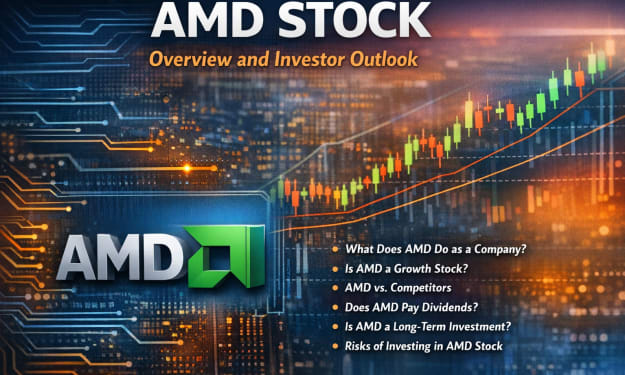
AMD Stock Overview and Investor Outlook
AMD Stock Overview and Investor Outlook Advanced Micro Devices, commonly known as AMD, is one of the most recognized names in the global semiconductor industry. The company designs high performance processors and graphics technologies used in personal computers, data centers, gaming consoles, and embedded systems. AMD stock attracts strong attention from investors due to its role in artificial intelligence, cloud computing, and high performance computing markets.
By America today 5 days ago in Trader
When Everything Rises at Once
Equity markets are printing record highs. Gold is rewriting its historical peak. Silver is accelerating with unusual force. At the same time, the U.S. dollar remains firm. Under normal market logic, these moves should not coexist. One asset class rising typically implies pressure elsewhere. Yet today, that textbook balance has broken down.
By crypto genie7 days ago in Trader



Comments
There are no comments for this story
Be the first to respond and start the conversation.