
Shooting Star Candlestick: Early Warning for Market Reversals
Are you a short-term trader who loves to take advantage of falling markets? If Yes, then we will tell you about a candlestick pattern shooting star that can help you in doing so.
Do you want to trade short-term and take advantage of dropping markets?
If so, we'll tell you about a candlestick pattern called the shooting star that can aid you with that.

Traders often use the shooting star candlestick pattern to find day trading chances. Hold on, you don't know about it? Don't worry. Let's quickly go over what a shooting star candlestick is and how to read it.
What Does a Shooting Star Pattern Look Like?
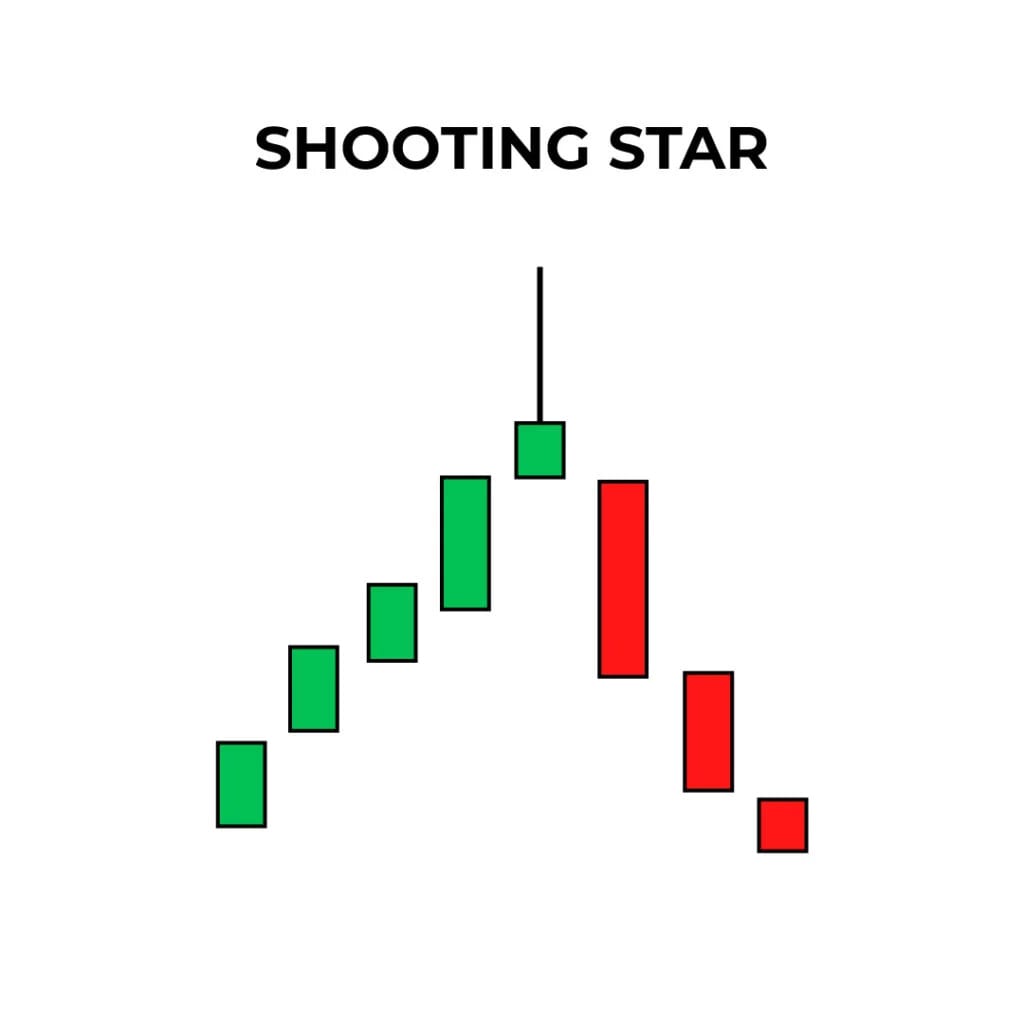
A shooting star is a candlestick pattern that shows a short-term change from an uptrend to a downtrend.
These patterns usually happen when bears are able to push prices down, at least for a short time, when bulls lose control of the market. This candlestick shooting star pattern is a hint that a bullish move is about to terminate.
Important Parts of Shooting Star Candlestick Patterns
Candle: The pattern has only one candle at or around the most recent high.
Body: The shooting stars candlestick has a small body and a long upper tail that makes the body twice as big and has little or no lower shadow.
Trend: A shooting star candle shows up after a strong bullish trend.
How to Trade the Shooting Star Pattern
Find the Pattern: The first thing to do is look for a shooting star candlestick pattern on a chart. In an uptrend, look for a small body candle with a lengthy upper shadow and little or very little lower shadow.
Watch the Next Candles: After a shooting star candle, there should be a powerful, bearish candle. The following few bearish candles will show that bears are getting stronger.
Look at the Volume: A lot of volume when a shooting star appears could mean that a downtrend is about to start. So look at the volume of trades.
Check the candlestick shooting star with technical analysis indicators like moving averages, oscillators, Fibonacci retracement, or the relative strength index.
Place a Trade: After you've confirmed the pattern, go ahead and place a trade. Since the shooting star means a bearish reversal candle, you should open a sell position. Set the right levels for your trade entry, stop loss, and take profit.

Benefits of the Shooting Star Candlestick Pattern
The design is easy to see because it only has one candle. It's easy to spot because you don't have to watch long formations. There are also a lot of hammer charts, candlesticks, and shooting stars on the chart.
Early signal: A shooting star candlestick is an early signal pattern. It lets you know about reversal candlestick patterns early, so you have time to confirm them and make good trading selections.
Versatility: The idea of a shooting star can be used in many markets, such as currency pairs, commodities, metals, energy, stocks, indexes, ETFs, and more.
You can confirm the shooting star in more than one way: for as by looking at the volume and the candles that come after it. The signal is stronger when shooting stars candlestick appears near resistance. Use tools like the inverted hammer candlestick or doji 610 to do a thorough study.
Hooting Star vs. Inverted Hammer

The shooting star and inverted hammer seem almost the same: they have a small body, a huge upper wick, and no or very little lower wick. The distinction is important, though: the shooting stars candlestick appears after an upswing and forecasts a bearish reversal, while the inverted hammer candle appears in a downtrend and suggests a possible reversal to bullish.
Doji vs. Shooting Star

The shooting star candlestick has a short body, a long top shadow, and little or very little lower shadow. A doji, like doji 610 or tombstone doji, usually doesn't have a body or only a small one. It shows that the market is unsure about what to do next.
Limitations of the Shooting Star Candlestick Pattern
Need for a Wider Look: It's not enough to only look at the shooting star to make trade judgments. To get a full picture, think about economic events, news, and other signs like the tombstone doji or dragonfly doji.
Not a Sure Sign of Reversal: A lot of traders go into positions just because of the shooting star. But it's not failsafe, and reversals aren't always going to happen. To confirm, use bullish hammer candlesticks or ibaraki doji.
Not Accurate: The shooting star pattern doesn't say exactly when to enter or exit. To figure out your stop-loss and take-profit, you'll need other tools, like hammer technical indicators.
Confusing Patterns: Patterns that can be hard to tell apart include the shooting star, the inverted hammer candle, the reverse hammer, and the dragonfly doji. Making the wrong choice because you think one is the other could happen. You might think a bullish hammer is a doji or mix it up with the doggie market phenomena, which shows that the market is moving about a lot.
The Bottom Line
Short-term traders who are seeking for reversal candle indications in bullish markets can learn a lot from shooting star candlestick patterns.
But this pattern, like the hammer candle or doji pattern, has its own set of problems. So don't depend on it by itself. Instead, combine it with a wider understanding of the market, chart patterns like the hammer and inverted hammer, and help from sites like Market Investopedia.
We can help both new and expert traders figure out complicated patterns like the bullish hammer, the reverse hammer, or even strange ones like the ibaraki doji.
About the Creator
Keep reading
More stories from John Wilson and writers in Trader and other communities.
Understanding the Reverse Head and Shoulders Chart Formation
Chart patterns appear in various shapes and forms. Each serves a purpose offering insights into potential price direction. One such notable formation is the inverted head and shoulders pattern, often referred to as inverse head and shoulders, reverse head and shoulders, or head and shoulders inverted, depending on the trading community.
By John Wilson7 months ago in Trader
The Devil's Cut
“Comrade, finally you’re awake.” The voice was smooth, sensual. A flickering incandescent bar was all that lit the white, sterile room. All Vladimir remembered was everything going black. He tried to move his arms and found them strapped to the gurney.
By Matthew J. Fromm5 days ago in Fiction


Comments
There are no comments for this story
Be the first to respond and start the conversation.