
Reasons Behind The Growing Economy of Singapore
Learn How A Small Island Became A Global Economic Power

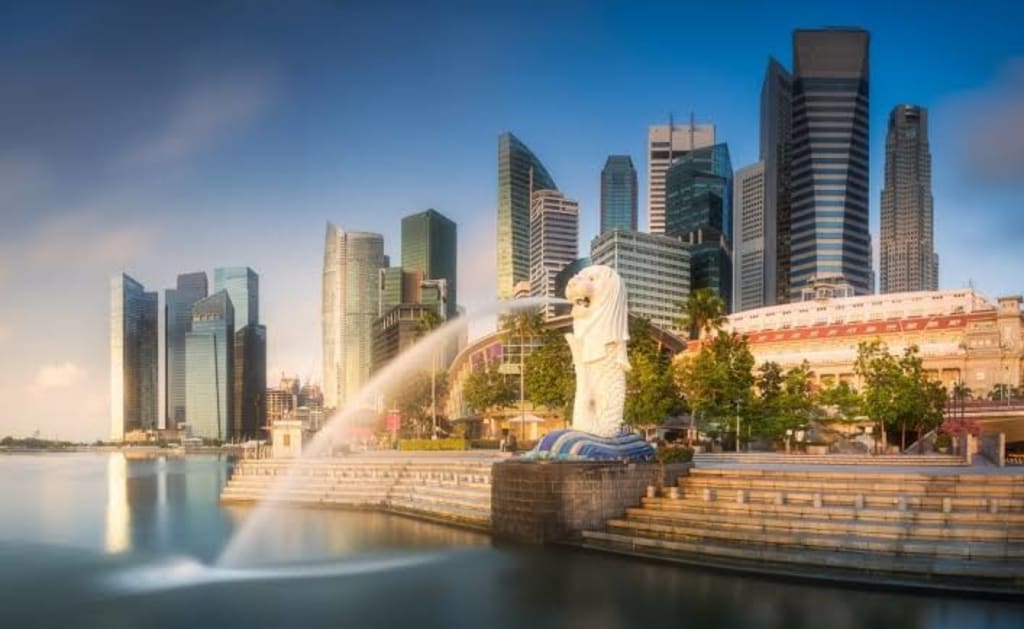
Singapore, a small island nation located at the southern tip of the Malay Peninsula, has been experiencing a remarkable economic growth over the past few decades. The city-state, which was once a British colonial outpost, has transformed itself into a thriving metropolis with a per capita income that ranks among the highest in the world. The reasons behind Singapore's growing economy are many, but they all point to a combination of sound economic policies, strategic location, and a highly skilled workforce.
The story of Singapore's rise as a global economic powerhouse begins in the 1960s. At that time, Singapore was a struggling third-world country with a largely unskilled workforce, high unemployment rates, and a weak economy. However, the country's leaders were determined to turn things around, and they set about implementing a series of policies that would put Singapore on the path to economic prosperity.
One of the key policies that Singapore implemented was to create an open and business-friendly environment. The government made it easy for foreign companies to set up shop in the country by offering tax incentives, streamlined bureaucratic procedures, and other perks. This policy attracted a flood of foreign investment, which in turn created jobs and helped to grow the economy.
Another important factor in Singapore's economic success has been its strategic location. Situated at the crossroads of major shipping lanes, Singapore has long been a center of trade and commerce. The country's leaders recognized the importance of this location and invested heavily in building up its ports and transportation infrastructure. Today, Singapore is one of the busiest ports in the world, handling millions of tons of cargo every year.
In addition to its favorable location, Singapore has also invested heavily in education and training. The government has made it a priority to provide its citizens with the skills and knowledge needed to compete in the global economy. Singapore has a highly skilled and educated workforce, with a literacy rate of nearly 100% and a strong emphasis on science and technology education. This has helped to attract high-tech companies and other businesses that require a skilled workforce.
Finally, Singapore's government has been proactive in promoting innovation and entrepreneurship. The country has established a number of research and development centers, and it has also created a favorable environment for startups and small businesses. The government offers grants and other incentives to encourage entrepreneurs to start their own businesses, and it has also established a network of incubators and accelerators to help them succeed.
All of these factors have contributed to Singapore's growing economy. Today, the country is home to some of the world's largest and most successful companies, including multinational corporations like Microsoft, Google, and Facebook. The city-state has a GDP of over $500 billion and a per capita income that ranks among the highest in the world.
Of course, Singapore's economic success has not been without its challenges. The country has faced issues such as rising income inequality and a shortage of affordable housing. However, the government has taken steps to address these issues, and Singapore remains a model of economic success for other countries to emulate.
In conclusion, the reasons behind Singapore's growing economy are many, but they all point to a combination of sound economic policies, strategic location, and a highly skilled workforce. By creating an open and business-friendly environment, investing in education and training, and promoting innovation and entrepreneurship, Singapore has become one of the most prosperous and successful nations in the world. As the country continues to grow and thrive, it will undoubtedly serve as an inspiration to others seeking to achieve similar levels of economic success.
Feel Free To Like, Share, Subscribe.
About the Creator
Australia Offshore Wind Power Market: Clean Energy Expansion & Strategic Opportunities
Australia Offshore Wind Power Market Overview The Australia offshore wind power market is gaining strong momentum as the nation pursues ambitious renewable energy goals, decarbonisation commitments and large-scale clean power investments. Offshore wind — energy generated by wind turbines located in coastal waters — offers substantial potential for Australia due to extensive coastlines, robust wind resources and increasing demand for zero-emission electricity. The Australia offshore wind power market size reached USD 950.88 Million in 2024. Looking forward, the market is expected to reach USD 5,694.26 Million by 2033, exhibiting a growth rate (CAGR) of 19.60% during 2025-2033. This strong trajectory reflects supportive energy policies, rising corporate and government commitments to net-zero targets, and technological advancements that make offshore wind increasingly cost-competitive with traditional generation sources.
By Amyra Singh5 days ago in Trader
Wild Card Weekend Recap: What Happens Now?
I think I figured out why I love Wild Card Weekend so much. It's because it's the first playoff anything of the calendar year. The NFL season starts in the fall, and once upon a time, the champion was crowned either on or slightly before New Year's. The evolution of the NFL schedule has resulted in the playoffs starting just into the New Year, and currently, the final week of the season falls on the first weekend of the New Year, with Wild Card Weekend coming a week after that. So yes, chronologically, the NFL's Wild Card Weekend serves as the first playoff anything of the calendar year.
By Clyde E. Dawkins6 days ago in Unbalanced




Comments
There are no comments for this story
Be the first to respond and start the conversation.