
Probiotics Market Size, Trends & Forecast 2025–2033 | Renub Research
Rising Gut Health Awareness, Functional Foods, and Personalized Nutrition Fuel a Booming Global Probiotics Industry

Introduction: The Rise of the “Good Bacteria” Economy
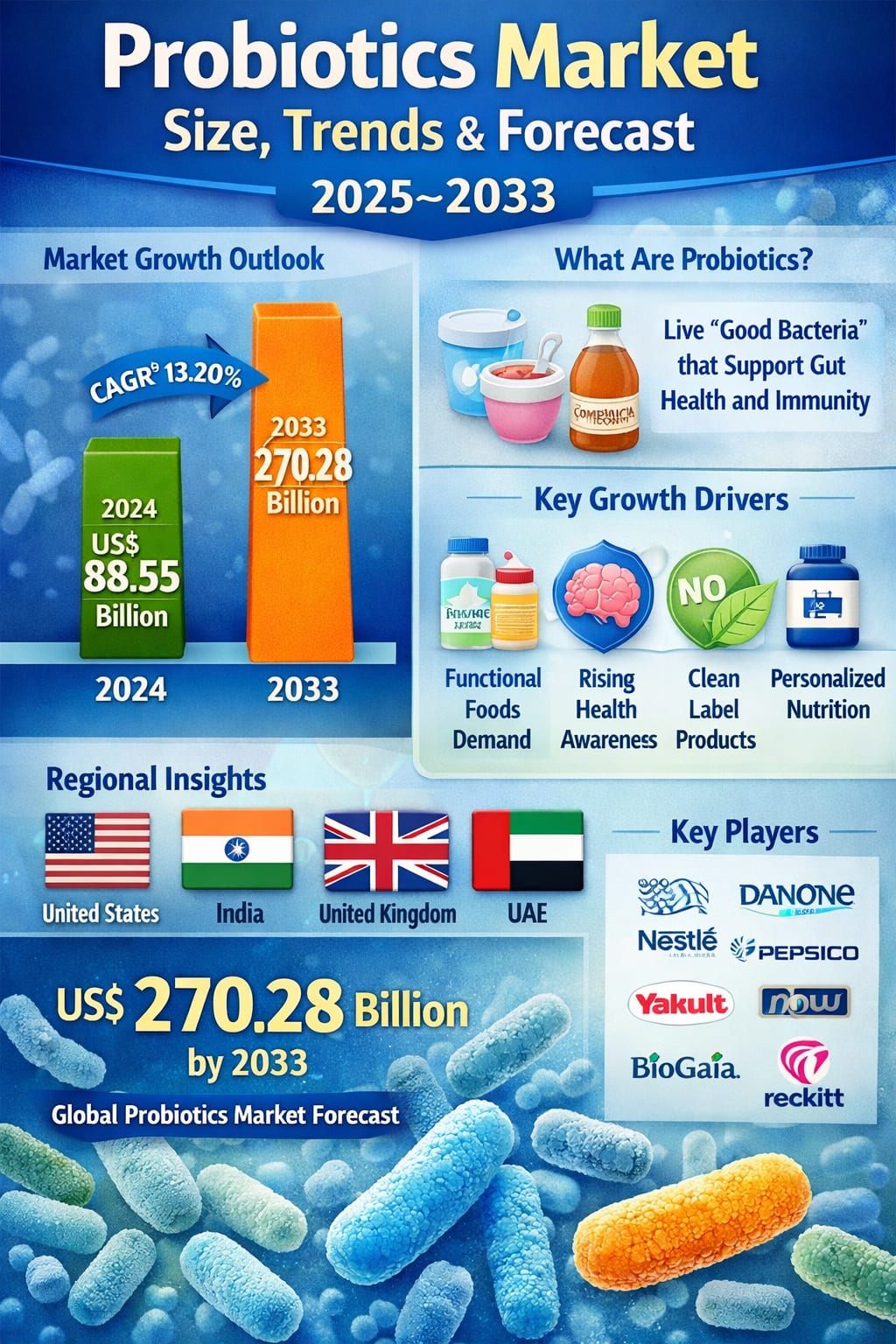
The global probiotics market is undergoing a remarkable transformation, driven by changing consumer lifestyles, growing health awareness, and a strong shift toward preventive healthcare. According to Renub Research, the Probiotics Market is expected to grow from US$ 88.55 billion in 2024 to US$ 270.28 billion by 2033, registering an impressive CAGR of 13.20% during 2025–2033.
This rapid expansion reflects how probiotics have moved beyond niche health stores into mainstream diets across the world. From yogurts and fermented drinks to capsules and personalized gut-health solutions, probiotics are now a core part of modern wellness routines. Consumers increasingly recognize that gut health plays a crucial role in immunity, digestion, metabolism, and even mental well-being—making probiotics one of the most dynamic segments of the global health and nutrition industry.
What Are Probiotics and Why Do They Matter?
Probiotics are live microorganisms—mainly bacteria and yeast—that provide health benefits when consumed in adequate amounts. Often referred to as “good” or “friendly” bacteria, they help maintain a healthy balance of gut flora by supporting beneficial microbes and limiting harmful ones.
Naturally found in fermented foods such as yogurt, kefir, sauerkraut, kimchi, and kombucha, probiotics are also widely available in dietary supplements and functional food products. Their benefits extend beyond digestion, supporting immune function, reducing the risk of certain gastrointestinal disorders, and contributing to overall wellness.
As scientific research continues to uncover new links between gut health and chronic conditions such as obesity, diabetes, allergies, and mental health disorders, probiotics are increasingly seen not just as supplements—but as essential components of a healthy lifestyle.
Global Probiotics Market Outlook
The probiotics industry is benefiting from several long-term structural trends: rising healthcare costs, increasing prevalence of lifestyle-related diseases, and a growing consumer preference for natural, preventive health solutions. Instead of waiting to treat illness, consumers are proactively investing in products that help maintain health—and probiotics fit perfectly into this mindset.
Additionally, the market is being reshaped by innovation in product formats, including gummies, flavored drinks, plant-based supplements, and customized formulations based on individual microbiomes. This diversification is helping probiotics reach wider consumer groups, including children, seniors, athletes, and people with specific dietary needs.
Key Growth Drivers of the Probiotics Market
1. Growing Demand for Functional Foods
One of the strongest drivers of the probiotics market is the rising demand for functional foods—products that offer health benefits beyond basic nutrition. Consumers today want foods that not only satisfy hunger but also support immunity, digestion, and overall wellness.
Probiotic-rich foods such as yogurt, kefir, and fermented beverages have become daily staples in many households. Food companies are responding by expanding their portfolios with innovative flavors and formats. For example, Yakult Danone India launched Yakult Light Mango Flavor in July 2024, reflecting how brands are blending taste, convenience, and health benefits to attract new consumers.
This trend highlights how probiotics are no longer niche health products but part of everyday diets across multiple regions.
2. Rising Health Awareness and Preventive Care
Consumers are becoming increasingly aware of the strong connection between gut health and overall well-being. From immunity and digestion to mental health and energy levels, the gut is now seen as a central pillar of health.
This shift is driving demand for both probiotic foods and supplements. In November 2023, Probiotic Partners LLC launched a plant-based probiotic supplement designed for vegetarians and individuals with dietary restrictions. Free from dairy, gluten, and artificial additives, the product aligns with the rising demand for clean-label and plant-based health solutions.
As preventive healthcare becomes a global priority, probiotics are positioned as an easy and accessible way for consumers to take control of their long-term health.
3. The Clean Label and Natural Products Movement
The clean label trend is reshaping the entire food and nutrition industry, and probiotics are no exception. Consumers increasingly prefer products with simple, transparent, and recognizable ingredients, avoiding artificial additives, preservatives, and unnecessary chemicals.
Probiotics, often marketed as natural and gut-friendly, fit perfectly into this trend. Manufacturers are reformulating products to emphasize purity, natural sourcing, and minimal processing. This shift is boosting consumer trust and encouraging repeat purchases, further accelerating market growth.
4. Rise of Personalized Nutrition
Another powerful trend fueling the probiotics market is the rise of personalized nutrition. Advances in microbiome research and digital health tools are making it possible to tailor probiotic solutions to individual needs.
Consumers are no longer satisfied with one-size-fits-all supplements. Instead, they are seeking customized solutions based on lifestyle, diet, age, and specific health goals. This trend is especially strong in emerging markets like India, where startups are combining technology with nutrition science to deliver personalized gut health products.
Challenges Facing the Probiotics Market
Regulatory Hurdles
Despite strong growth prospects, the probiotics industry faces complex regulatory challenges. Different countries have different rules regarding product approvals and health claims, making it difficult for companies to launch products globally with consistent messaging.
In many regions, probiotics must meet strict scientific and labeling standards before they can be marketed with specific health benefits. The lack of global regulatory harmonization increases compliance costs, delays product launches, and creates uncertainty for manufacturers—especially smaller companies trying to scale internationally.
Cost and Accessibility Issues
High-quality probiotic products often require specialized strains, advanced manufacturing processes, and controlled storage conditions to maintain effectiveness. These factors increase production and distribution costs, which can make probiotics less affordable for price-sensitive consumers.
In developing markets, limited access to premium probiotic products and higher prices can slow adoption. Ensuring broader affordability and accessibility remains a key challenge for the industry moving forward.
Regional Market Insights
United States Probiotics Market
The United States is one of the largest and most mature markets for probiotics, driven by high consumer awareness, strong purchasing power, and a well-developed functional food and supplement industry.
American consumers активно seek products that support digestive health and immunity. In March 2022, Danone introduced Activia+, a drinkable probiotic yogurt available in multiple flavors and enriched with zinc, vitamin C, and vitamin D. This product reflects the U.S. market’s focus on convenient, multi-benefit health solutions that combine probiotics with added nutritional value.
The U.S. market continues to lead in innovation, branding, and product diversification, setting trends that often influence other regions.
India Probiotics Market
India is emerging as one of the most exciting growth markets for probiotics, fueled by rising health awareness, increasing disposable incomes, and growing interest in preventive healthcare.
In April 2025, Mumbai-based The Good Bug launched a weight-management probiotic with a GLP-1-based formulation, combining metabolic fibers with clinically validated probiotics to support gut health and metabolism. Meanwhile, in November 2024, Sova Health introduced Sova X, a personalized gut health solution using robotic compounding technology and a subscription-based model.
These innovations highlight how India is not only adopting probiotics but also leading in personalization and tech-driven nutrition, positioning itself as a key player in the global probiotics ecosystem.
United Kingdom Probiotics Market
The UK probiotics market is growing steadily, supported by rising interest in natural wellness products, plant-based diets, and convenient supplement formats. Consumers are increasingly looking for clean-label and vegan-friendly options.
In February 2022, Optibac Probiotics launched vegan probiotic gummies in strawberry flavor, designed to support digestive and immune health. These products cater to consumers who want health benefits in easy-to-consume and enjoyable formats, reflecting broader lifestyle trends in the UK market.
United Arab Emirates Probiotics Market
In the UAE, the probiotics market is expanding rapidly due to increasing health consciousness, a diverse population, and rising demand for functional foods. Probiotic-rich products such as yogurt, kefir, and functional beverages are gaining popularity, especially in urban areas.
Supermarkets and hypermarkets remain key distribution channels, although online retail is growing steadily. While challenges such as high product costs and limited awareness in some segments remain, the overall outlook for the UAE probiotics market is positive, driven by a strong focus on wellness and preventive healthcare.
Probiotics Market Segmentation
By Product:
Probiotic Food & Beverages
Probiotic Dietary Supplements
Animal Feed
By Ingredient:
Bacteria
Yeast
By Distribution Channel:
Supermarkets/Hypermarkets
Pharmacies/Health Stores
Convenience Stores
Online Retail
Others
By Country (25 Viewpoints):
North America:
United States, Canada
Europe:
France, Germany, Italy, Spain, United Kingdom, Belgium, Netherlands, Turkey
Asia Pacific:
China, Japan, India, Australia, South Korea, Thailand, Malaysia, Indonesia, New Zealand
Latin America:
Brazil, Mexico, Argentina
Middle East & Africa:
South Africa, Saudi Arabia, United Arab Emirates
Competitive Landscape and Key Players
Renub Research analyzes companies from four perspectives: Company Overview, Key Persons, Recent Developments & Strategies, and Sales Analysis.
Key Players Include:
PepsiCo Inc.
Nestlé SA
Danone SA
Yakult Honsha Co. Ltd
Now Foods
BioGaia
Reckitt Benckiser LLC
Morinaga Milk Industry Co. Ltd
These companies are focusing on product innovation, clean-label formulations, regional expansion, and personalized nutrition solutions to strengthen their market positions in an increasingly competitive landscape.
Final Thoughts: A Market Built on Wellness and Science
The global probiotics market is entering a golden growth phase. With the market projected to reach US$ 270.28 billion by 2033, probiotics are no longer just supplements—they are becoming a cornerstone of modern health and nutrition strategies.
Driven by rising health awareness, functional food demand, clean-label preferences, and personalized nutrition trends, the industry is evolving rapidly. While regulatory challenges and cost barriers remain, continuous innovation and expanding consumer education are expected to unlock even greater opportunities in the years ahead.
As science continues to reveal the profound impact of gut health on overall well-being, probiotics are set to play an even bigger role in shaping the future of global wellness.
About the Creator
Sakshi Sharma
Content Writer with 7+ years of experience crafting SEO-driven blogs, web copy & research reports. Skilled in creating engaging, audience-focused content across diverse industries.
Keep reading
More stories from Sakshi Sharma and writers in Trader and other communities.
Digital Health Market Size and Forecast 2025–2033: How Technology Is Rewriting the Future of Global Healthcare
Introduction: Healthcare Enters Its Digital-First Era Healthcare is undergoing one of the most profound transformations in its history. Once dominated by in-person consultations, paper records, and reactive treatments, the industry is now shifting toward a digital-first, data-driven, and patient-centric model. At the heart of this change lies the rapidly expanding digital health ecosystem—a broad umbrella that includes telemedicine, mobile health applications, wearable devices, electronic health records, healthcare analytics, and artificial intelligence-powered diagnostic and treatment tools.
By Sakshi Sharma2 days ago in Trader
Boeing Stock Analysis: Can Boeing Recover and Regain Investor Confidence?
Introduction Boeing stock has experienced significant volatility over the past few years, making it one of the most debated names in the aerospace and defense sector. As a global leader in aircraft manufacturing and defense technology, Boeing plays a vital role in commercial aviation, military defense, and space exploration. While safety issues, production delays, and financial pressure have challenged the company, investors continue to watch closely for signs of a sustainable turnaround.
By Hammad Nawaz3 days ago in Trader
At My Wits’ End
Life is about taking out the trash and calling it trash because you have every reason to. It wasn't meant to be linear, they say. But the times you tried to make it straight led to problems, and you didn’t have the tools to put any of it to use. You don't put your right shoes on the right feet; you put the left shoes on the left feet. The grey hardened slab will trip you up anyway.
By Caitlin Charltonabout 22 hours ago in Psyche



Comments
There are no comments for this story
Be the first to respond and start the conversation.