

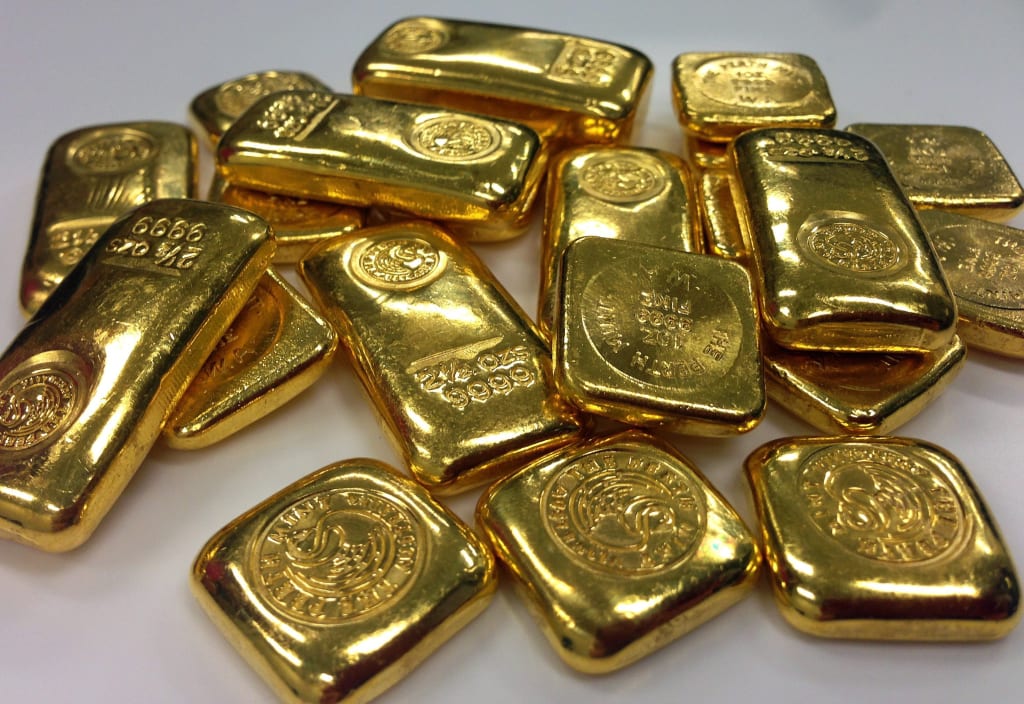
The Reasons, Implications, and Prospects for the Future of the Gold Price Gold prices have experienced a significant rise in the global financial landscape over the past few months. Gold has reached record highs as of the beginning of 2025, attracting the attention of investors, economists, and the general public. In addition to being a sign of market dynamics, the rising price of gold also indicates broader economic and geopolitical developments. The rise in the price of gold, its implications for various industries, and what the future may hold are the subjects of this article. An Overview of the Rising Cost of Gold Over the course of the past year, gold prices have steadily increased, with the price of one ounce now exceeding $2,300. This rise is one of the most significant in more than a decade. Although gold has always been regarded as an asset that can serve as a safe haven, the current upward trend is being driven by a combination of factors that include economic uncertainty, central bank policies, international conflicts, and other factors. Causes of the Surge in Gold Prices
1. Inflation and uncertainty in the economy Instability in the economy of the rest of the world is a major factor in the rise in gold prices. In many nations, inflation has remained a persistent issue as a result of difficulties with post-pandemic recovery. Although interest rates have been raised in response, inflation remains high in some economies. Since gold has historically maintained its value better than paper currencies during inflationary times, investors typically flock to it in such circumstances. 2. Tensions in Geopolitics Investor apprehension has been exacerbated by ongoing geopolitical conflicts such as those in Eastern Europe, the Middle East, and Asia. The demand for safe-haven assets like gold typically rises in response to conflicts and political unrest. When markets feel uncertain, gold becomes a form of security, leading to increased demand and, consequently, higher prices.
3. Weakening of the U.S. Dollar
Since gold is typically priced in U.S. dollars, a weaker dollar makes gold more affordable for holders of other currencies, increasing demand for it. The dollar has shown signs of weakness recently, causing gold prices to rise as a result of various economic pressures, such as the high debt levels in the United States and cautious monetary policy. 4. Buying by the central bank Gold reserves at central banks around the world have been rising. In recent years, a number of nations, including India, China, and Russia, have made significant purchases of gold in order to diversify their foreign exchange reserves away from the US dollar. Prices have risen as a result of tight supply caused by this demand from the central bank. 5. Investment Demand
Individual investors and exchange-traded funds (ETFs) backed by actual gold are both increasing their holdings in anticipation of continued price growth. With stock markets showing volatility, gold is perceived as a safer alternative, especially for long-term value preservation.
Economic and Sector-Wide Implications
The rise in the price of gold has far-reaching effects on various industries and economic policies around the world. 1. Effect on Jewelry Markets and Consumers Higher gold prices have increased the cost of goods for consumers, particularly in nations like India and China where gold jewelry is culturally significant. This has affected the retail gold and jewelry market's demand, frequently resulting in a decrease in consumption or a preference for lighter-weight or lower-karat goods. 2. A boost for Mining Businesses On the flip side, gold mining companies are enjoying increased profitability due to the higher selling price of gold. Major gold mining companies' stock prices have risen as a result, and investments in exploration and production have increased as a result. 3. Factors to Consider in Monetary Policy Central banks must weigh the rising gold prices while formulating monetary policy. While higher gold prices themselves are not directly harmful, they signal deeper economic concerns such as inflation or loss of faith in fiat currencies. Policymakers might feel compelled to adjust interest rates or strengthen currency measures in response.
4. Portfolios of investments The rise of gold presents investors with an opportunity to protect themselves from currency depreciation and volatility in the stock market. During turbulent times, financial advisors frequently recommend allocating a portion of portfolios to precious metals. As gold rises, it brings balance and stability to investment portfolios that may otherwise be under stress from market fluctuations.
Future Prospects: Will Gold Continue to Rise? The most pressing concern on everyone's minds is whether or not this spike in gold prices will last. According to a number of analysts, the upward trend may continue into 2025. The global economy remains fragile, inflation is still a concern in various parts of the world, and geopolitical tensions show little sign of easing. Gold's outlook is supported by all of these factors. However, there could be dangers to the growth that continues. Investor interest in gold may decrease if inflation is controlled and central banks begin cutting interest rates. Riskier assets like stocks may also become more appealing if economic growth stabilizes and peace returns to conflict zones, decreasing demand for gold. Technological developments, such as increased use of digital currencies and blockchain-backed assets, may also impact long-term demand for physical gold. Nevertheless, for the foreseeable future, gold is likely to remain a favored investment tool, especially during times of uncertainty.
Conclusion
Inflation, geopolitical instability, and shifts in investment behavior are just a few of the complex global factors at play in the recent rise in gold prices. Whether you're a small investor, a policymaker, or someone simply interested in the global economy, understanding the dynamics behind gold's value is crucial.
Gold frequently shines brightest during times of crisis, as history has demonstrated. With the world facing multiple challenges in 2025, it’s no surprise that this ancient asset continues to play a vital role in shaping economic decisions and financial strategies across the globe.
About the Creator
Keep reading
More stories from Towhidur Rahman and writers in Trader and other communities.
Samsung Galaxy S25 vs Samsung Galaxy S24 ultra
I was surprised by the small Galaxy S25, but not enough to replace my S24 Ultra permanently. I wasn't expecting much when I first held the Galaxy S25 in my hands. After all, in an era dominated by spec monsters like the S24 Ultra, how much really does a "smaller" flagship offer? However, after working with Samsung's newest compact powerhouse for a week, I was truly surprised. The Samsung Galaxy S25 is more than just a miniaturized flagship; it is also a refined, well-balanced, and delightfully unexpected device. Still, as much as I’ve enjoyed it, it hasn’t quite convinced me to retire my Galaxy S24 Ultra.
By Towhidur Rahman11 months ago in Trader
Crowdfunding Market Size and Forecast 2026–2034
The global Crowdfunding Market is steadily evolving into one of the most dynamic segments of the digital finance ecosystem. According to market analysis, the industry is projected to expand from US$ 19.32 Billion in 2025 to US$ 45.37 Billion by 2034, growing at a compound annual growth rate (CAGR) of 9.95% between 2026 and 2034.
By shibansh kumarabout 21 hours ago in Trader


Comments
There are no comments for this story
Be the first to respond and start the conversation.