
Potato Chips Market Size & Forecast 2026–2034
How Flavor Innovation, Convenience Snacking, and E-Commerce Are Powering a Global Crunch Boom

The Global Potato Chips Market at a Glance
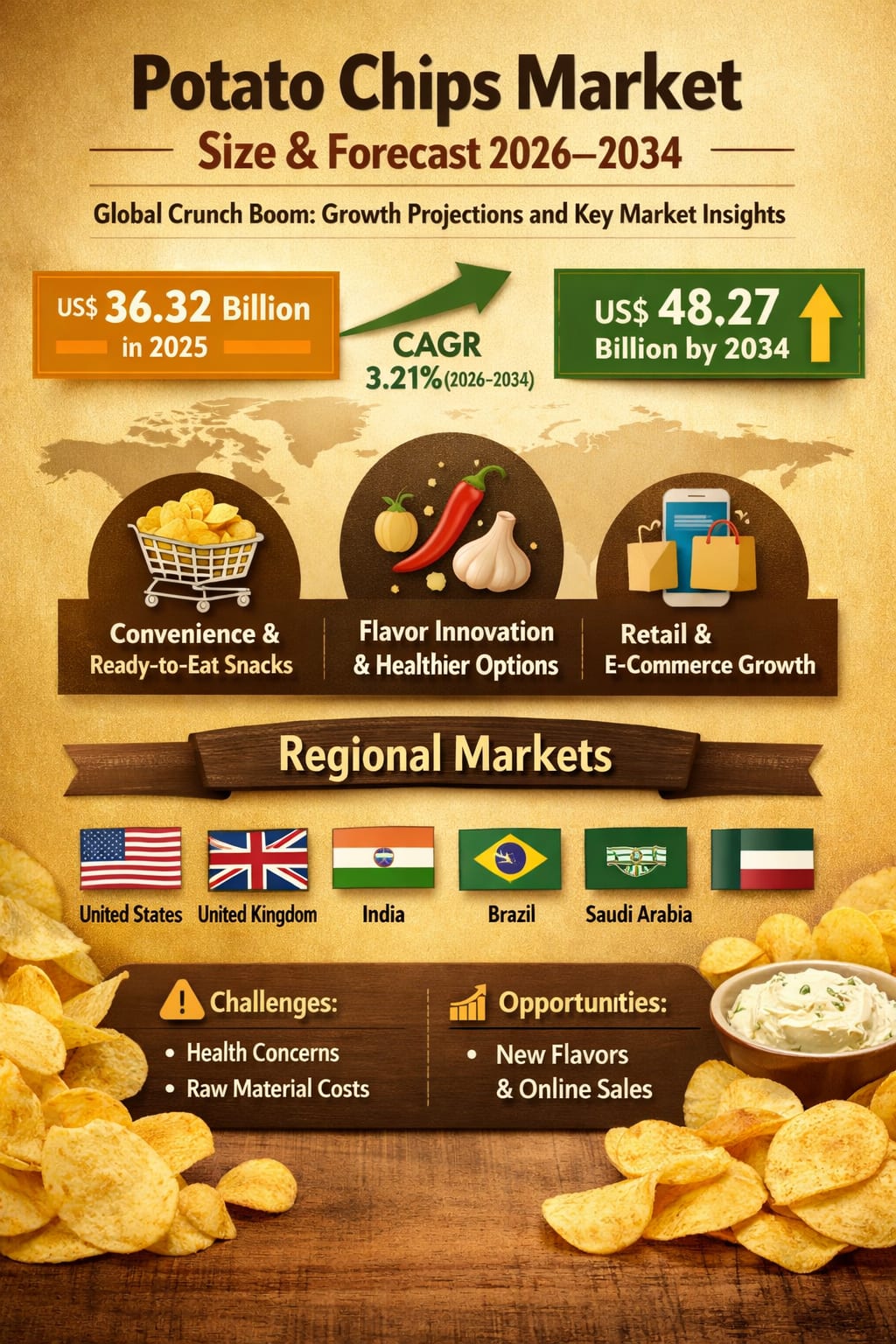
The global potato chips market continues to demonstrate resilient and steady growth as changing lifestyles, evolving taste preferences, and expanding retail access reshape the snacking landscape. According to Renub Research, the Potato Chips Market is set to rise from US$ 36.32 Billion in 2025 to US$ 48.27 Billion by 2034, growing at a CAGR of 3.21% during the period 2026–2034.
This consistent expansion is being driven by several converging trends: the rising demand for convenient ready-to-eat foods, increasing urban populations, and a global shift toward frequent snacking. At the same time, manufacturers are fueling demand through continuous product innovation in flavors, healthier variants, and premium offerings. Supported by strong distribution through supermarkets, convenience stores, and fast-growing e-commerce channels, potato chips remain one of the most dynamic segments within the global savory snacks industry.
Potato Chips Market Outlook
Potato chips are thin slices of potatoes that are fried or baked until crispy and then seasoned with salt or various flavorings. They are among the most popular savory snacks worldwide, loved for their crunchy texture, convenience, and wide range of taste profiles. Today’s market includes plain salted chips, ridged chips, kettle-cooked varieties, baked options, and numerous flavored versions such as cheese, barbecue, sour cream, chili, and region-specific spice blends.
Advancements in processing technology and packaging have significantly improved shelf life, texture consistency, and flavor retention. These improvements have helped potato chips secure a strong presence across retail shelves and foodservice outlets globally. Their affordability and adaptability to local taste preferences make them a truly global snack category.
Consumption spans all age groups, and potato chips are closely associated with leisure activities, social gatherings, entertainment, and on-the-go snacking. Rapid urbanization, rising disposable incomes, and the expansion of modern retail formats have further boosted global demand. At the same time, manufacturers are continuously introducing new flavors, healthier alternatives such as baked or low-fat chips, and premium offerings to meet evolving consumer expectations. This ongoing innovation reinforces potato chips as a staple product in the global snack food ecosystem.
Key Growth Drivers in the Potato Chips Market
1. Rising Demand for Convenience and Ready-to-Eat Snacks
One of the strongest growth drivers for the potato chips market is the global shift toward convenient, ready-to-consume foods. Fast-paced lifestyles, urbanization, and longer working hours have made packaged snacks a regular part of daily diets across many regions. Potato chips fit perfectly into this trend: they are easy to store, require no preparation, and are widely available.
Their long shelf life and portability make them especially appealing to students, office workers, and travelers. In addition, chips are frequently consumed during social occasions, entertainment, and casual dining, which supports repeat purchases. In many markets, snacking is increasingly replacing traditional meals, and potato chips benefit from being both familiar and affordable.
A notable example of premiumization in this space came in November 2025, when Red Rock Deli, PepsiCo’s iconic Australian gourmet snack brand, entered the Indian market. The brand introduced globally inspired flavors produced locally, using sunflower oil and advanced technologies such as kettle-cooked, baked, and popped methods, offering consumers a more adventurous and premium snacking experience.
2. Flavor Innovation and Product Diversification
Flavor innovation remains one of the most powerful engines of growth in the potato chips market. Brands continuously launch new flavors inspired by regional cuisines, global food trends, and consumer demand for novelty. From spicy and savory to tangy and smoky profiles, the wide range of options helps attract new buyers while encouraging existing customers to try something new.
Limited-edition and seasonal flavors also create excitement and urgency, often driving short-term sales spikes. Beyond flavors, diversification into baked, kettle-cooked, ridged, and thick-cut chips broadens the market’s appeal across different consumer segments. Health-oriented variants, such as low-sodium, reduced-fat, or organic chips, are expanding the consumer base further by appealing to wellness-conscious shoppers.
In December 2025, Lay’s announced two new additions to its baked lineup—Loaded Baked Potato and Roasted Garlic & Herbs—made with olive oil and positioned as better-for-you options. Such launches highlight how major players are balancing indulgence with health-focused innovation.
3. Expansion of Retail and E-Commerce Channels
The growth of modern retail formats and digital commerce platforms has significantly strengthened the potato chips market. Supermarkets, hypermarkets, convenience stores, and specialty snack outlets ensure high visibility and easy availability. Attractive packaging and point-of-sale displays further encourage impulse purchases in physical stores.
At the same time, e-commerce and online grocery platforms are transforming how consumers buy snacks. These channels offer a wide range of brands, flavors, and pack sizes, along with the convenience of home delivery. Online platforms are particularly popular in urban areas and are supported by digital marketing, influencer promotions, and targeted advertising.
In October 2025, WellBe Foods launched a new category of vacuum-cooked snacks focused on health-conscious consumers, showcasing how direct-to-consumer and online-first strategies are becoming increasingly important for snack brands.
Challenges Facing the Potato Chips Market
1. Health Concerns and Nutritional Scrutiny
Despite its popularity, the potato chips market faces growing scrutiny over health and nutrition. Chips are often associated with high salt, fat, and calorie content, which has led some health-conscious consumers to reduce their consumption. Rising awareness of lifestyle-related conditions such as obesity, heart disease, and hypertension has further intensified this trend.
Governments and health agencies in many regions are promoting healthier eating habits, and regulatory measures such as stricter nutritional labeling and advertising restrictions are becoming more common. While manufacturers are introducing healthier variants, changing long-standing consumer perceptions remains a challenge. Balancing taste, texture, and nutrition without significantly increasing costs or reducing appeal continues to be a complex task for the industry.
2. Volatility in Raw Material Prices and Supply Risks
The potato chips market is highly sensitive to fluctuations in raw material prices, particularly potatoes, cooking oil, and packaging materials. Agricultural factors such as weather conditions, crop diseases, and seasonal variations directly affect potato yields and prices. Similarly, changes in oil prices and transportation costs can significantly impact production expenses.
These cost fluctuations can squeeze profit margins or force price increases, potentially affecting demand in price-sensitive markets. Ensuring consistent quality and supply is especially challenging for smaller producers. As a result, efficient sourcing, inventory management, and supply chain optimization have become critical priorities across the industry.
Market Segmentation Insights
Plain Potato Chips Market
Plain potato chips remain a core segment of the market due to their simple ingredients and universally accepted taste. Many consumers prefer them for their natural potato flavor and balanced salt content. They are often used as a base snack, paired with dips, or chosen by first-time buyers. Their simplicity and cost-effective production ensure that plain chips continue to contribute significantly to overall market revenue.
Flavored Potato Chips Market
Flavored potato chips represent the fastest-growing segment, driven by consumers’ appetite for novelty and variety. From barbecue and cheese to sour cream, chili, herbs, and regional spice blends, this segment offers higher margins and premium positioning. It is particularly popular among younger consumers seeking adventurous snacking experiences.
Online Stores Market for Potato Chips
Online sales of potato chips are rising steadily with increased digital adoption. E-commerce platforms offer broader product selections, competitive pricing, and the convenience of home delivery. They also enable brands to connect directly with consumers, gather insights, and launch exclusive online products.
Convenience Stores Market
Convenience stores play a crucial role due to impulse buying behavior. Chips are typically placed near checkout counters, and small, single-serve packs perform especially well in this channel. Extended operating hours and strategic locations near residential and business areas make convenience stores a key driver of urban snack sales.
Specialty Stores Market
Specialty stores focus on gourmet, artisanal, and premium chips, often highlighting unique flavors, organic ingredients, and distinctive packaging. Although volumes may be lower, higher margins make this channel attractive and help elevate potato chips into a premium snack category.
Regional Market Highlights
United States
The United States is one of the largest and most mature potato chips markets globally, driven by high per-capita snack consumption. The market is characterized by strong product diversity, continuous innovation, and growing demand for healthier and non-GMO options. In June 2025, Tapatío Foods partnered with Chipoys to launch Mexican-style chips featuring Tapatío’s Salsa Picante, reflecting the market’s appetite for bold flavors.
United Kingdom
The UK crisps market is highly innovation-driven, with strong demand for spicy, premium, and healthier options such as baked and low-salt chips. In February 2025, the popular spicy snack brand Hot Chip from the Czech Republic entered the UK market, adding further excitement to the segment.
India
India’s potato chips market is growing rapidly due to urbanization, rising incomes, and a young population with evolving snacking habits. Local flavors like masala and chili dominate, and small, affordable pack sizes drive mass consumption. In November 2025, PepsiCo India introduced Red Rock Deli as a premium offering, signaling growing demand for upscale snack experiences.
Brazil
Brazil’s market benefits from an expanding middle class and increasing popularity of packaged snacks. Both international and domestic brands compete, offering classic and flavored varieties. In September 2025, Hero Group announced the acquisition of Brazil-based snack firm Super Saude Nutricional, highlighting consolidation and investment in the region.
Saudi Arabia
Saudi Arabia’s potato chips market is supported by a young population and strong demand for convenient foods, especially spicy flavors. The country is also investing in local production; in May 2024, Al-Jouf Agricultural Development Company began trial production at a new facility to boost self-sufficiency and reduce imports.
Market Segmentation
By Product Type:
Plain Chips
Flavored Chips
By Distribution Channel:
Supermarkets & Hypermarkets
Convenience Stores
Specialty Stores
Online Stores
Others
By Geography:
North America (United States, Canada)
Europe (France, Germany, Italy, Spain, United Kingdom, Belgium, Netherlands, Turkey)
Asia Pacific (China, Japan, India, South Korea, Thailand, Malaysia, Indonesia, Australia, New Zealand)
Latin America (Brazil, Mexico, Argentina)
Middle East & Africa (Saudi Arabia, UAE, South Africa)
Key Companies Covered
General Mills
Kellogg’s Company
The Kraft Heinz Company
PepsiCo Inc.
Mondelez International
Herr Foods Inc.
Calbee Inc.
Utz Brands, Inc.
(Each company analyzed across Overview, Key Person, Recent Developments, SWOT Analysis, and Revenue Analysis.)
Final Thoughts
The global potato chips market is entering a phase of steady, innovation-led growth. With Renub Research projecting the market to expand from US$ 36.32 Billion in 2025 to US$ 48.27 Billion by 2034 at a CAGR of 3.21%, the industry’s future looks both stable and dynamic. Convenience snacking, flavor experimentation, premiumization, and e-commerce expansion will continue to reshape consumer choices.
While health concerns and raw material volatility pose real challenges, the industry’s ability to adapt through product reformulation, supply chain optimization, and creative branding ensures that potato chips will remain a dominant force in the global snack food market. In a world that increasingly values quick, tasty, and accessible food options, the humble potato chip is set to keep its crunchy crown for years to come.
About the Creator
Global Airport Retailing Market Growth, Trends & Industry Outlook
Overview Airport Retailing Market Airport retailing refers to the sale of goods and services within airport terminals, including duty-free shops, luxury brand outlets, food and beverage stores, and convenience retail. The global market is expanding rapidly as airports diversify revenue streams beyond aviation services. Market estimates suggest the sector was valued at approximately USD 32–50 billion in 2025 and is projected to grow substantially over the next decade, supported by increasing air connectivity and evolving traveler consumption patterns.
By James Smith6 days ago in Trader




Comments
There are no comments for this story
Be the first to respond and start the conversation.