
Philippines Palm Oil Market: Dietary Staples, Industrial Demand & Sustainability Trends
How consumption patterns, import dynamics and evolving regulations are shaping the palm oil landscape in the Philippines

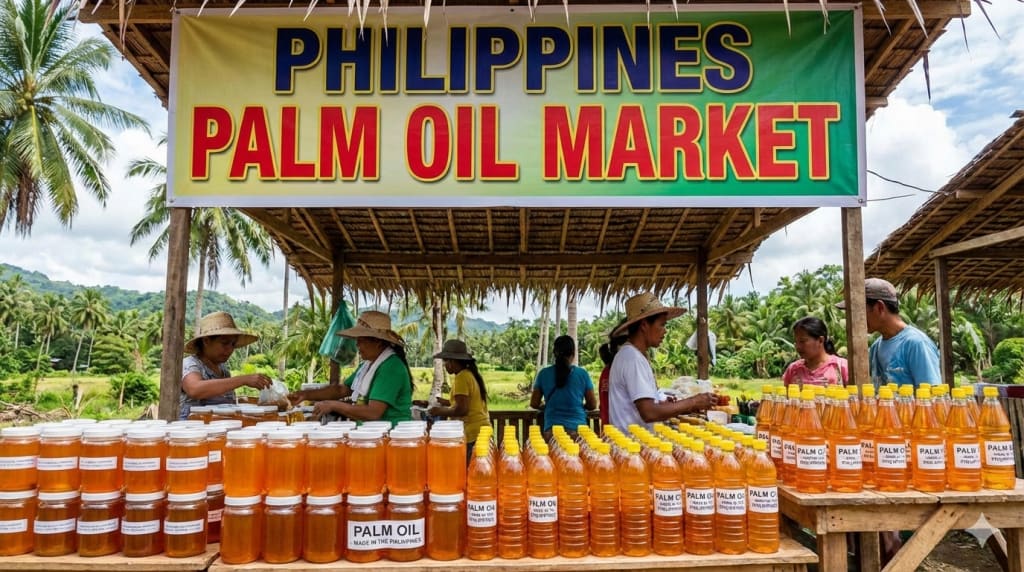
Philippines Palm Oil Market
The Philippines palm oil market plays a vital role in both the food and industrial sectors, driven by population growth, evolving consumption habits and demand from key downstream industries. Palm oil is widely used in cooking oils, margarine, bakery products, snacks, personal care items and industrial applications, making it a ubiquitous commodity in the Philippine economy.
The Philippines palm oil market size reached USD 1,143.80 Million in 2024. Looking forward, the market is expected to reach USD 1,552.12 Million by 2033, exhibiting a growth rate (CAGR) of 3.45% during 2025-2033. This expansion reflects robust demand fundamentals, import dependency and opportunities for efficiency improvements in procurement and distribution.
What’s Driving Market Growth
1. Rising Food Consumption & Population Growth
Palm oil is a staple cooking ingredient in Filipino households, used widely due to its affordability, versatility and long shelf life. As the Philippine population continues to grow — with a young demographic profile and increasing urbanisation — demand for edible oils, including palm oil, rises accordingly.
Expanding foodservice outlets, fast-moving consumer goods (FMCG) products, and quick-serve restaurant chains further reinforce ongoing consumption.
2. Industrial & Manufacturing Usage
Beyond the food sector, palm oil derivatives are widely used in the manufacture of soaps, detergents, cosmetics, candles, lubricants and biofuels. This broad industrial application base supports demand across multiple sectors, cushioning volume growth against fluctuations in any single segment.
3. Import Dependency & Trade Dynamics
The Philippines is not a major palm oil producer and remains heavily reliant on imports — predominantly from Indonesia and Malaysia, the world’s leading palm oil suppliers. Trade patterns, import tariffs, exchange rates and global commodity prices directly influence local market pricing and availability.
Efficient trade logistics and cost management are critical considerations for distributors and food processors.
4. Price Volatility & Commodity Markets
Global commodity price volatility — driven by weather patterns, export policies, shipping constraints and geopolitical dynamics — directly impacts the palm oil market in the Philippines. Producers, traders and retailers must navigate price risk and inventory planning to stabilise supply and manage margins.
Request a Sample Report with the Latest 2025 Data & Forecasts
What the Opportunities Are
The Philippines palm oil market presents several strategic opportunities for traders, manufacturers, importers and investors:
1. Supply-Chain Efficiency & Cost Optimisation
Given import dependence, improving procurement strategies, freight optimisation, hedging and inventory management can enhance cost competitiveness for distributors and FMCG processors.
2. Downstream Product Innovation
Innovation in value-added products — such as fortified cooking oils, blended oils, specialty food ingredients and sustainable cosmetics — offers higher margins and differentiation.
3. Sustainability & Certifications
Sustainably sourced palm oil — including Roundtable on Sustainable Palm Oil (RSPO) certified products — is gaining traction with global brands and conscientious consumers. Market players that invest in traceability, certification and eco-friendly packaging can command premium positioning.
4. E-Commerce Expansion
Online grocery platforms and digital supply channels are creating new distribution opportunities, particularly for bulk buyers, institutional customers and health-oriented consumer segments.
5. Price Risk Management Instruments
Strategic use of futures markets, options and commodity hedging tools can help market participants manage price volatility and protect margins in an environment of global supply uncertainty.
Recent News & Developments in Philippines Palm Oil Market
Jul 2025: The Department of Agriculture issued new guidelines promoting affordable edible oil availability, aimed at stabilising domestic cooking oil prices — indirectly impacting palm oil procurement strategies for food retailers.
Aug 2025: Retailers reported a significant uptick in refined palm oil imports amid seasonal pricing trends, with bulk purchases aligned to festive demand and supply planning.
Oct 2025: Industry analysts highlighted growing demand for certified sustainable palm oil, particularly from food manufacturers aligning with ESG commitments and global sourcing standards — a signal that ethical consumption influences procurement choices.
Why Should You Know About the Philippines Palm Oil Market?
You should know about this market because palm oil is not just a commodity — it is a critical input across food and industrial supply chains that directly affects pricing, production planning and consumer behaviour in a developing economy.
For investors, palm oil represents exposure to global commodity cycles, trade flows, currency dynamics and price risk — all of which can influence related equities, logistics sectors and food processing valuations.
For traders and businesses, understanding demand drivers, import linkages and consumption trends helps optimise supply contracts, mitigate volatility and capitalise on value-added opportunities.
About the Creator
Keep reading
More stories from Manisha Dixit and writers in Trader and other communities.
Philippines Luxury Fashion Market: Aspirational Spending, Brand Expansion & Lifestyle Upgrading
Philippines Luxury Fashion Market The Philippines luxury fashion market is witnessing steady expansion as economic growth, rising disposable incomes and evolving lifestyle aspirations reshape consumer spending patterns. The Philippines luxury fashion market size reached USD 1.14 Billion in 2024. The market is projected to reach USD 1.62 Billion by 2033, exhibiting a growth rate (CAGR) of 3.57% during 2025-2033.
By Manisha Dixitabout a month ago in Trader
Pre-engineered Building Market Size and Forecast 2025–2033
Global Pre-engineered Building Market Overview The global construction industry is undergoing a major transformation, driven by the need for faster project delivery, cost efficiency, and sustainable building practices. At the center of this evolution is the pre-engineered building (PEB) market, which is rapidly emerging as a preferred alternative to traditional construction methods across industrial, commercial, and infrastructure projects.
By Renub Researchabout 12 hours ago in Trader
The Devil's Cut
“Comrade, finally you’re awake.” The voice was smooth, sensual. A flickering incandescent bar was all that lit the white, sterile room. All Vladimir remembered was everything going black. He tried to move his arms and found them strapped to the gurney.
By Matthew J. Fromm6 days ago in Fiction




Comments
There are no comments for this story
Be the first to respond and start the conversation.