
Philippines Forage Market: Livestock Nutrition, Sustainable Feed & Agricultural Growth
How rising animal production, nutritional awareness and feed infrastructure development are driving the forage industry in the Philippines

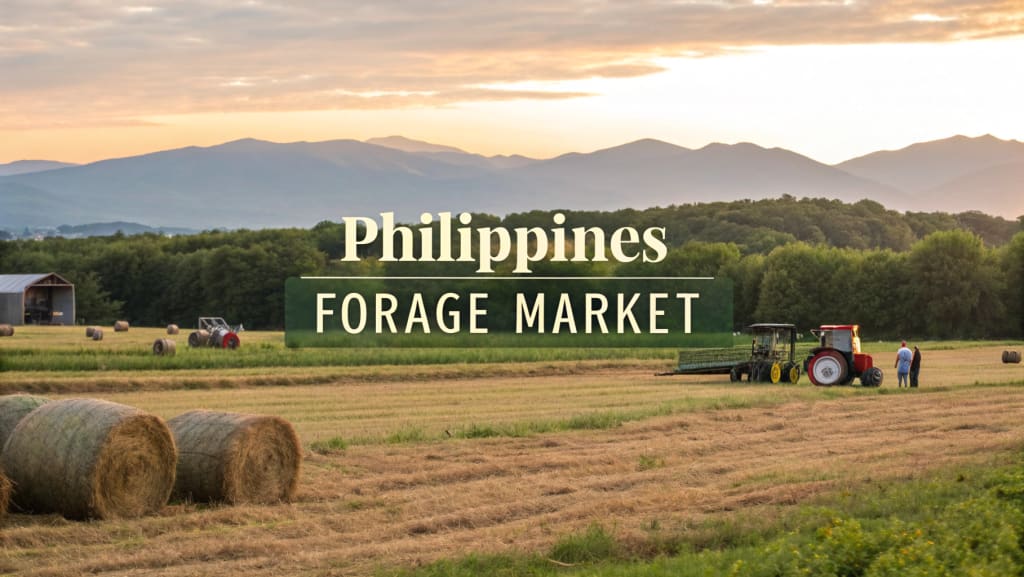
Philippines Forage Market
The Philippines forage market is expanding steadily as the livestock sector modernises, demand for quality animal nutrition rises and agricultural stakeholders prioritise sustainable feed solutions. The Philippines forage market size reached USD 1,878.00 Million in 2024. The market is projected to reach USD 2,656.83 Million by 2033, exhibiting a growth rate (CAGR) of 3.93% during 2025-2033. IMARC Group Forage crops — including cereals, legumes and grasses — form a vital component of livestock diets, supplying essential nutrients for ruminants (such as cattle and sheep), swine, poultry and other animals.
As the Philippines strives to enhance meat, dairy and poultry production, improved forage availability and quality are critical for efficient animal growth, productivity and overall farm profitability. Forage adoption supports feed security, reduces dependence on imported feed ingredients and fosters greater self-sufficiency in the agricultural value chain.
What’s Driving Market Growth
1. Rising Livestock Populations and Demand for Animal Protein
The Philippines is experiencing growth in livestock farming, particularly in poultry, swine and cattle sectors, driven by rising domestic demand for meat, dairy products and eggs. As consumer preferences shift toward higher protein diets, forage plays a pivotal role in supplying nutrient-rich feed essential for healthy animal development. Improved forage quality enhances feed conversion ratios, which promotes livestock performance and cost efficiency for farmers.
2. Increased Awareness of Animal Nutrition
Producers and livestock owners are increasingly prioritising balanced diets that support animal health, reproductive performance and product quality. Forage crops — such as Napier grass, maize, hybrid sorghum, legumes and grasses — provide fibre, energy and protein needed for optimal nutrition. Research initiatives and agricultural extension services are promoting high-yield and climate-resilient crop varieties tailored to local farming conditions, enhancing forage availability and adoption across regions.
3. Agricultural Modernisation and Infrastructure Investments
Mechanised harvesting equipment, silage storage facilities, and improved seed varieties enable higher forage production and storage efficiency. Investments in feed processing infrastructure — including ensiling, chopping and storage technologies — help reduce wastage, preserve feed quality and ensure consistent supply throughout seasonal fluctuations. Partnerships between forage producers and feed mills are fostering integrated value chains that improve forage accessibility.
4. Government Support and Livestock Development Programmes
Government initiatives aimed at livestock sector enhancement — including credit facilities, agronomy extension programmes, and support for forage seed distribution — are bolstering market growth. Government-funded projects invest in breeding farms, forage cultivation trials and feed quality improvement, particularly in regions such as Luzon, Visayas and Mindanao, which show significant agricultural activity.
What the Opportunities Are
1. High-Yield and Climate-Resilient Crop Varieties
There is a significant opportunity for the development and adoption of high-yield, drought-tolerant and disease-resistant forage crop varieties. These bioengineered or improved seeds can boost production, improve nutritional content, and withstand variable weather conditions — enhancing the sustainability of forage supply.
2. Silage and Stored Forage Expansion
Stored forage, including silage and hay, helps livestock producers maintain consistent animal nutrition even in dry seasons or feed scarcity periods. Providers that offer turnkey silage solutions can capture value by enabling year-round feed supply, especially for larger commercial farms.
3. Integrated Feed Solutions
Partnerships between forage producers, feed mills and agritech companies can create integrated feed solutions that combine fresh forage with complementary feed ingredients. Such bundled offerings improve feed efficiency and reduce operational complexity for farmers.
4. Precision Agriculture & Technology Adoption
Digital and precision agriculture tools — including remote sensing, yield mapping, soil analysis and irrigation management — can optimise forage yield, reduce cultivation costs and increase overall productivity, appealing to tech-savvy agribusinesses.
5. Value-Added Forage Products
There is an opportunity to develop value-added forage products such as enriched silage blends, fortified hay bales and packaged feed mixes tailored to specific livestock needs (e.g., dairy vs. beef cattle), allowing higher pricing and broader market appeal.
Recent News and Developments in Philippines Forage Market
Aug 2025: Golden Forage — an agricultural startup — introduced compact silage balers and wrap technologies aimed at improving forage preservation and reducing spoilage, particularly benefiting smallholder farmers in rural communities.
Sep 2025: Regional agricultural cooperatives expanded forage seed distribution programmes designed to support high-yield forage cultivation and improve livestock feed availability in Visayas and Mindanao.
Nov 2025: Agricultural research institutions hosted climate-resilient forage crop showcases, promoting hybrid varieties designed for tropical conditions, with participation from government agricultural agencies and livestock producer associations.
Why should You Know About Philippines Forage Market?
You should know about this market because it lies at the heart of the livestock value chain — directly impacting animal health, agricultural productivity, food security and rural livelihoods in the Philippines. Forage is not just a raw feed input; it is a strategic agricultural component that influences meat, dairy and poultry output quality, cost efficiency and sustainability of livestock operations.
For investors, the forage market offers exposure to a continuing growth story underpinned by increasing demand for animal protein, rising livestock commercialisation and government support for agricultural modernisation. As consumers demand higher quality meat and dairy products, the economic relevance of sustainable forage solutions becomes increasingly significant.
For agritech innovators and feed producers, understanding forage dynamics can guide product development, seed technologies and integrated feed strategies that deliver value across the supply chain. In essence, the Philippines forage market reflects how agricultural innovation, animal nutrition and feed security converge — making it an essential segment for stakeholders focused on sustainable agricultural growth and resilient livestock ecosystems.
About the Creator
Keep reading
More stories from Manisha Dixit and writers in Trader and other communities.
Philippines Tin Market: Industrial Demand, Export Dynamics & Strategic Resource Value
Philippines Tin Market The Philippines tin market plays a crucial role in the global metals landscape, serving as a significant source of tin concentrate and refined tin for industries such as electronics, solder production, automotive, packaging and renewable energy applications. The Philippines tin market size reached 1.86 Kilo Tonnes in 2024. Looking forward, the market is expected to reach 2.45 Kilo Tonnes by 2033, exhibiting a growth rate (CAGR) of 2.82% during 2025-2033. Tin remains a strategic metal due to its conductivity, corrosion resistance and versatility across a wide array of industrial uses — making it a key commodity for both domestic manufacturing and export markets.
By Manisha Dixit2 months ago in Trader
Tire Market Accelerates with Smart Mobility, EV Expansion, and AI-Driven Manufacturing Innovations
Tire Market: Trends, Drivers, and Future Outlook The global tire market has been undergoing remarkable transformations in recent years, driven by rapid technological advancements, changing consumer behavior, and a growing emphasis on sustainability. Tires, an essential component of vehicles, are no longer just functional; they are now a crucial element in vehicle safety, fuel efficiency, and performance. From passenger cars to commercial vehicles, the demand for high-quality, durable, and eco-friendly tires is witnessing significant growth across the globe.
By James Smitha day ago in Trader
Taiwan Advertising Market Size, Share, Industry Trends, Growth Factors and Forecast to 2033
Why Taiwan Advertising Market Is Transforming: Digital Growth, Media Trends & Market Forecast Market Overview The Taiwan advertising market has experienced substantial transformation over the past decade, driven by rapid digital adoption, widespread internet penetration, and changing consumer media habits. Taiwan ranks among Asia’s most digitally connected economies, with high smartphone usage and active social media participation shaping modern advertising strategies.
By Jackson Watson5 days ago in Trader
Flower Bloom 369
FLOWER Bloom 2/25/26 Wednesday By Mariann Carroll Karen had been with Tony for 7 years. Tony started acting strangely after her surgery. He would mow the lawn in the rain and be on his cellphone. He started pushing Karen away. Tony came clean about seeing someone. Karen moved out two months later. Karen moved in with a friend. She felt betrayed.
By Mariann Carroll2 days ago in Fiction




Comments
There are no comments for this story
Be the first to respond and start the conversation.