
Philippines Digital Asset Management Market 2026: Set for Rapid Expansion Amid Digital Transformation Trends
Rising cloud adoption and digital media demands drive a forecasted market growth from USD 39.64 M in 2025 to USD 122.86 M by 2034.


Philippines Digital Asset Management Market Overview
The Philippines digital asset management market growth stands at a pivotal point of expansion as organizations across sectors embrace digital transformation and content-driven strategies. According to IMARC Group data, the market was valued at USD 39.64 million in 2025 and is projected to reach USD 122.86 million by 2034, representing a compound annual growth rate (CAGR) of 13.39 % between 2026 and 2034.
Digital asset management (DAM) refers to software solutions and services for organizing, storing, retrieving, and distributing digital files — such as images, videos, and documents — across enterprises. As businesses scale their digital content creation and distribution, centralized DAM platforms are becoming a strategic investment, fueling demand across marketing, cloud computing, and enterprise IT sectors. This growth story is especially compelling for investors and businesses aiming to capitalize on the Philippines’ burgeoning digital economy.
Why the Market Is Growing So Rapidly
One of the fundamental growth drivers is the accelerated digital transformation across industries. Organizations in banking, healthcare, retail, and media are shifting away from legacy, siloed systems toward integrated digital ecosystems that support collaboration and content reuse. This transition fuels demand for advanced DAM systems capable of handling diverse asset types and large volumes of data.
A second key growth impetus is the expansion of e-commerce and online business activities in the Philippines. With more companies selling products and services online, the volume of images, videos, and promotional assets has surged. These assets must be managed efficiently to maintain brand consistency and competitive advantage, further incentivizing the adoption of DAM solutions.
Technological progress in cloud computing and AI integration has also reshaped the market landscape. Cloud-based DAM platforms offer scalability, reduced infrastructure costs, and seamless access for remote teams — features that resonate strongly as hybrid work becomes more common. Additionally, artificial intelligence enhances metadata tagging and search capabilities, improving workflow efficiency and reducing manual effort.
Government digital initiatives are emerging as another influential factor. As public agencies onboard digital workflows and services, the need for secure, organized, and compliant digital repositories becomes critical. While not the largest segment yet, public sector adoption adds to the overall growth momentum by legitimizing DAM systems as essential infrastructure for modern governance.
Finally, the media and entertainment sector — the largest end-use category — is generating significant demand due to the sheer volume of multimedia content produced. DAM systems help these organizations manage content lifecycles from production to distribution, making them indispensable tools in an increasingly competitive digital media environment.
Request a Sample Report with the Latest 2026 Data & Forecasts
What the Opportunities Are
1. Cloud-native Solutions Expansion
With cloud deployment being the dominant model (59.01 % share in 2025), companies offering scalable, secure, multi-tenant DAM services are positioned to capture significant market share as remote work and hybrid teams become lasting trends.
2. AI-driven Asset Intelligence
Platforms that integrate AI and machine learning for automated tagging, predictive search, and usage analytics can reduce manual workload and provide deeper insights into asset performance — a compelling value proposition for enterprise customers.
3. Sector-specific DAM Customization
End-use industries such as BFSI, healthcare, and education have distinct regulatory and workflow needs. Tailored DAM solutions that address compliance, privacy, and specialized content types can unlock lucrative vertical-specific revenue streams.
4. Integration with Marketing Technology Stacks
As marketing teams demand seamless integration between DAM systems, content management platforms, and campaign automation tools, vendors facilitating these integrations can differentiate themselves in a crowded market.
5. Targeting SMEs
While large enterprises currently dominate the market (62.08 % share), small and medium-sized enterprises (SMEs) represent a growth frontier. Affordable, modular DAM offerings will attract this segment as digital literacy and online business adoption rises.
6. Public Sector Digitization Projects
Government agencies and public institutions are increasingly prioritizing digital service delivery, presenting opportunities for secure, standards-compliant DAM solutions for archiving public records and citizen information.
7. Strategic Partnerships and Channel Growth
Technology vendors partnering with systems integrators, cloud service providers, and creative agencies can expand distribution channels and accelerate deployments, especially where in-house IT capabilities are limited.
Recent News & Developments
• January 2025: The Philippine government introduced a Digital Nomad Visa under Executive Order 86, aimed at attracting remote professionals and boosting the digital economy. This initiative has indirectly accelerated demand for cloud-based collaborative tools, including DAM platforms, by drawing international talent and digital enterprises to the country.
• March 2025: Ellerton & Co., a Southeast Asia-based PR agency, launched the Ellerton Creative Studio to provide integrated visual storytelling and communications services across multiple markets, including the Philippines. This expansion underscores rising demand for centralized asset management solutions in creative workflows.
• December 2025: GoTyme Bank launched cryptocurrency trading in partnership with Alpaca, enabling investments in Bitcoin, Ethereum, and Solana for Filipino users. This move reflects increasing digital-first financial engagement, contributing to broader digital ecosystem growth that supports technologies like DAM.
Why Should You Know About the Philippines Digital Asset Management Market?
For investors, the Philippines DAM market presents a compelling growth story in a regional economy undergoing digital acceleration. A projected 3-fold increase in market size over the next decade at a robust CAGR signals lasting demand and scalable revenue potential.
For business leaders, DAM systems are no longer optional tools — they are strategic enablers for digital workflows, brand consistency, and content governance across global and local markets.
For policy makers, fostering a digital infrastructure that supports data management and creative industries translates directly into enhanced productivity, innovation, and competitiveness within the Southeast Asian landscape.
About the Creator
Keep reading
More stories from Manisha Dixit and writers in Trader and other communities.
Philippines Digital Advertising Market 2026: Set for Rapid Expansion with Mobile, Social, and E-Commerce Fueling Growth
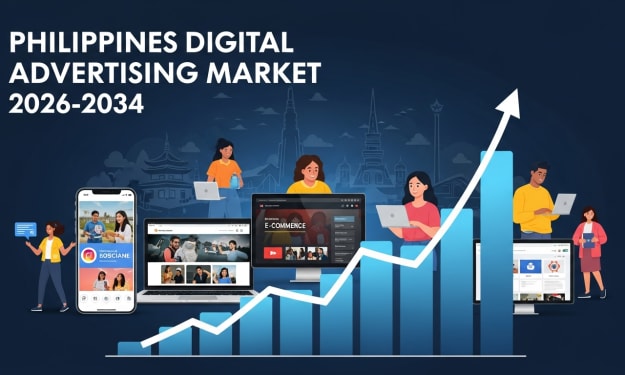
Philippines Digital Advertising Market Overview The Philippines digital advertising market size is experiencing a period of sustained and dynamic growth, driven by mobile penetration, influencer engagement, e-commerce expansion, and supportive digital infrastructure policies. According to IMARC Group, the market reached USD 2.1 billion in 2025 and is projected to grow to USD 5.4 billion by 2034, representing a compound annual growth rate (CAGR) of 11.22% during 2026–2034.
By Manisha Dixit2 days ago in Trader
Trading Dreams for Reality
Adeel had always been fascinated by the market. The numbers, the charts, the rapid-fire decisions—it all made sense to him in a way nothing else did. While his friends spent their evenings at cafes or scrolling through social media, he sat in front of glowing screens, analyzing trends, studying patterns, and imagining the wealth he could build if he played his cards right.
By Sudais Zakwan7 days ago in Trader
US Stock Market Update: Dow, S&P 500, and Nasdaq Futures Continue Uptrend
The US stock market today showed renewed strength as major indices extended their upward momentum. Futures for the Dow Jones Industrial Average, S&P 500, and Nasdaq indicate continued optimism among investors. Following a series of positive economic data releases and corporate earnings reports, traders are increasingly confident that the market rally may sustain in the near term.
By Hammad Nawaza day ago in Trader
Feelings Never Die
It is Valentine's Day again, and it bought back memories that were over fifty years old. It bought me back to 1971, and I woke up and I knew my baby was due today. I was big and pregnant, and I felt like I was about to burst wide open. Imagine my surprise when the doctor told my I had a due date of February 14. I couldn't believe it, and since my baby was due today, I felt I could indulge myself a bit. I had gained a lot of weight, and chocolate was on the no-no list, but I had came to the end of this pregnancy, and I hoped it would be okay, after all I would deliver this baby today. So I walked across the street to the grocery story, and bought myself, a peppermint patty, covered in chocolate, my favorite. Me and my Valentine's baby would enjoy it together.
By Susan Payton6 days ago in Fiction



Comments
There are no comments for this story
Be the first to respond and start the conversation.