
Online Trading in 2025: Platforms, Strategies, and Market Insights
A complete guide to online trading in 2025 — platforms, strategies, risk management, and insights for global traders

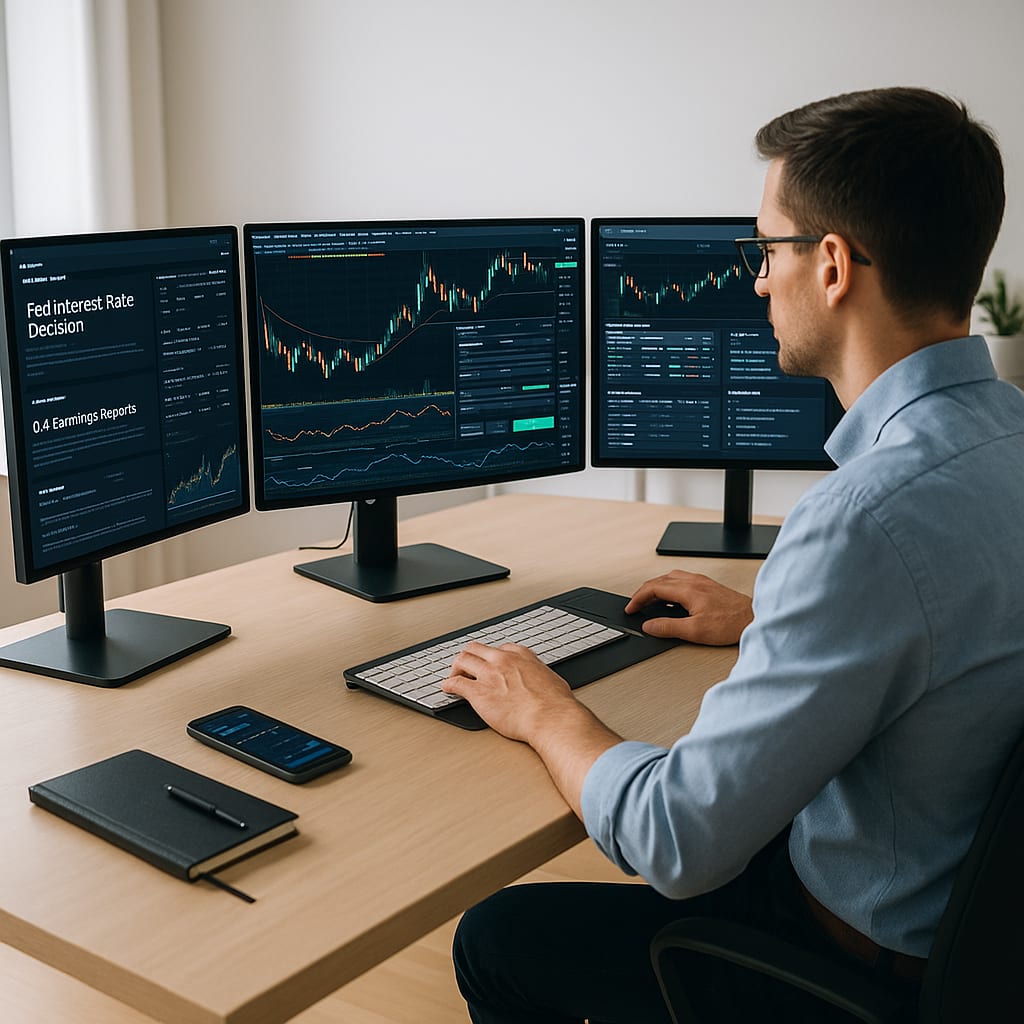
Online trading has fundamentally reshaped the landscape of global finance, transitioning from a niche activity for professionals to a mainstream endeavor accessible to millions. The practice, which involves the electronic buying and selling of financial assets like stocks, bonds, currencies, and derivatives via internet-based platforms, has seen exponential growth over the past decade. This surge is propelled by a confluence of factors: the proliferation of sophisticated yet user-friendly online trading platforms, the widespread adoption of smartphones enabling best online trading app experiences, and a global shift towards digitalization accelerated by recent macroeconomic events. Crucially, the framework of online trading is underpinned by stringent regulatory oversight from bodies like the SEC, FCA, and ASIC, which has helped standardize practices and build a baseline of trust. This article provides a comprehensive, neutral analysis of the online trading ecosystem in 2025, examining its mechanisms, key players, inherent risks, and evolving strategies, with a firm emphasis on education and disciplined capital protection.
What Is Online Trading and How It Works
At its core, online trading is the execution of financial transactions through a digital broker’s platform. This system replaces the traditional phone-based broker-client model with a direct, automated interface. The process begins when a user opens an account with a regulated broker, undergoing a Know Your Customer (KYC) and Anti-Money Laundering (AML) verification process. Once funded, the trader can access the platform’s trading interface, which provides real-time or near-real-time price quotes for various assets.
A standard transaction involves several key components:
- Order Entry: The trader selects an asset, quantity, and order type. Common orders include market orders (executed immediately at the current price) and limit orders (executed only at a specified price or better).
- Routing: The online trading platform routes the order to a liquidity provider, such as a stock exchange (e.g., NYSE, NASDAQ) or a decentralized network for forex or cryptocurrencies.
- Execution: The order is matched with a counterparty and filled. The speed and price of this execution are critical and can be affected by market volatility and liquidity spreads slippage.
- Confirmation & Settlement: The platform instantly confirms the trade, and the settlement process—the official transfer of securities and funds—occurs, typically within one to two business days for stocks (T+1/T+2).
Modern platforms integrate advanced tools directly into this workflow, including live charts with technical analysis indicators, news feeds for fundamental analysis stocks, and risk management features like stop loss take profit orders. This integrated ecosystem allows individuals to engage in diverse activities, from long-term investing to rapid-fire day trading vs swing trading, all from a single interface.
Key Platforms and Best Apps for Online Trading
The competitive landscape of online trading platforms is diverse, catering to different trader profiles, from absolute beginners to institutional-level participants. When evaluating the best online trading app or platform, traders typically consider factors such as user experience, asset coverage, research tools, and cost structure.
- For Beginners and Mobile-First Users: Platforms like Robinhood and eToro gained prominence by simplifying the user interface and, historically, popularizing online trading without commission on core equity trades. eToro is also a leader in the online trading with copy trading social investing space, allowing users to mirror the trades of experienced investors automatically.
- For Comprehensive Investors: Established firms like Fidelity, Charles Schwab, and Vanguard offer robust platforms that integrate online trading with retirement planning, wealth management, and extensive educational resources. These are often preferred for long-term, ETF trading online and retirement-focused strategies.
- For Active and Professional Traders: Platforms like Interactive Brokers and TD Ameritrade’s thinkorswim are renowned for their powerful tools, global market access, and sophisticated order types. They cater to those employing complex options trading strategies and futrated trading margin requirements, often providing direct market access (DMA).
- For CFD and Forex-Focused Traders: Specialized platforms like Plus500, MetaTrader 4 (MT4), and MetaTrader 5 (MT5) dominate the forex trading platforms and Contracts for Difference (CFD) space. They are known for advanced charting packages, automated trading bots, and support for API trading algorithmic systems.
A 2024 report by J.D. Power highlighted that while low fee online trading remains a significant draw, user satisfaction is increasingly tied to the quality of online trading customer support 24/7, educational resources, and platform reliability during periods of high market volatility VIX.
How Beginners Can Start Safely (Demo Accounts & Education)
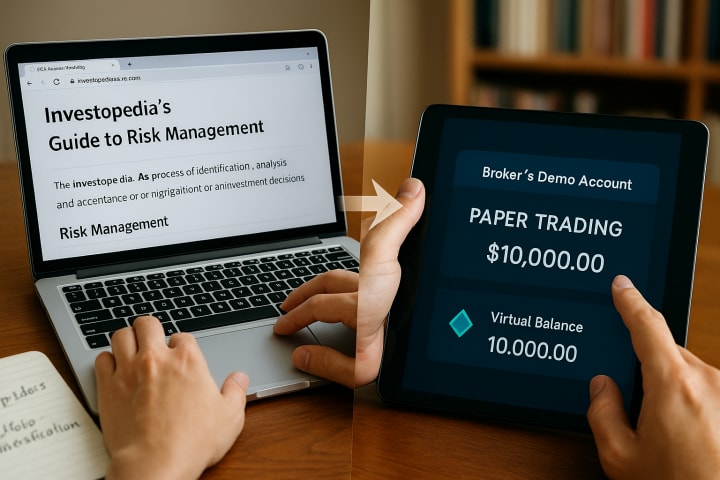
For those exploring online trading for beginners, a methodical and educational approach is paramount. The inherent risks of financial markets necessitate a foundation built on knowledge and practice before committing real capital.
The first and most critical step is education. Reputable online trading courses are widely available from sources like the SEC’s investor education website, FINRA, and non-commercial educational portals like Investopedia. These resources cover essential concepts, including portfolio diversification, understanding leverage margin call risks, and the psychological aspect of trading journal discipline.
The single most valuable tool for a novice is a online trading demo account. Also known as paper trading simulator, these accounts provide a risk-free environment with virtual currency, allowing users to:
- Familiarize themselves with a platform’s interface and tools.
- Test online trading strategies without financial consequence.
- Understand the practical application of candlestick patterns and other technical analysis indicators.
- Develop and refine their risk reward ratio calculations.
When ready to transition to live trading, the principle of starting with online trading with small capital is universally advised by financial educators. This approach limits potential losses while the trader gains real-world experience. Furthermore, beginners should prioritize brokers with strong regulatory oversight (e.g., SEC in the USA, FCA in the UK) and clear, transparent fee structures to avoid unexpected costs.
Risk Management and Capital Protection
In the realm of online trading, effective online trading risk management is not merely a supplementary skill; it is the cornerstone of sustainable participation. The primary goal of risk management is to preserve capital, allowing traders to survive losing streaks and remain in the market long enough to succeed.
Key principles of safe online trading methods include:
- Position Sizing: Never risking a significant portion of total capital on a single trade. A common rule of thumb is to risk no more than 1-2% of one's trading capital per trade.
- Stop-Loss Orders: A stop loss take profit order is an essential tool that automatically closes a position at a predetermined price to cap losses. Adhering to a stop-loss is a fundamental discipline that prevents small losses from becoming catastrophic ones.
- Leverage Management: The use of leverage margin call is a double-edged sword. While it can amplify gains, it can also magnify losses exponentially, potentially leading to losses that exceed the initial deposit. Understanding margin requirements is critical, especially in CFD trading risks and forex.
- Diversification: Portfolio diversification across uncorrelated asset classes, sectors, and geographical regions helps mitigate unsystematic risk. This principle is as relevant for an active trader as it is for a long-term investor.
- Emotional Discipline: Maintaining a trading journal discipline helps traders objectively analyze their performance, identify recurring mistakes, and remove emotion from the decision-making process.
Financial regulators like the FCA and ESMA frequently issue warnings about the high risks associated with complex, leveraged products, emphasizing that a significant percentage of retail investors lose money trading CFDs. This reinforces that online trading should be approached with a capital preservation mindset first and foremost.
Popular Trading Strategies and Tools (Day, Swing, Copy, Algo)
The strategies employed in online trading are as varied as the traders themselves, each with distinct time horizons, analytical methods, and risk profiles.
- Day Trading: This involves entering and exiting positions within the same trading day, with no overnight holds. Day traders capitalize on small price movements and rely heavily on technical analysis indicators, real-time news, and Level 2 market data. It requires significant time, focus, and a robust understanding of liquidity spreads slippage.
- Swing Trading: Swing traders hold positions for several days to weeks, aiming to capture gains from a predicted upward or downward "swing." This approach often combines technical analysis indicators with fundamental analysis stocks to identify potential entry and exit points.
- Copy Trading and Social Trading: Platforms that offer online trading with copy trading allow users to automatically replicate the trades of selected experienced investors. This can serve as a form of passive learning and strategy diversification, though it does not eliminate risk, as the performance of the copied trader is not guaranteed.
- Algorithmic and Automated Trading: Utilizing automated trading bots and API trading algorithmic systems, this strategy relies on pre-programmed algorithms to execute trades based on specific criteria like price, volume, or timing. It removes emotion from trading and can execute strategies at speeds impossible for a human.
- Long-Term Investing: While sometimes distinguished from active trading, this is a core function of online trading platforms. It focuses on buying and holding assets for years, based primarily on fundamental analysis stocks, with the goal of wealth accumulation through compounding.
Tools supporting these strategies are embedded within platforms, ranging from simple moving averages and candlestick patterns to complex back-testing environments that allow traders to simulate strategies against historical data.
Understanding Costs, Fees, and Regulation (FCA, SEC, ASIC)
The advertised promise of low fee online trading often belies a more complex cost structure. Astute traders must account for all potential expenses, which can significantly impact net returns.
- Commissions: While many brokers offer online trading without commission for stocks and ETFs, this typically does not apply to other assets like options, futures, or international shares.
- Spreads: In forex and CFD trading, the spread—the difference between the bid and ask price—is a primary cost. Tighter spreads generally indicate better liquidity and lower transaction costs.
- Overnight Financing (Swap Fees): For positions held open overnight on leverage, traders may pay or receive a financing fee based on the interbank interest rates.
- Inactivity and Withdrawal Fees: Some platforms charge fees for account dormancy or for withdrawing funds.
These costs are directly influenced by the regulatory environment. Reputable brokers are licensed and overseen by major financial authorities, which enforce strict rules on capital adequacy, client fund segregation, and transparent pricing. Key regulators include:
- USA: The Securities and Exchange Commission (SEC) and the Financial Industry Regulatory Authority (FINRA).
- United Kingdom: The Financial Conduct Authority (FCA).
- Australia: The Australian Securities and Investments Commission (ASIC).
- European Union: National regulators operating under the European Securities and Markets Authority (ESMA) framework.
Trading with a broker regulated by one of these bodies provides a layer of protection, including access to investor compensation schemes in the event of the broker's insolvency. Verification of a broker's regulatory status is a fundamental step in safe online trading methods.
Taxes, Compliance, and Market Hours by Region
The fiscal and operational aspects of online trading are heavily dependent on the trader's jurisdiction. An online trading taxes guide is essential, as tax liabilities can be complex.
- United States: Traders are subject to capital gains tax. Short-term gains (on assets held for less than a year) are taxed as ordinary income, while long-term gains benefit from reduced rates. Traders must report all transactions on IRS Form 8949.
- United Kingdom: Capital Gains Tax (CGT) applies to profits above an annual tax-free allowance. Additionally, stamp duty may be applicable on share purchases.
- India: Gains from equity shares held for less than one year are classified as short-term capital gains (STCG) and are taxed at 15%. Long-term gains (LTCG) on equities are taxed at 10% above a specified exemption limit.
Understanding online trading hours by market is equally crucial for planning and execution:
- US Markets (NYSE, NASDAQ): 9:30 AM - 4:00 PM Eastern Time, Monday to Friday.
- London Stock Exchange (LSE): 8:00 AM - 4:30 PM GMT.
- Tokyo Stock Exchange (TSE): 9:00 AM - 3:00 PM JST, with a lunch break.
- Forex Market: Operates 24 hours a day from 5:00 PM EST Sunday to 5:00 PM EST Friday, across major global sessions (Sydney, Tokyo, London, New York).
For specific communities, concepts like halal online trading are important, which involves ensuring trading activities comply with Islamic finance principles, often by avoiding interest (riba) and speculative uncertainty (gharar). Several regulated brokers offer specific Sharia-compliant accounts.
Online Trading in the USA, UK, and India
The online trading landscape exhibits distinct characteristics in different global markets, shaped by local regulations, market maturity, and investor demographics.
- Online Trading in the USA: The US market is one of the world's largest and most mature. Dominated by major platforms like Fidelity, Charles Schwab, and Interactive Brokers, it is characterized by intense competition on fees and technology. Regulatory scrutiny from the SEC and FINRA is high, focusing on payment for order flow (PFOF) practices and investor protection. The rise of online trading for students and younger demographics has been significant, driven by app-based platforms.
- Online Trading in the UK: The UK market operates under the stringent oversight of the FCA. Following the Brexit transition, some differences have emerged from the broader ESMA framework, particularly concerning the marketing and distribution of CFDs to retail clients. The FCA mandates rigorous stress testing for brokers and provides a robust Financial Services Compensation Scheme (FSCS). The demand for online trading community forum engagement is strong among UK retail traders.
- Online Trading in India: The Indian market has experienced explosive growth, driven by a young, digitally-savvy population and the emergence of discount brokers like Zerodha and Upstox. The market is regulated by the Securities and Exchange Board of India (SEBI), which has implemented rules to ensure stability, such as the collection of the Securities Transaction Tax (STT) on all trades. Discussions around halal online trading and online trading with small capital are particularly prevalent in this region.
- Hyper-Personalization through AI and ML: Artificial Intelligence and Machine Learning will move beyond simple analysis to offer hyper-personalized trading insights, risk assessments, and portfolio management suggestions tailored to an individual's behavior and goals.
- Integration of Decentralized Finance (DeFi): The bridge between traditional online trading platforms and decentralized crypto exchanges will strengthen, potentially allowing for the trading of tokenized versions of real-world assets (RWAs) like stocks and commodities on blockchain networks.
- Enhanced Regulatory Scrutiny: As markets and products become more complex, regulators will focus increasingly on API trading algorithmic systems, the use of AI, and the protection of retail traders from potentially unsuitable complex products.
- The Rise of Fractional and Social Investing: Concepts like fractional share ownership and social online trading with copy trading will become more mainstream, further lowering barriers to entry and fostering community-driven investment approaches.
- Focus on Financial Wellness: Platforms may increasingly bundle online trading with broader financial wellness tools, including budgeting, savings, and credit monitoring, positioning themselves as holistic financial hubs.
Outlook for Online Trading in 2025 and Beyond
The trajectory of online trading points towards continued innovation and evolution. Several key trends are poised to define the space in 2025 and the coming years.
While the allure of online trading passive income ideas will persist, the future will likely reward those who prioritize education, disciplined risk management, and a clear understanding of the interplay between technology, regulation, and global macroeconomic forces.
Conclusion Education and Discipline as the Bedrock of Trading
The world of online trading in 2025 offers unprecedented access and tools for global market participation. From sophisticated online trading platforms to educational online trading courses and risk-free online trading demo account simulators, the resources available to the modern trader are vast. However, this accessibility does not diminish the inherent risks. The volatility of financial markets, the impact of leverage, and the psychological challenges of trading remain constant.
The consistent theme among seasoned market participants and regulators is the non-negotiable role of continuous education and stringent risk management. Success in online trading is less about finding a "secret strategy" and more about consistent execution of a disciplined plan, prudent capital protection, and a long-term perspective. As the ecosystem evolves with new technologies, the fundamental principles of understanding costs, verifying regulatory standing, and managing risk will continue to separate informed participants from the rest. Traders should always consult regulated financial and tax institutions before making financial decisions.
About the Creator
MEXQUICK
Beyond Market Move - At MEXQuick, we combine smart trading infrastructure with global market access — offering users a seamless way to trade, learn, and grow. MEXQuick News & MEXQuick News
Australia Stearic Acid Market: Industrial Demand, Sustainability Trends & Functional Applications
Australia Stearic Acid Market Overview The Australia stearic acid market is witnessing robust growth driven by rising demand from end-use industries such as personal care, cosmetics, detergents, rubber processing, pharmaceuticals and industrial chemicals. Stearic acid — a saturated fatty acid typically derived from vegetable fats (such as palm oil, coconut oil) or animal fats — serves as a versatile ingredient in lubricants, surfactants, emulsifiers, stabilisers, and texturising agents across a wide range of applications. The Australia stearic acid market size reached 0.19 Million Tons in 2024. Looking forward, IMARC Group expects the market to reach 0.30 Million Tons by 2033, exhibiting a growth rate (CAGR) of 5.20% during 2025-2033. This growth mirrors steady industrial activity, increasing consumer goods production, and a growing emphasis on functional and sustainable raw materials in manufacturing and formulations.
By Amyra Singh7 days ago in Trader
Wild Card Weekend Recap: What Happens Now?
I think I figured out why I love Wild Card Weekend so much. It's because it's the first playoff anything of the calendar year. The NFL season starts in the fall, and once upon a time, the champion was crowned either on or slightly before New Year's. The evolution of the NFL schedule has resulted in the playoffs starting just into the New Year, and currently, the final week of the season falls on the first weekend of the New Year, with Wild Card Weekend coming a week after that. So yes, chronologically, the NFL's Wild Card Weekend serves as the first playoff anything of the calendar year.
By Clyde E. Dawkins6 days ago in Unbalanced



Comments
There are no comments for this story
Be the first to respond and start the conversation.