
Netherlands Logistics Market: Supply Chain Strength, Global Trade & Technological Integration
How infrastructure excellence, e-commerce growth and digital transformation are shaping the Netherlands logistics landscape

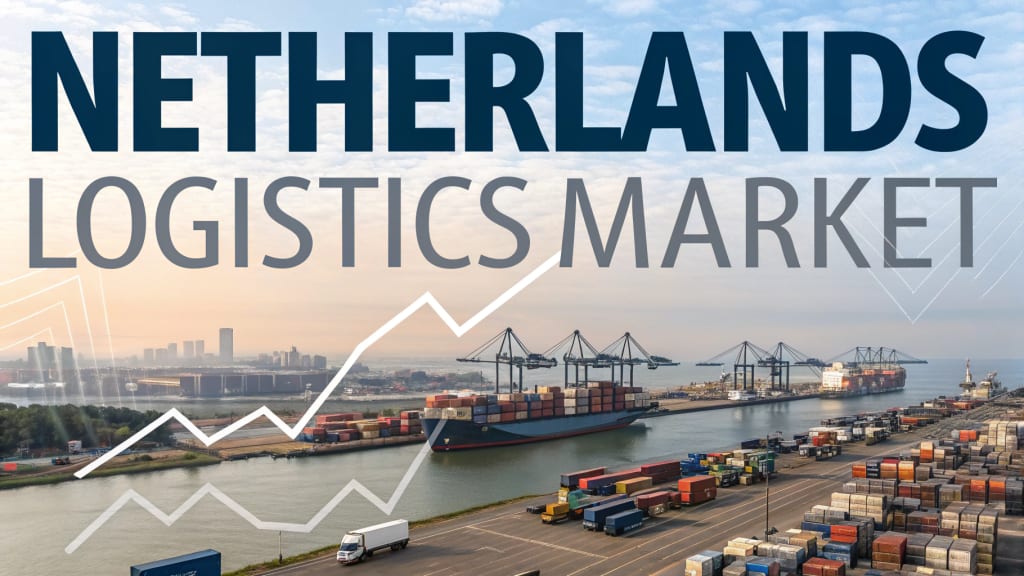
The Netherlands logistics market is one of Europe’s most dynamic supply-chain ecosystems, known for world-class infrastructure, strategic ports, strong connectivity and efficient multimodal networks. According to market estimates, the Netherlands logistics market size reached USD 59.36 Billion in 2025 and is expected to grow to USD 84.64 Billion by 2034, exhibiting a CAGR of 4.02% during 2026–2034. The logistics sector — encompassing freight transport, warehousing, distribution, supply-chain management and value-added services — plays a pivotal role in both domestic economic activity and international trade flows, reinforcing the Netherlands’ reputation as a European logistics hub.
With the Port of Rotterdam, Schiphol Airport and a highly developed rail-road network, the Netherlands connects goods efficiently across Europe and beyond. This strategic positioning attracts global manufacturers, e-commerce giants, distribution partners and logistics service providers — all of which contribute to robust market demand and steady sector growth.
What’s Driving Market Growth?
Strategic Infrastructure & Trade Connectivity The Netherlands is home to key logistics gateways in Europe, prominently including the Port of Rotterdam — the continent's largest port — and Amsterdam Schiphol Airport, a major center for air cargo. These nodes support large amounts of maritime and air cargo, enabling smooth distribution into Central and Western Europe. Comprehensive road and rail networks further improve supply chain effectiveness and connectivity.
E-Commerce and Omni-Channel Retail Expansion Online shopping patterns are increasingly driving logistics needs, as e-commerce companies necessitate warehousing, fulfillment centers, last-mile delivery solutions, and inventory control systems. Retailers and third-party logistics (3PL) companies are putting money into expandable distribution systems to enhance quick delivery, returns handling, and customer demands for same-day or next-day shipping.
Stakeholders in Value-Added Services & Advanced Fulfilment Logistics are progressively providing enhanced solutions like tailored packaging, reverse logistics, drop-shipping options, inventory optimization, cold-chain management, and tech-driven fulfilment services. These sophisticated solutions enable brands to distinguish service quality while enhancing supply chain efficiency.
Sustainability & Green Logistics The Netherlands is at the forefront of sustainable logistics strategies in Europe. Companies are adopting green fleets, alternative fuels, carbon tracking systems, energy-efficient warehousing and eco-friendly routing technologies to reduce emissions, cut operational costs and align with regulatory sustainability goals. Green logistics is becoming a competitive differentiator in the sector.
Digitalisation & Smart Supply Chain Technologies The adoption of digital platforms, automation, real-time tracking systems, warehouse robotics, AI-powered forecasting and data analytics has elevated operational efficiencies across logistics operations. These technologies not only reduce manual labour but also optimise resource utilisation, improve service reliability and enhance customer transparency throughout the supply chain.
Market Segmentation & Key Insights
By Service Type The logistics market is diverse, including freight transportation (road, rail, air, sea), contract logistics, warehousing & distribution, express delivery & courier services, cold-chain logistics, last-mile delivery, cross-docking services, reverse logistics, and value-added services such as packaging and order fulfilment.
By Transportation Mode Road transport continues to lead due to flexibility and dense regional networks, while rail freight is growing as an efficient inland alternative. Sea freight retains significance through Rotterdam’s port connectivity, and air cargo — supported by Schiphol — facilitates time-sensitive deliveries including pharmaceuticals, perishables and high-value goods.
By End-Use Industry The sector serves retail & e-commerce, manufacturing, automotive, pharmaceuticals, food & beverage, electronics, cold chain & perishables, fast-moving consumer goods (FMCG), industrial equipment, and consumer durables. E-commerce and FMCG sectors are major contributors due to frequent inventory turnover and high delivery volumes.
By Distribution Channel Logistic services are offered through third-party logistics (3PL) providers, fourth-party logistics (4PL) integrators, in-house teams of large corporations, express couriers, digital logistics platforms, freight forwarders, and supply-chain service marketplaces. 3PL partners often provide end-to-end solutions that reduce complexities for manufacturers and retailers.
What the Opportunities Are?
Automated Warehousing & Robotics Integration There is significant opportunity for automated warehousing solutions, robotics systems, IoT-enabled inventory tracking and smart fulfilment centres that increase throughput, reduce labour costs and boost order accuracy. These advancements enhance competitiveness in a high-performance logistics environment.
Green & Low-Emission Transport Solutions Sustainability initiatives open avenues for electric freight fleets, hydrogen-fuelled vehicles, green routing algorithms and carbon-neutral logistics services that align with climate goals while appealing to environmentally conscious customers and corporate ESG targets.
Cold Chain & Temperature-Sensitive Logistics With growing demand for fresh produce, pharmaceuticals and perishable goods, advanced cold-chain infrastructure, temperature-controlled storage, and specialised transport services cater to sectors requiring strict quality control and regulatory compliance.
Cross-Border & EU Logistics Expansion Leveraging the Netherlands’ EU market access, logistics firms can tap into cross-border distribution networks, tariff efficiencies and integrated supply chains that benefit regional trade flows — enabling multinational logistics operations and expanded service portfolios.
Digital Platforms & Data-Driven Services Logistics technology providers can capitalise on real-time tracking platforms, predictive analytics, digital freight marketplaces and integrated supply-chain suites that deliver transparency, operational insights and actionable performance metrics — enhancing decision-making across stakeholders.
Recent News and Developments in Netherlands Logistics Market
Jul 2025: Authorities and logistics associations highlighted multimodal freight enhancement initiatives aimed at improving rail–sea–road connectivity and cargo flow optimization — boosting cross-border transport efficiency.
Sep 2025: Reports revealed rising investment in automated warehouse infrastructure and robotics by 3PL operators to support fast-moving e-commerce demand — shortening order cycles and enhancing fulfilment speed.
Nov 2025: Industry forums spotlighted green logistics strategies including alternative fuel adoption, carbon tracking tools, and eco-fleet innovation — positioning sustainable supply chains as market differentiators.
Why Should You Know About Netherlands Logistics Market?
You should know about this market because it illustrates how trade infrastructure, digital innovation and consumer trends drive foundational economic activity — making logistics an indispensable pillar of both domestic commerce and global supply chains. The Netherlands is strategically positioned as a logistics hub that connects Europe’s production, consumption and distribution networks, reinforcing its importance beyond national borders.
For investors, the logistics sector presents exposure to a steady-growth market underpinned by e-commerce expansion, global trade linkages, technological integration and supply-chain diversification. The projected CAGR of 4.02% reflects structural demand supported by essential logistics functions, cross-border access and service innovation.
For businesses, service providers, and policymakers, understanding logistics segmentation, infrastructure priorities and technology trends helps inform strategic planning, investment decisions and operational improvements — ensuring resilience, efficiency and competitive differentiation in a fast-evolving ecosystem.
In essence, the Netherlands logistics market encapsulates how mobility, connectivity and digital workflow orchestration converge — making it a compelling sector for trend watchers, investors and business leaders intent on navigating future supply-chain challenges and opportunities.
About the Creator
Thomas
Market Research Analyst | Industry Trends & Forecasting | Turning market data into clear, actionable business insights across global sectors.
Mexico Digital Twin Market Size, Opportunities & Investment Trends 2026–2034 | IMARC Analysis
Mexico Digital Twin Market Growth, Trends, Forecast, Key Players, and Opportunities Mexico Digital Twin Market Overview The Mexico Digital Twin Market is witnessing strong expansion as organizations across industries accelerate digital transformation initiatives. Digital twin technology, which enables the creation of virtual replicas of physical assets, systems, and processes, is increasingly being adopted to improve operational efficiency, predictive maintenance, and real-time decision-making.
By Kim Soo hyunabout 14 hours ago in Trader
United States Air Freight Market Size, Share, Industry Trends and Forecast 2026-2034
How the United States Air Freight Market Keeps the Modern Economy Moving Most people rarely think about air freight, yet it quietly powers everyday life in the United States. From medical supplies and electronics to fresh produce and emergency equipment, air cargo moves goods at a speed that ground and sea transportation cannot match. The United States air freight market reflects the country’s reliance on rapid logistics, global trade networks, and consumer expectations shaped by instant delivery culture.
By Jackson Watsona day ago in Trader




Comments
There are no comments for this story
Be the first to respond and start the conversation.