
Modern Rice Milling Processing Step
The significance of milling paddy extends beyond mere aesthetic improvements to rice grains. It offers various other advantages
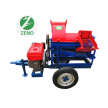

Milling of paddy is the detailed process of producing refined milled rice, which involves the careful separation of the husk (20%), bran layers (10%), and clean rice or starchy endosperm (65%) and broken rice (5%). This process consists of various essential steps, including cleaning, husking, whitening, polishing, and sorting. Each stage plays a vital role in the transformation of unpolished rice into high-quality white rice that is suitable for consumption.
The significance of milling paddy extends beyond mere aesthetic improvements to rice grains. It offers various other advantages:
1. Enhanced Taste
The elimination of the bran layer, which carries a slightly bitter taste, results in a milder and more palatable flavour profile.
2. Improved Cooking Properties
Milled rice cooks more rapidly and evenly than unpolished rice, making it a convenient option for daily consumption.
By eliminating the bran layer, which contains oils prone to spoilage, milling of paddy contributes to extending the shelf life of rice. This not only reduces waste but also ensures long-term food security.
Modern rice millling line have experienced powerful improvements by including cutting-edge machinery and techniques to enhance efficiency and the quality of the final product. The main objective of rice milling is to eliminate the husk, bran layers, and any other impurities, revealing pure white rice grains that are fit for consumption.
The process of milling of paddy not only enhances the visual appeal but also the taste, and cooking characteristics of the rice and extends its shelf life. By refining the product, rice milling produces a premium result that is not only aesthetically pleasing but also packed with nutrients.
What is modern rice milling?
Modern rice milling is a refined process that uses advanced technology to carefully extract the edible portion of the rice grain. This multi-step process involves removing the outer layers, called the husk and bran while preserving the nutritious heart of the rice grain, known as the endosperm. This not only enhances the appearance and texture of the rice but also plays a crucial role in its quality
Modern rice milling machines are supplied with advanced features that work in harmony to produce top-quality rice that meets the expectations of consumers -
Dehuskers
These powerful machines act like nutcrackers, cracking open the outer husk to reveal the brown rice kernel.
Polishers
The rice polisher machines take the brown rice and further refine it by carefully removing some of the remaining bran layers, giving it a characteristic white appearance.
Graders
These sorting machines separate the rice based on size and quality, ensuring consistency in the final product.
Modern Rice Milling:
We use advanced machines like polishers, abrasive stones, pumps and powerful motors to process rice. It's like having high-tech aides that make the whole process smoother. This way, we get more rice, and it's harmonious in quality. It's a fast and effective system.
Cleaning
The processing of rice begins with the blowout of paddy (unhusked rice). The paddy is thoroughly cleaned to remove impurities like stones, dust, and other foreign particles. Cleaning machines such as pre-cleaners and vibro destoner machines are used in this step.
Parboiling
In some cases, the paddy may undergo the parboiling stage, a process that improves the nutritional content and quality of the rice. During this process, the paddy is washed, steamed, and dried before the milling of paddy. This stage requires soaking tanks, steaming equipment, and drying facilities.
Milling Process
The actual milling of the paddy process begins with the removal of the outer layers of the paddy to obtain brown rice. Modern rice mills use various machines like hullers, whitening machines, and polishers to remove the husk, bran, and germ layers, producing brown rice.
Whitening
Brown rice undergoes further processing to remove the remaining bran layers, resulting in white rice. Whitening machines that use friction or
Sorting and Grading
The milled rice is sorted and graded based on size, colour, and quality to guarantee a consistent final product. Optical sorters, length graders, and other sorting machines are used for accurate categorisation.
Polishing
For certain types of rice, additional polishing is performed to enhance appearance. Water jet polishing machines use friction to give the rice a shiny appearance.
Length Grading and Blending
Rice is further sorted based on grain length. Different batches may be combined to achieve specific qualities. Length graders and blending equipment are used to achieve the desired rice quality.
Packaging
The final milled rice is packaged for distribution to consumers. Automated packaging machines fill and seal bags with processed rice.
About the Creator
Catherine Lyne
Zeno Farm Machinery produce grain thresher machine,corn sheller machine,rice mill machine,paddy husker machine,rice destoner,rice reaper machine,corn harvester machine,chaff cutter machine etc.https://www.shellermachine.com
Keep reading
More stories from Catherine Lyne and writers in Trader and other communities.
Artificial Intelligence in Agriculture
Although we produce a lot of food, many people still lack the right to access enough meals. Waste, weather change, and different problems are responsible for this. Artificial intelligence, or AI, is beneficial. It can examine data to assist farmers in making more informed choices. For instance, it can aid in lowering the consumption of water and pesticides. AI in agriculture may be a significant opportunity in India.
By Catherine Lyneabout a year ago in Humans
Stanislav Kondrashov: AI Is Quietly Rewriting the Rules for Bitcoin and XRP
Bitcoin has dropped to $74,000. XRP has slipped. Across the board, digital currencies have lost ground—at the same time that technology companies are facing renewed pressure. While headlines often point to policy changes or economic signals, another factor is emerging in the background: artificial intelligence. According to TELF AG founder Stanislav Kondrashov, the ripple effects of AI development are playing a much larger role than many realise.
By Stanislav Kondrashova day ago in Trader



Comments
There are no comments for this story
Be the first to respond and start the conversation.