
Japan Ultrasound Device Market Size and Forecast 2025–2033
How aging demographics, technological innovation, and point-of-care imaging are reshaping Japan’s diagnostic landscape

Introduction: A Clearer View into Japan’s Healthcare Future
Japan’s healthcare system is globally recognized for its technological sophistication, strong infrastructure, and commitment to early diagnosis and preventive care. Among the many medical technologies supporting this ecosystem, ultrasound devices play a particularly vital role. These systems, which use high-frequency sound waves to produce real-time images of internal organs and tissues, have become indispensable tools across hospitals, diagnostic centers, maternity clinics, and ambulatory care settings.
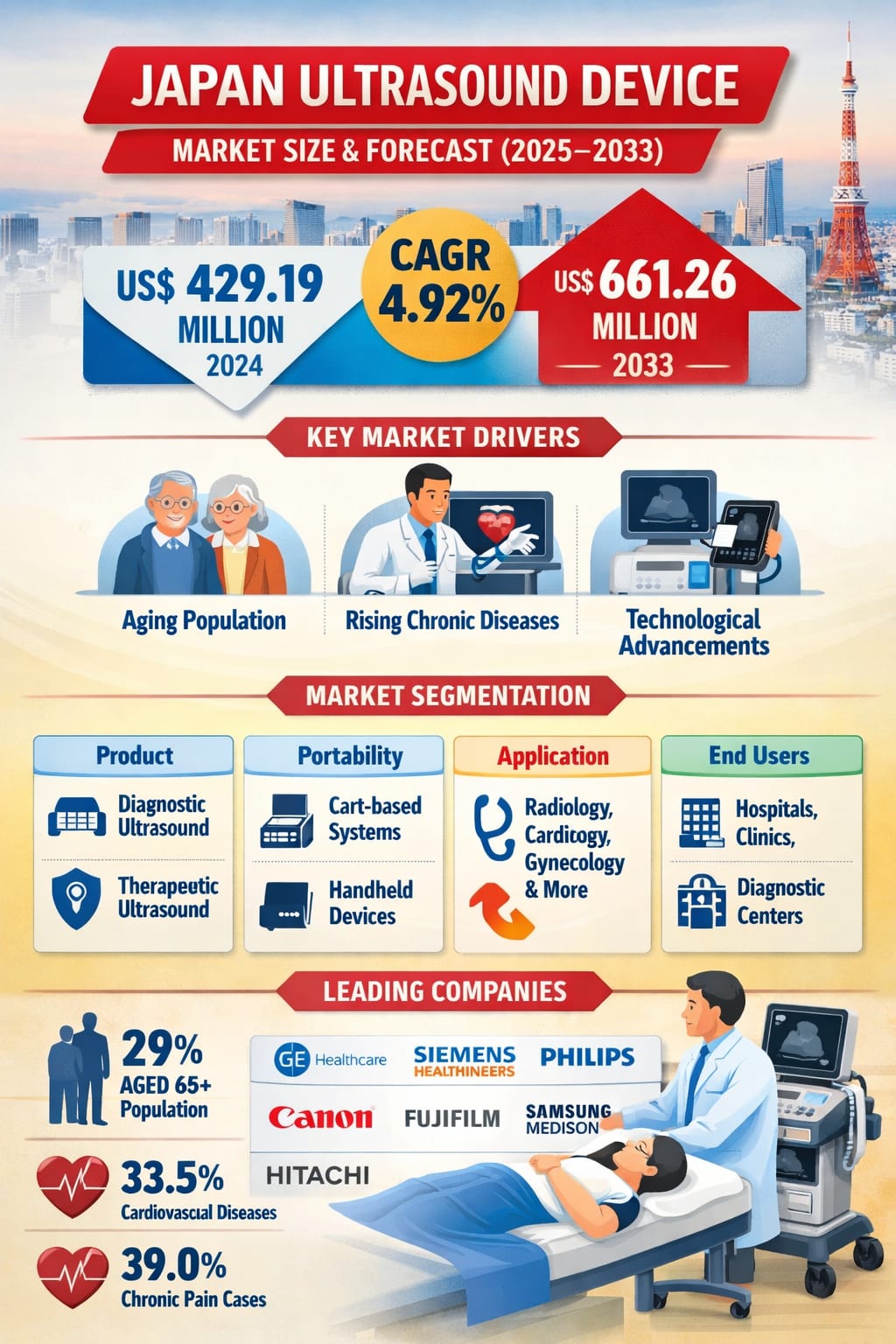
According to Renub Research, the Japan Ultrasound Device Market is expected to reach US$ 661.26 million by 2033, up from US$ 429.19 million in 2024, growing at a compound annual growth rate (CAGR) of 4.92% from 2025 to 2033. This steady expansion reflects both structural healthcare trends and rapid technological evolution within the country’s medical device sector.
The market is expanding mainly due to the rising demand for diagnostic imaging and therapy and the growing popularity of minimally invasive procedures. Ultrasound technology, known for being non-invasive, radiation-free, and cost-effective compared to many other imaging modalities, is increasingly favored for both routine screenings and specialized clinical applications.
Understanding Ultrasound Devices and Their Clinical Importance
An ultrasound device, often referred to as a sonogram machine, is a medical imaging system that uses high-frequency acoustic waves to generate real-time images from inside the human body. Unlike X-rays or CT scans, ultrasound does not rely on ionizing radiation, making it safer for repeated use and particularly valuable in sensitive applications such as pregnancy monitoring.
In clinical practice, ultrasound is widely used to examine organs such as the liver, kidneys, pancreas, spleen, gallbladder, thyroid, uterus, ovaries, prostate, and testicles, as well as the vascular system. It also plays a crucial role in guiding minimally invasive procedures, including biopsies, fluid drainage, and tumor treatments, by enabling precise needle placement.
In Japan, ultrasound has become deeply embedded in routine diagnostics and long-term disease management. Its versatility, safety profile, and continuous improvements in image quality have ensured its relevance across multiple medical specialties, from cardiology and radiology to gynecology and urology.
Disease Burden and Demographics: The Demand Side of the Market
One of the strongest drivers of ultrasound adoption in Japan is the country’s aging population. Japan has one of the oldest populations in the world, with more than 36 million people aged 65 and above, representing roughly 29% of the total population. This demographic shift has profound implications for healthcare demand, particularly in the diagnosis and monitoring of chronic diseases.
Research published in January 2023 highlighted that the weighted prevalence of atherosclerosis and cardiovascular diseases in Japan stood at 33.5% and 37.3%, respectively. Cerebrovascular disorders, coronary heart disease, and carotid artery disease were among the most common subcategories. These conditions often require repeated imaging for diagnosis, treatment planning, and follow-up—making ultrasound a frontline tool due to its safety and accessibility.
Similarly, a study published in August 2022 reported that the pooled prevalence of chronic musculoskeletal pain in Japan was 39.0%, with rates of 36.3% in men and 41.8% in women, increasing with age. Musculoskeletal ultrasound is increasingly used to assess soft tissue injuries, joint inflammation, and tendon disorders, further broadening the technology’s clinical footprint.
Taken together, the high burden of chronic diseases and the rapidly aging population are creating sustained demand for ultrasound equipment across Japan’s healthcare system.
Technological Innovation: Redefining What Ultrasound Can Do
Another major growth engine for the Japan ultrasound device market is continuous technological advancement. Over the past decade, ultrasound systems have evolved from basic grayscale imaging tools into highly sophisticated diagnostic platforms.
The integration of 3D and 4D imaging has significantly enhanced visualization, especially in cardiology, obstetrics, and gynecology. These technologies allow clinicians to observe anatomical structures in greater detail and even in motion, improving diagnostic confidence and clinical outcomes.
At the same time, artificial intelligence (AI) and machine learning are increasingly being incorporated into ultrasound systems. These tools assist with image processing, automated measurements, anomaly detection, and workflow optimization, enabling faster and more accurate clinical decision-making. For busy hospitals and diagnostic centers in Japan, such efficiency gains are becoming increasingly valuable.
Advancements in transducer technology and imaging software have also improved image resolution, depth penetration, and overall usability. As a result, modern ultrasound systems are not only more powerful but also more user-friendly, supporting wider adoption across different types of healthcare facilities.
The Rise of Portable and Handheld Ultrasound Systems
One of the most transformative trends in the market is the growing popularity of portable and handheld ultrasound devices. These compact systems are reshaping how and where ultrasound imaging is performed.
In emergency departments, ambulatory care centers, rural clinics, and even home care settings, portable ultrasound devices enable point-of-care imaging, allowing clinicians to make faster diagnostic and treatment decisions. Their mobility, ease of use, and relatively lower cost compared to traditional cart-based systems make them especially attractive in settings where space, time, or resources are limited.
In Japan, where healthcare delivery is increasingly focused on decentralization and accessibility, these devices support broader policy goals. They help extend diagnostic capabilities to underserved areas and improve care for elderly patients who may have difficulty traveling to large hospitals. This shift is expected to play a significant role in driving overall market growth over the forecast period.
Strategic Collaborations and Industry Developments
The competitive landscape of Japan’s ultrasound device market is also being shaped by strategic partnerships, product launches, and long-term supply agreements. These initiatives aim to expand access to advanced technologies while strengthening the domestic medical device ecosystem.
A notable example is the five-year agreement signed in January 2021 between Olympus Corporation and Hitachi, Ltd. Under this collaboration, the two companies agreed to jointly develop endoscopic ultrasound (EUS) systems, with Hitachi continuing to supply Olympus with diagnostic ultrasound systems and related components. Such partnerships highlight the industry’s focus on innovation, integration, and long-term technological leadership.
As leading manufacturers continue to invest in research and development, Japan’s healthcare providers are expected to gain access to increasingly sophisticated ultrasound solutions, further supporting market expansion.
Challenges Facing the Japan Ultrasound Device Market
Despite strong growth prospects, the market is not without its challenges.
High Cost of Advanced Systems
Modern ultrasound devices equipped with features such as 3D/4D imaging, AI-powered software, and advanced transducers come with significant acquisition, installation, and maintenance costs. For smaller hospitals, outpatient clinics, and rural healthcare providers, these expenses can be prohibitive. As a result, access to cutting-edge technology may remain concentrated in large, well-funded institutions, potentially widening the healthcare gap between urban and rural areas.
Market Saturation in Urban Areas
Major metropolitan regions like Tokyo and Osaka already have highly developed healthcare infrastructures with widespread adoption of advanced imaging equipment. This has led to a degree of market saturation, limiting opportunities for rapid growth in these areas. While rural regions represent a potential expansion frontier, they often face constraints related to funding, infrastructure, and consistent demand, making market penetration more complex and resource-intensive.
Market Segmentation: A Diverse and Multi-Faceted Landscape
The Japan Ultrasound Device Market is segmented across several dimensions, reflecting its broad range of applications and user needs.
By Product:
Diagnostic Ultrasound Systems
Therapeutic Ultrasound Systems
By Portability:
Trolley/Cart-based Ultrasound Devices
Compact/Handheld Ultrasound Devices
By Display Type:
Color Ultrasound Devices
Black & White (B/W) Ultrasound Devices
By Application:
Radiology/General Imaging
Cardiology
Gynecology
Vascular
Urology
Others
By End User:
Hospitals
Surgical Centers
Diagnostic Centers
Maternity Centers
Ambulatory Care Centers
Academic Institutions
This broad segmentation highlights the versatility of ultrasound technology and its critical role across nearly every corner of the healthcare system.
Competitive Landscape: Key Companies Shaping the Market
The Japanese ultrasound device market is supported by a strong mix of global and domestic players, all of whom are actively investing in innovation, partnerships, and market expansion. The key companies covered in the market include:
GE Healthcare
Siemens Healthcare
Philips
Canon Inc.
Fujifilm Holdings Corporation
Samsung Medison Co. Ltd. (Samsung Electronics Co. Ltd.)
Hitachi Ltd.
These companies compete on factors such as image quality, system reliability, software capabilities, portability, after-sales service, and price. Their ongoing focus on research and development is expected to further elevate the technological standard of ultrasound imaging in Japan.
Market Outlook: Steady Growth with Strategic Importance
With the market projected to grow from US$ 429.19 million in 2024 to US$ 661.26 million by 2033, the outlook for Japan’s ultrasound device industry remains solid and stable. A CAGR of 4.92% reflects not explosive, but sustainable and resilient growth, underpinned by structural healthcare needs rather than short-term trends.
The combination of demographic pressures, chronic disease prevalence, technological innovation, and healthcare system modernization ensures that ultrasound will remain a cornerstone of diagnostic and therapeutic practice in Japan for years to come.
Final Thoughts
The Japan Ultrasound Device Market stands at the intersection of medical necessity and technological progress. As the country continues to grapple with an aging population and a rising burden of chronic diseases, the importance of safe, efficient, and versatile diagnostic tools will only increase.
Ultrasound devices, with their non-invasive nature, expanding technological capabilities, and growing portability, are uniquely positioned to meet these needs. While challenges such as high equipment costs and urban market saturation persist, ongoing innovation, strategic collaborations, and policy-driven efforts to improve healthcare access are likely to keep the market on a steady upward trajectory.
About the Creator
Keep reading
More stories from shibansh kumar and writers in Trader and other communities.
Australia Hormone Replacement Therapy Market Size and Forecast 2025–2033
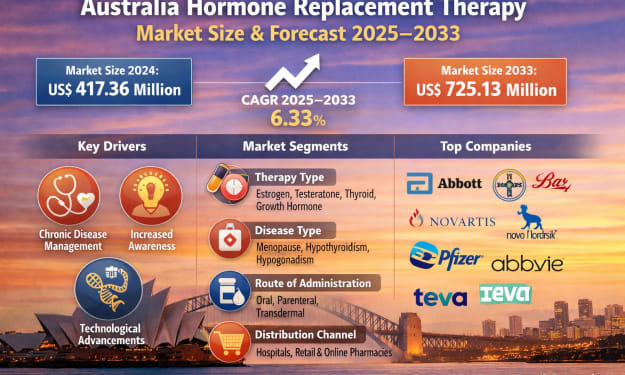
Australia Hormone Replacement Therapy Market Outlook The Australia Hormone Replacement Therapy (HRT) Market is entering a phase of steady and meaningful expansion, reflecting broader shifts in healthcare awareness, demographic change, and therapeutic innovation. According to Renub Research, the market is expected to reach US$ 725.13 million by 2033, up from US$ 417.36 million in 2024, growing at a compound annual growth rate (CAGR) of 6.33% from 2025 to 2033.
By shibansh kumarabout 15 hours ago in Trader
Understanding REITs: A Beginner’s Guide to Real Estate Investing
Introduction Real Estate Investment Trusts (REITs) are companies that own, operate, or finance income-generating real estate. They provide an opportunity for investors to earn passive income from real estate without directly owning property.
By Hammad Nawaz5 days ago in Trader



Comments
There are no comments for this story
Be the first to respond and start the conversation.