
James Wahls’ Revolve Fund: Recoverable Grants and Equitable Capital
How can funders distinguish Revolve’s “strategic influence” from simple correlation when attributing follow-on capital?


James Wahls, founder of the Revolve Fund, explains how recoverable grants expand capital access for marginalized entrepreneurs. Unlike loans or equity, they set impact or revenue milestones; repayment occurs only when goals are reached, with no penalties if funds were used as intended. Revolve pairs flexible dollars with wraparound supports—communications support, business acumen, access to different networks, etc.—to help navigate banks, CDFIs, and venture funds. Impact is measured as "strategic influence": co-investment, follow-on capital, and referral-driven wins. While based in Baltimore, Revolve works with grantees around the country including an expanded focus in Detroit, Wahls’s hometown of origin. Detroit grantee partners include Black Tech Saturdays, Invest Detroit Ventures, Black Leaders Detroit, College & Beyond and more. In this and other markets, Wahls advocates for thoughtful risk tolerance, cautions against exploitative capital, and emphasizes the contextual leadership of local philanthropy.
In this interview with Scott Douglas Jacobsen, Wahls outlines the origins and impact of the Revolve Fund, a grantmaking impact investing initiative designed to expand capital access for historically marginalized entrepreneurs. Wahls explains how his Detroit upbringing, personal experience as an entrepreneur, and work in major foundations informed Revolve's model of recoverable grants—flexible, non-punitive capital tied to milestones rather than debt. He emphasizes the Fund's dual role: deploying dollars and providing wraparound supports like education, networking, and referrals. Wahls also highlights Detroit partnerships, the importance of local philanthropy, and his philosophy of balancing risk-taking with long-term sustainability in entrepreneurial ecosystems.
Scott Douglas Jacobsen: All right, hello. Today we're here with James Wahls, founder and managing director of the Revolve Fund, an innovative grantmaking impact investing initiative that increases capital access for historically marginalized entrepreneurs and organizations. Born and raised in Detroit, Wahls has dedicated his career to advancing equitable economic opportunities, having previously served as a portfolio manager for social investments at the Annie E. Casey Foundation and currently serving at Mission Investors Exchange. Under his leadership, Revolve has deployed over $1 million nationally—including $400,000 in Detroit-specific grantmaking—catalyzing at least $15 million in additional capital in the city. His work blends philanthropy and investment to close capital gaps, foster innovation, and strengthen entrepreneurial ecosystems. He currently has a role at Mission Investors Exchange. Thank you very much for being with me today. What inspired you to create the Revolve Fund?
James Wahls: Really, my experiences in impact investing, along with my personal experiences as an entrepreneur in Detroit. I was both fortunate and unfortunate enough to encounter many of the capital barriers that we often talk about when I was exploring my social enterprises before I went to the Kellogg Foundation. With those experiences, I carried that knowledge to the Kellogg Foundation, which afforded me the opportunity to get into impact investing. Once I had the opportunity to learn more about impact investing and how it works, I was able to utilize those tools to build or co-build several investments in Detroit and around the United States, supporting entrepreneurs in securing capital. While doing that at Kellogg and later at Casey, I saw that there were still gaps. Even with all the great tools we had—and still have—in impact investing, I thought there was an opportunity to provide smaller amounts of capital directly into communities in ways that could be absorbed effectively. More importantly, I saw opportunities to work with entrepreneurs to help them reach the next step on the capital spectrum as they moved forward. That was the inspiration behind the creation of the Revolve Fund: my own experiences and my professional experiences in the industry.
Jacobsen: How do recoverable grants differ from traditional philanthropy or equity investment models?
Wahls: To be clear, recoverable grants are grants. They're not loans or equity investments—we're not asking for collateral, and we're not charging interest. The difference from a traditional grant is that we set financial or impact milestones; when those are reached, the grantee returns some or all of the funds. If they use the money for its intended purpose but do not meet the milestones, there are no penalties—the capital is there to help them reach those goals.
Jacobsen: What challenges do historically marginalized entrepreneurs face that Revolve helps explicitly address?
Wahls: First, capital access—getting the actual dollars. That's one thing we address. But more importantly, I think it's education and access to the institutions.
Many institutions that provide capital are well-intentioned and do much great work, but they can sometimes be challenging to navigate. With Revolve Fund, we bring my own experience, the guidance of our advisory board, and other consultants who have decades of experience working with these institutions. We provide knowledge, wraparound support, soft introductions, referrals, and other assistance that help entrepreneurs position themselves better to access capital. So it's capital, wraparound supports, and networking.
Jacobsen: You've catalyzed over $15 million in additional funding in Detroit and over $70 million nationwide. How do you measure impact through your metrics?
Wahls: We use a custom term called "strategic influence." What that means is we look at co-investment—if others are investing alongside us, regardless of whether it's grants, debt, or equity capital paired with our recoverable grant, we count that. We also look at follow-on capital. Oftentimes, we're one of the first institutional providers of capital. Over the next couple of years, our name and others will get referenced when entrepreneurs apply for funding from other sources, and we can count that as part of our contribution to their increased capital access.
Another aspect is referrals. Many times, we either receive or send referrals based on grantee profiles. That often gets entrepreneurs in the door for a conversation. If they're then able to go through the process, get approved, and receive capital, we count that as part of our influence. Those are some of the main ways we define strategic influence.
Jacobsen: So, a significant factor in measuring influence is access?
Wahls: Yes, very much so. And not just identifying opportunities—it's also knowing how to apply, how to communicate with frontline staff at banks, community financial institutions, venture funds, and so on.
Jacobsen: Which Detroit partnerships have been most catalytic?
Wahls: To be clear, Revolve Fund works around the country. But for Detroit, I'd highlight two things. First, our partnership with Black Leaders Detroit, a community loan fund that is doing great work in investing in Detroit neighbourhoods. We partnered with them to help navigate some of the impact investing steps they were undertaking at the time. We also provided a recoverable grant to help set up their loan loss reserve for their community lending program as they expanded and grew.
Jacobsen: What role should local philanthropy and donors play in complementing national funding efforts?
Wahls: Local philanthropy has a critical role. When I worked at two national foundations, we relied heavily on local philanthropy partners to understand what was happening in the community. Community foundations and family foundations, in particular, often have a better grasp of local realities than national philanthropy, which has to consider a broader set of priorities. Local philanthropy's deep knowledge of community context makes it indispensable.
Local philanthropy also plays a vital role in uplifting strategies that may not fit the profile of a national foundation. They provide capital support and access to institutions so that local organizations can become viable candidates for national philanthropy or other investors. Local philanthropy serves as a marker in the community and has an outsized influence. They have to recognize that influence and operate with that mindset.
Jacobsen: How do you balance risk-taking with long-term sustainability in your funding approach?
Wahls: When I started the Revolve Fund, I saw it as a project. I wastesting out the viability. "I was experimenting with gathering a few grants to see if this was truly a viable tool. In many ways, I wanted to break some myths. When people think about community lending, there's often an undercurrent of "how do we protect ourselves from people who may not pay us back?" That mentality plays out disproportionately in urban and minority communities.
I wanted to challenge that by using a recoverable grant tool. Unlike loans, Revolve does not have recourse mechanisms—no liquidated damages, no penalties, none of the sticks lenders often use. My goal was to minimize financial harm and give entrepreneurs space to iterate, test revenue models, and explore their ideas without the fear of defaulting on a loan or losing equity. Many times, people don't get a second chance.
What I am the team learned quickly is that people want to pay back. Even without the punitive structures of traditional finance, grantees did everything they could to repay. Once Isaw that, and once I realized the strategic influence of our grants and the role of Revolve Fund, we knew there was an opportunity to build and grow. That was when I shifted from the initial project mindset into a long-term sustainability strategy and began securing the capital to scale beyond the pilot.
As I think about sustainability today, I know philanthropy remains essential—for operating support and for deploying more recoverable grants. But I also know I don't want just to become another CDFI (Community Development Financial Institution) or a bank. Those institutions already do great work. Revolve’s role is to meet entrepreneurs at that critical stage when they're trying to advance to the next level. That means I have to accept a higher potential loss tolerance, which is why I designed our strategy in this way—to build that flexibility in.
For Revolve, achieving a 100 percent recovery rate would suggest that we weren't taking enough risks. A perfect recovery rate looks good on the surface, but it would mean we weren't reaching all of the entrepreneurs we need to be targeting. We maintain a balance to ensure that we're taking risks with the community. That requires being comfortable with loss and managing expectations with our funders. So far, we've had great success in doing that.
Jacobsen: How has your experience at Kellogg and other foundations shaped your design and model for Revolve?
Wahls: Both my time at the Kellogg Foundation and at the Annie E. Casey Foundation had a significant influence. The impact investing programs I worked on there were very data-driven. They focused heavily on understanding what was happening within a community, space, or sector, and then thinking carefully about what type of capital to provide to advance goals aligned with the foundation's mission.
At Revolve, we take a similar approach. Ineed to understand what's happening in a community before deploying capital. The last thing I want to do is walk into Detroit, Baltimore, or communities in the U.S. South and say, "Hey, I have a recoverable grant tool, let me apply it." That doesn't work. The lesson I carried forward is that every community is different. One strategy that works in one place may not work in the next. Revolve hase to customize, adapt, and introduce new products where appropriate.
For example, Revolve’scommunity grant product, which is slightly different from our recoverable grant, grew out of lessons I learned from the first round of recoverable grants. That product was informed directly by the data and feedback we collected. My time at Kellogg, Casey, and even now at Mission Investors Exchange, where I get a wide range of perspectives and strategies, has all shaped how I think about bringing the Revolve Fund tool into communities.
Jacobsen: What advice would you give to entrepreneurs seeking early-stage capital in high-risk environments?
Wahls: Entrepreneurs often feel pressure to throw every resource they have into one goal. The narrative tells you that you have to push to the absolute limit—max yourself out—to achieve success. That often means putting yourself on a limb to reach a target.
But it's a relative calculation. You have to think about what you're truly comfortable with. Some early-stage capital options look attractive but hinder you in the long run, undermining both your sustainability as a business and your own personal stability.
So entrepreneurs need to carry out their own internal risk assessment. Understand what level of risk you can realistically live with. Going out without that self-awareness can land you in trouble, especially because many early-stage capital tools are exploitative.
Jacobsen: James, thank you very much for your time today. I really appreciate it.
Wahls: Thank you. Scott.
Scott Douglas Jacobsen is the publisher of In-Sight Publishing (ISBN: 978-1-0692343) and Editor-in-Chief of In-Sight: Interviews (ISSN: 2369-6885). He writes for The Good Men Project, International Policy Digest (ISSN: 2332–9416), The Humanist (Print: ISSN 0018-7399; Online: ISSN 2163-3576), Basic Income Earth Network (UK Registered Charity 1177066), A Further Inquiry, and other media. He is a member in good standing of numerous media organizations.
About the Creator
Scott Douglas Jacobsen
Scott Douglas Jacobsen is the publisher of In-Sight Publishing (ISBN: 978-1-0692343) and Editor-in-Chief of In-Sight: Interviews (ISSN: 2369-6885). He is a member in good standing of numerous media organizations.
Keep reading
More stories from Scott Douglas Jacobsen and writers in Trader and other communities.
Claus D. Volko, M.D. on Symbiont Conversion Theory and Bacterial Reprogramming
Claus D. Volko, M.D. (born 1983) is an Austrian software engineer and medical scientist in Vienna. He holds degrees in medicine (M.D.), medical informatics (B.Sc.) and computational intelligence (M.Sc.). In the demoscene he is known as “Adok” and served as main editor of the electronic magazine Hugi. Volko formulated Symbiont Conversion Theory in 2018. He founded and leads the Prudentia High IQ Society, and joined Mensa in 2002. In 2018 he published “Volko Personality Patterns,” a Jungian-inspired extension of MBTI typology. In 2025 he posted “Reprogramming Bacteria for Symbiont Conversion: A Review” on Prudentia’s blog, and maintains Prudentia’s journal and blog.
By Scott Douglas Jacobsen3 months ago in Interview
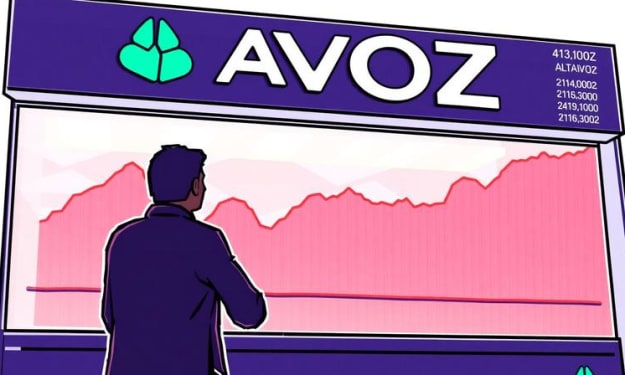
44,100-Share Volume Spike for AVOZ Altavoz (PNK) on 27 Feb 2026: Trader Implications
AVOZ Altavoz Inc., trading under the ticker AVOZ on the OTC Markets, experienced a notable surge in trading activity on February 27, 2026, with 44,100 shares changing hands. This sudden spike in volume signals heightened trader attention and underscores the importance of monitoring liquidity, momentum, and near-term positioning in thinly traded stocks.
By Hammad Nawaz7 days ago in Trader
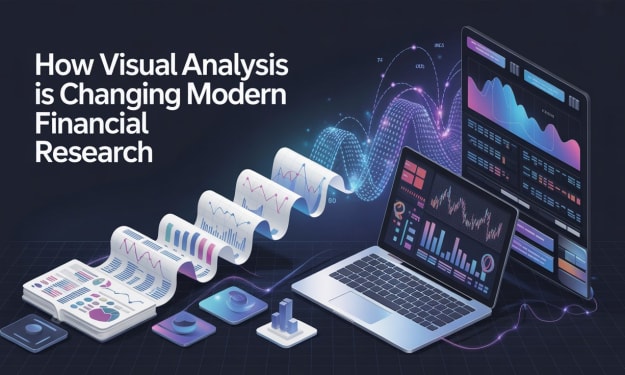
How Visual Analysis Is Changing Modern Financial Research
Financial research has evolved far beyond spreadsheets and quarterly reports. Analysts, traders, and portfolio managers now rely on sophisticated digital tools that transform raw information into visual formats, enabling faster interpretation and deeper insight. In this environment, image search techniques play an emerging role in how financial professionals discover patterns, verify data sources, and interpret market signals. Visual analysis has become a practical bridge between massive data sets and actionable investment intelligence, allowing decision-makers to assess trends with greater speed and precision.
By Hammad Nawaz7 days ago in Trader


Comments
There are no comments for this story
Be the first to respond and start the conversation.