
Iran–Qatar Tensions
Are We Heading Toward a New Global Gas Crisis?

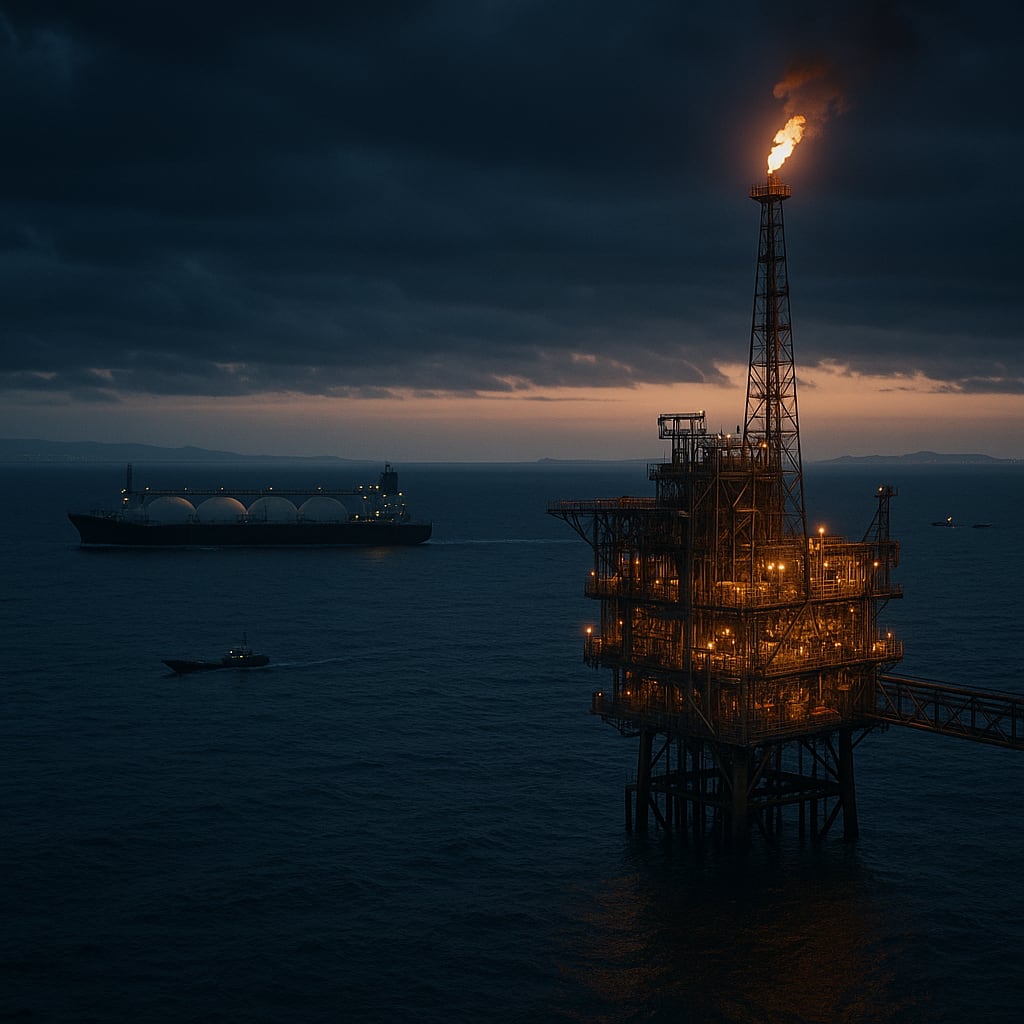
The tiny patch of sea that could change your winter
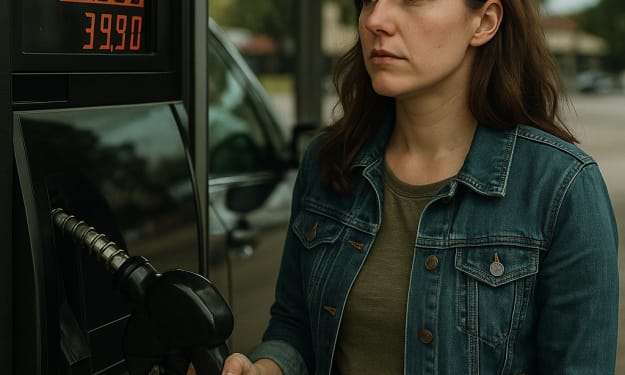
The first time I really felt the world’s energy system in my bones was in the winter of 2022, standing in my kitchen with the gas bill open on my phone.
The number at the bottom might as well have been a scream.
Nothing in our life had changed — same apartment, same radiator hissing in the corner, same kettle for tea — but suddenly the cost of heat felt like it had been priced by someone who didn’t expect ordinary people to survive the season.
Back then, all the headlines pointed to one thing: gas. Russia, pipelines, Europe in panic mode. It was the first time many people realized that energy isn’t just “some faraway thing politicians talk about.” It’s your shower, your stove, your rent.
And now, quietly, a new fault line has opened — not in Russia this time, but in the waters between Iran and Qatar.
Most people scroll past those stories.
“Iran, Qatar, maritime dispute, whatever,” they think. “Far away. Complicated. Doesn’t really touch my life.”
Except it does. More than we want to admit.
Because the invisible line these two countries are arguing about cuts through one of the most important gas fields on Earth — the one that keeps the lights on and the radiators warm from London to Tokyo.
And if that line explodes into real conflict, we might be staring down another global gas crisis, just as the last one stopped dominating the front page.
Not years from now. Not in some abstract future.
This decade. Your next winter. My next kitchen bill.
The gas giant under the sea: why this patch of water matters
Under the Persian Gulf, straddling the maritime border between Iran and Qatar, lies a monster: one of the largest natural gas fields on the planet.
Iran calls its side South Pars.
Qatar calls its side North Field.
Geologically, it’s one reservoir — a massive underground sponge of gas and condensate. Politically, it’s a split personality with a fault line running through it.
Qatar figured this out early and moved fast.
While Iran stumbled under sanctions, bureaucracy, and political infighting, Qatar quietly made itself into a gas superpower. It built liquefied natural gas (LNG) export terminals, signed long-term contracts with Asian buyers, and then — when Russia invaded Ukraine — stepped into the European vacuum like someone who’d been rehearsing for this exact moment.
If you live in Europe and your government has bragged about “diversifying gas supplies,” there’s a good chance Qatar is part of the reason your apartment isn’t freezing.
Now layer this on top:
The North Field is undergoing massive expansion.
Qatar plans to push LNG exports even higher over the next few years.
Iran, still hamstrung by sanctions and underinvestment, believes it’s not getting a fair share of the joint reservoir.
So when you see headlines about Iran complaining that Qatar is overproducing, or new tensions over maritime boundaries, it’s not some abstract diplomatic dispute.
It’s two neighbors arguing about a shared bank account.
Except the “money” in that account is the gas that powers a good chunk of the modern economy.
A small argument in a crowded neighborhood
To really understand why this matters, you have to picture the map.
That stretch of water isn’t some empty blue void.
It’s one of the busiest, most crowded, most politically fragile energy corridors on Earth.
Look at the neighborhood:
Iran on one side, under heavy Western sanctions, long at odds with the U.S. and Israel.
Qatar, a tiny but extremely wealthy gas giant, hosting U.S. troops but also keeping ties with Iran.
Saudi Arabia and the UAE watching nervously, with their own interests in regional power.
Shipping lanes snaking through narrow waterways where a single drone or missile could shut everything down.
The gas field sits inside this pressure cooker.
When Iran hints that Qatar is taking more than its share, or when Iran’s navy flexes near gas platforms, or when its officials warn about “consequences,” they’re not just talking to Doha.
They’re talking to everyone who depends on Qatari LNG.
That’s Europe.
That’s Japan, South Korea, China.
That’s any country that signed a long-term contract betting Qatar would be the stable, boring option, the adult in the room compared to the chaos of Russian pipelines.
Because Qatar has marketed itself as exactly that: the safe supplier.
Until suddenly, safety doesn’t look quite as guaranteed as it did on those glossy PowerPoints.
We thought we learned from the Russia gas shock. Did we?
If you lived through the energy shock of 2022 and 2023, you probably remember the feeling of unreality.
Politicians told us for years that reliance on Russian gas was fine — low cost, reliable, mutually beneficial, nothing to worry about.
Then, almost overnight, “dependence” stopped being an academic word.
It became:
factories slowing production,
households turning down thermostats,
governments scrambling for emergency LNG cargoes at any price,
and a global bidding war that pushed some poorer countries right out of the market.
There’s a sentence I heard a lot during that time: “We can never be this vulnerable again.”
Europe promised to diversify.
“Never again” became “Qatar, please, save us.”
And in the short term, it sort of worked. LNG terminals sprang up like mushrooms. Floating regasification units were rushed into ports. Tankers changed course mid-ocean to chase higher bids.
But the deeper question never really got answered:
Did we actually make the system more resilient? Or did we just swap one kind of dependence for another?
We traded Russian pipelines for Qatari LNG, U.S. LNG, a patchwork of deals from places many people can’t even locate on a map.
On paper, that’s diversification.
But in reality, energy security isn’t just about having multiple suppliers.
It’s about the stability of the regions those suppliers live in.
And the Persian Gulf isn’t exactly known as a conflict-free zone.
How Iran–Qatar tension could spill into your life
Imagine a world where Iran decides that Qatar’s expansion of North Field is intolerable.
There are a lot of ways that anger could express itself, and not all of them are theatrical or obvious.
A few possible scenarios people quietly worry about:
Offshore harassment. Iranian speedboats or drones buzzing around gas platforms, creating safety concerns, raising insurance costs, forcing temporary shutdowns.
Legal and political pressure. Iran challenging maritime boundaries, slowing foreign investment, making big energy companies think twice before putting billions into new projects.
Broader escalation. Not necessarily a full-blown war — even a localized conflict in the Gulf could spook markets and send LNG prices soaring.
Targeting shipping. A few strategically timed attacks or “mysterious incidents” around LNG carriers in the region could tighten supply without a single well being destroyed.
You don’t need a Hollywood-style war to trigger a gas crisis.
You just need enough risk, enough uncertainty, enough fear.
Markets move on perception long before they move on actual physical shortages.
We’ve seen this before:
A drone strike on Saudi oil facilities sent oil markets into a panic — even though production was quickly restored.
Rumors about pipeline interruptions in Europe pushed prices up before a single molecule of gas stopped flowing.
Now picture similar fear swirling around Qatari LNG, just as the world has reconfigured its energy flows around it.
Prices spike.
Poorer countries back out of the LNG market again, unable to compete.
Richer countries reassure their citizens, but quietly start bidding up cargoes.
Households brace for another winter where heating becomes a luxury conversation, not a given.
Suddenly that line between South Pars and North Field doesn’t feel far away at all.
The uncomfortable truth: we built a fragile system on purpose
Here’s the part that’s hard to swallow: this isn’t just bad luck or a weird coincidence of geography.
We built our energy system to be fragile.
On purpose.
For decades, the logic was simple:
Find the cheapest suppliers.
Build whatever pipelines or LNG terminals are needed.
Trust that geopolitics won’t erupt in the wrong place at the wrong time.
Efficiency over resilience.
Shareholder value over redundancy.
Price today over risk tomorrow.
And there’s a kind of seduction in that system. When it works, it works beautifully.
Gas is cheap. Bills are manageable. Governments can point to growth and stability. Energy traders make fortunes smoothing out little bumps in supply and demand.
Until one of those “little bumps” turns out to be:
a war,
a blockade,
a revolution,
a dispute over where exactly one country’s part of a gas field ends and another’s begins.
Then we discover we’ve built our daily lives on a chain of invisible dependencies stretching across oceans, borders, and fault lines we barely recognize.
Russia taught us this.
Now the Iran–Qatar tension is trying to teach us again.
The myth of “far away”
I still remember a conversation with a friend during the height of the last gas crisis.
She rents a cramped apartment, works two jobs, and has little patience for the news.
When her heating bill doubled, she looked up from the statement and asked, “Why is this happening?”
I started talking about Russian pipelines, LNG spot prices, and European storage levels.
She just stared at me and said, “Okay, but why is my life being held hostage by people I will never meet, places I will never visit, and words I don’t even understand?”
That question has stuck with me.
Because it’s not just her life.
It’s all of us.
Iran and Qatar are “far away” until your landlord raises the rent because utility costs went up.
Until your local bakery closes because energy prices eat their margins.
Until your government starts talking about “temporary energy taxes” that never seem to remain temporary.
Distance is an illusion in a globalized energy system.
When you turn on your stove, you’re not just burning gas.
You’re tapping into a web of political deals, underwater fields, shipping routes, and quiet diplomatic agreements that can unravel much faster than anyone wants to admit.
So when tensions flare in the Persian Gulf, the question is not, “Will this affect us?”
The question is, “How long until it does, and how hard will it hit when it gets here?”
Is a new global gas crisis inevitable?
No.
But it is possible.
And that possibility is enough to make serious people nervous.
Right now, the risk looks like this:
Iran feels squeezed and sidelined. It watches Qatar monetize a shared resource while its own gas projects stall under sanctions.
Qatar is in full expansion mode. It has signed long-term contracts with Europe and Asia and is building infrastructure that assumes relatively stable conditions.
The region is volatile. Israel–Iran tensions, proxy conflicts, shifting Gulf alliances — all of these can bleed into energy infrastructure.
The global market is tighter than it looks. Yes, new LNG export projects are coming online, especially from the U.S. and elsewhere. But big demand swings — a cold winter in both Asia and Europe, for example — could still strain the system.
Put all of that together, and you have a world where it wouldn’t take much to send gas prices soaring again.
Not a permanent crisis, necessarily.
But a sharp, painful reminder that we never really fixed the underlying vulnerability.
We just rearranged it.
What we rarely talk about: the choices hiding behind “energy security”
When governments talk about “energy security,” they usually mean some combination of:
new LNG terminals,
more storage capacity,
more contracts with more suppliers.
All of that matters.
If you’re using gas, having backup options is better than praying one pipeline never fails.
But there’s another layer of security we don’t like to talk about because it’s slower, messier, and doesn’t show up neatly on quarterly reports:
Needing less fossil gas in the first place.
Not overnight.
Not in some utopian fantasy where tomorrow everything runs on sunshine and goodwill.
But steadily, deliberately, in ways that make it harder for any single gas field — whether in Russia, Qatar, or Iran — to hold our entire society by the throat.
Insulation sounds boring until you’ve seen how much it can cut a heating bill.
Heat pumps sound niche until you realize they’re a way of decorating your home with climate tech that doesn’t care if there’s a diplomatic meltdown in the Persian Gulf.
Local renewables are not a magic wand, but they’re also not subject to sanctions, naval blockades, or maritime boundary disputes.
Every bit of demand we shave off gas makes the next crisis less catastrophic.
It doesn’t mean we won’t feel it.
But it might mean the difference between “this year hurts” and “this year breaks people.”
The quiet question under every bill you pay
When I think back to that winter in my kitchen — the shock of the gas bill, the cold creeping in around the windows — I remember feeling strangely small.
Like my life was being nudged around by supply contracts, territorial disputes, and energy traders thousands of miles away.
The Iran–Qatar tensions bring that feeling back.
Because beneath all the geopolitical analysis and market predictions, there’s a quieter, more personal question:
How much of our daily lives do we want to leave at the mercy of fights we can’t see, in places we’ll never visit, over lines on a seabed we’ll never touch?
We can’t control Iranian politics.
We can’t dictate Qatari strategy or redraw maritime boundaries.
We can’t prevent every conflict in a region built on overlapping grievances and oil money.
But we can decide not to keep building our future around the assumption that gas will always be cheap, always be available, always be someone else’s problem until the moment it hits us in the wallet.
Iran and Qatar may or may not stumble into a confrontation that triggers a new global gas crisis.
Diplomats may step in. Deals may be cut. Cooler heads might prevail.
Or they might not.
Either way, this moment is a warning.
Not just about a tiny patch of sea in the Persian Gulf, but about the whole idea that our comfort can rest on a resource that lives in someone else’s backyard, under someone else’s flag, in someone else’s line of fire.
The next time you turn on the heat or boil water for tea, that gas flame is more than just blue and silent.
It’s a signal.
A question.
How many more times do we want to be surprised by crises we already saw coming?
About the Creator
abualyaanart
I write thoughtful, experience-driven stories about technology, digital life, and how modern tools quietly shape the way we think, work, and live.
I believe good technology should support life
Abualyaanart
Keep reading
More stories from abualyaanart and writers in Trader and other communities.
India Online Food Delivery Market Size and Forecast 2026–2034
India’s online food delivery ecosystem is undergoing a remarkable transformation. According to Renub Research, the India Online Food Delivery Market is expected to reach US$ 269.77 billion by 2034 from US$ 46.34 billion in 2025, expanding at a CAGR of 21.62% from 2026 to 2034.
By Sakshi Sharma2 days ago in Trader
North America Smart Agriculture Market Size to Hit USD 10.4 Billion in 2034 | Grow CAGR by 7.60%
Market Overview Agriculture across North America is undergoing a significant transformation with the rapid adoption of smart farming technologies. Smart agriculture refers to the integration of advanced technologies such as Internet of Things (IoT), artificial intelligence, data analytics, drones, and automated equipment into agricultural operations. These technologies help farmers improve productivity, reduce operational costs, and optimize resource usage.
By Jackson Watson7 days ago in Trader
Tatt~Master
— Assembly Line Tatt Machine ~ Impressions to Impress — As I begin to understand more about the Tattoo Phenomenon. I've written silly, yet verbatim, dating site anecdotes in 'Frazzled.' So let me ask you: Would you be More attracted to someone slathered with tattoos, or Less?
By Jay Kantor3 days ago in Humor


Comments
There are no comments for this story
Be the first to respond and start the conversation.