
India Gas Genset Market Size and Forecast 2025–2033: Cleaner Power Solutions Fueling a Greener Future
With India’s growing focus on sustainability and reliable power, the gas genset market is projected to surge to US$ 714 million by 2033, reflecting a CAGR of 7.04% from US$ 387.1 million in 2024, according to Renub Research.


India Gas Genset Market Overview
The India Gas Genset Market is entering a phase of robust expansion, expected to reach US$ 714 million by 2033, growing at a CAGR of 7.04% during 2025–2033. The primary forces driving this growth include the rising demand for dependable and eco-friendly backup power, supportive government policies favoring clean energy, industrial expansion, and a national push toward reducing carbon emissions.
A gas genset (gas generator set) converts chemical energy from natural gas, biogas, or LPG into electrical energy. Unlike conventional diesel gensets, gas gensets offer superior efficiency, quieter operation, and significantly lower emissions. As India’s economy grows and its cities expand, the need for sustainable, on-demand power solutions is more pressing than ever — and gas gensets are emerging as a vital component in this transition.
Why Gas Gensets Are Gaining Popularity in India
India’s industrial and residential sectors face frequent grid fluctuations and power outages, making reliable backup systems essential. Diesel gensets, while historically dominant, are increasingly being replaced by gas-based systems due to environmental regulations and cost benefits.
Government initiatives under CPCB IV+ norms, stricter emission controls, and the Energy Conservation Act are accelerating this shift. Consumers — from industrial operators to residential complexes — are recognizing that gas gensets not only reduce their carbon footprint but also offer lower operational costs over time.
Moreover, with a growing emphasis on Corporate Sustainability and ESG compliance, businesses are investing in cleaner power technologies. From manufacturing units and data centers to hospitals and IT hubs, gas gensets have become indispensable for maintaining operational continuity while aligning with green goals.
Key Growth Drivers in the India Gas Genset Market
1. Rising Demand for Clean and Environmentally Friendly Power
India’s commitment to sustainability and its ambitious renewable energy goals are pivotal to the rise of gas gensets. Compared to diesel, gas gensets emit lower levels of CO₂, NOₓ, and particulate matter. They align perfectly with India’s broader clean energy transition strategy.
A significant milestone came in July 2025, when Cooper Corporation launched India’s first CPCB IV+ certified 10 kVA LPG genset — the “Daimon Genset.” The innovation marked a leap toward cost-effective, sustainable, and low-emission power solutions, showcasing India’s engineering prowess in the green energy domain.
2. Expansion of Natural Gas Infrastructure
India’s goal to raise the share of natural gas in its primary energy mix to 15% by 2030 (from the current 6%) is transforming the accessibility and affordability of gas-based solutions. The rapid development of City Gas Distribution (CGD) networks ensures easier access to gas for industries, commercial buildings, and residences.
Further boosting this infrastructure, Indraprastha Gas Limited (IGL) and Genesis Gas Solutions are setting up a smart gas meter manufacturing unit with a capacity of one million meters annually. This expansion, expected to begin operations by October 2025, will enhance efficiency, transparency, and energy management — supporting the broader adoption of gas gensets.
3. Industrialization and Infrastructure Development
Programs like “Make in India,” Smart Cities Mission, and industrial corridor projects are stimulating the need for uninterrupted power across factories, data centers, and construction sites.
Gas gensets, particularly in the medium (75–375 KVA) and high (>375 KVA) segments, are preferred for their balance of performance, cost-efficiency, and compliance with emission norms. The rise of Tier II and III cities as new industrial and commercial hubs further expands the demand landscape.
Market Challenges
1. Limited Gas Availability and Infrastructure Constraints
Despite major investments, India’s gas distribution network is still developing. Many rural and semi-urban areas lack piped natural gas (PNG) connectivity, limiting genset usage. In such areas, diesel remains dominant due to easy accessibility. Moreover, volatile LNG prices and delays in CGD expansion create uncertainties in supply, hindering faster adoption of gas gensets.
2. High Initial Cost and Low Awareness
The upfront investment for gas gensets — including installation, regulators, and pipeline connectivity — remains a barrier, especially for small businesses. Although operational costs are lower in the long run, lack of awareness and financing options slow adoption. Building stronger financial incentives and technical education will be crucial to enhance market penetration.
Market Segmentation Analysis
Medium KVA Gas Genset Market (75–375 KVA)
This segment caters primarily to SMEs, commercial complexes, hospitals, educational institutions, and residential societies. Medium KVA gensets strike a balance between performance and cost-efficiency.
Their quieter operation and lower emissions make them ideal for urban and environmentally sensitive zones. With the growth of IT parks, shopping malls, and mid-sized industries, this segment is poised for steady expansion across metropolitan and Tier II cities.
High KVA Gas Genset Market (>375 KVA)
High-capacity gensets serve data centers, heavy industries, and infrastructure megaprojects. With India becoming a global hub for cloud services and data storage, demand for reliable and clean backup power is soaring.
Industries like cement, steel, automotive, and construction also rely heavily on these gensets to ensure continuous production. Increasing regulatory pressure for emission reductions and easy access to natural gas in industrial belts make this the fastest-growing segment within the market.
Regional Insights
Maharashtra
Maharashtra dominates the market with its extensive industrial base, CGD network, and urban infrastructure. Major cities like Mumbai, Pune, and Nashik have strong adoption rates due to environmental regulations and widespread commercial activity. The growing data center ecosystem in Mumbai and Pune further strengthens demand for high KVA gensets.
Karnataka
With its thriving IT, manufacturing, and healthcare sectors, Karnataka — especially Bengaluru and Mysuru — is at the forefront of gas genset adoption. The expansion of CGD networks and the state’s emphasis on renewable energy make it a strong market for both medium and high-capacity gensets.
Tamil Nadu
Tamil Nadu’s manufacturing and industrial strength — spanning textiles, automobiles, and electronics — drives its genset demand. Even with a stable power grid, industries prefer gas gensets for efficiency, lower emissions, and sustainability compliance. Chennai, Coimbatore, and Hosur are emerging as regional hotspots.
Telangana
Hyderabad’s booming pharmaceutical and IT industries, combined with the rise of logistics parks and commercial complexes, make Telangana an expanding market. Enhanced gas connectivity and government incentives for clean energy adoption are fueling rapid growth here.
Jharkhand
Jharkhand’s metallurgical and mining industries are witnessing increased demand for backup systems. As CGD infrastructure develops, the shift from diesel to gas gensets is accelerating. Industrial corridors in Ranchi, Jamshedpur, and Bokaro are emerging as future demand centers.
Competitive Landscape
Leading players in India’s gas genset market are focusing on innovation, local manufacturing, and partnerships to strengthen market presence. Major companies include:
Kirloskar Oil Engines Ltd.
Mahindra & Mahindra Ltd.
Ashok Leyland
Cummins India Ltd.
Greaves Cotton Ltd.
Caterpillar Inc.
Escorts Limited
Powerica Ltd.
These firms are investing in R&D to enhance efficiency, fuel flexibility, and remote monitoring features, while expanding production capacity to meet India’s rising demand for sustainable gensets.
Future Outlook: India’s Shift Toward a Low-Carbon Energy Ecosystem
The future of India’s gas genset market looks promising as the country advances its decarbonization goals. The transition from diesel to gas is expected to accelerate, supported by strong policy frameworks, CGD expansion, and industrial modernization.
Additionally, integration of IoT and smart controls will redefine operational efficiency in gensets, allowing remote diagnostics and predictive maintenance. As more sectors adopt ESG practices, gas gensets will play a key role in bridging the gap between renewable power and consistent energy reliability.
Final Thoughts
India’s gas genset market exemplifies the nation’s journey toward a sustainable, resilient, and efficient energy future. While challenges in gas infrastructure and affordability remain, technological innovation, government support, and growing environmental awareness are rapidly bridging these gaps.
By 2033, with a forecast market value of US$ 714 million, India is set to emerge not just as a consumer but as a global innovator in clean backup power technologies — leading the way toward an eco-conscious energy landscape.
About the Creator
Marthan Sir
Educator with 30+ years of teaching experience | Passionate about sharing knowledge, life lessons & insights | Writing to inspire, inform, and empower readers.
Keep reading
More stories from Marthan Sir and writers in Trader and other communities.
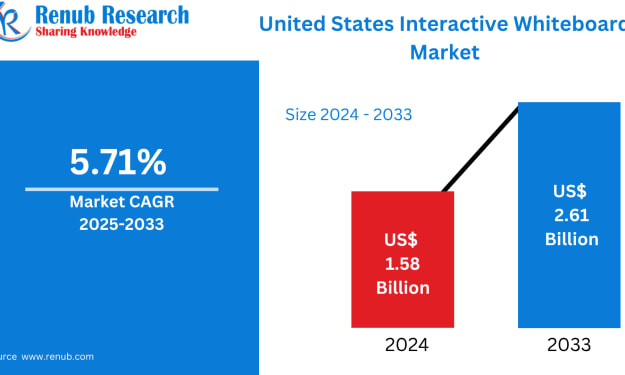
United States Interactive Whiteboard Market Size and Forecast 2025–2033
Introduction The United States is undergoing a significant transformation in how information is shared, taught, and collaboratively developed. From digital classrooms and university lecture halls to corporate boardrooms and remote work environments, interactive technologies are redefining traditional communication tools. Among these, interactive whiteboards (IWBs) have emerged as one of the most powerful and versatile platforms for enhancing engagement, productivity, and real-time collaboration.
By Marthan Sir4 days ago in Trader
Aluminium Powder Market: Trends, Growth, and Industry Outlook
Overview – Aluminium Powder Market The aluminium powder market is a specialized segment of the broader metal powders industry, driven by demand for lightweight, high-performance materials across sectors such as automotive, aerospace, construction, coatings, additive manufacturing, and electronics. Aluminium powder is widely used for its strength-to-weight ratio, thermal conductivity, and corrosion resistance, making it essential in applications ranging from paints and coatings to 3D printing feedstock and pyrotechnics. Growth is underpinned by industrial modernization, sustainability initiatives, and expanding use in advanced manufacturing processes.
By James Smithabout 7 hours ago in Trader
l&t finance share price prediction 2026: What investors need to know
l&t finance share price prediction 2026 is on the minds of many investors who want to plan for the future. Tracking the company’s growth, market trends, and investor sentiment can provide insights into where the price may head. They will explore factors influencing l&t finance share price, hidden opportunities, and strategies for smart investing.
By John.doe7985 days ago in Trader
How to Succeed at the Benson Directory®
Congratulations and welcome to the Benson Directory® employee #22391! As our newest call handler, you will have the privilege of speaking with dozens of unique and interesting people on a daily basis as well as the opportunity to earn bonuses for high performance. Contained within this handbook you will find a set of ease to follow instructions designed to help you settle in to your new role and begin paving the way to success.
By S. A. Crawford3 days ago in Fiction



Comments
There are no comments for this story
Be the first to respond and start the conversation.