
I Handed ChatGPT $100 to Trade Stocks — Here’s What Happened in 2 Months
AI vs Wall Street: Can a chatbot really beat the stock market?

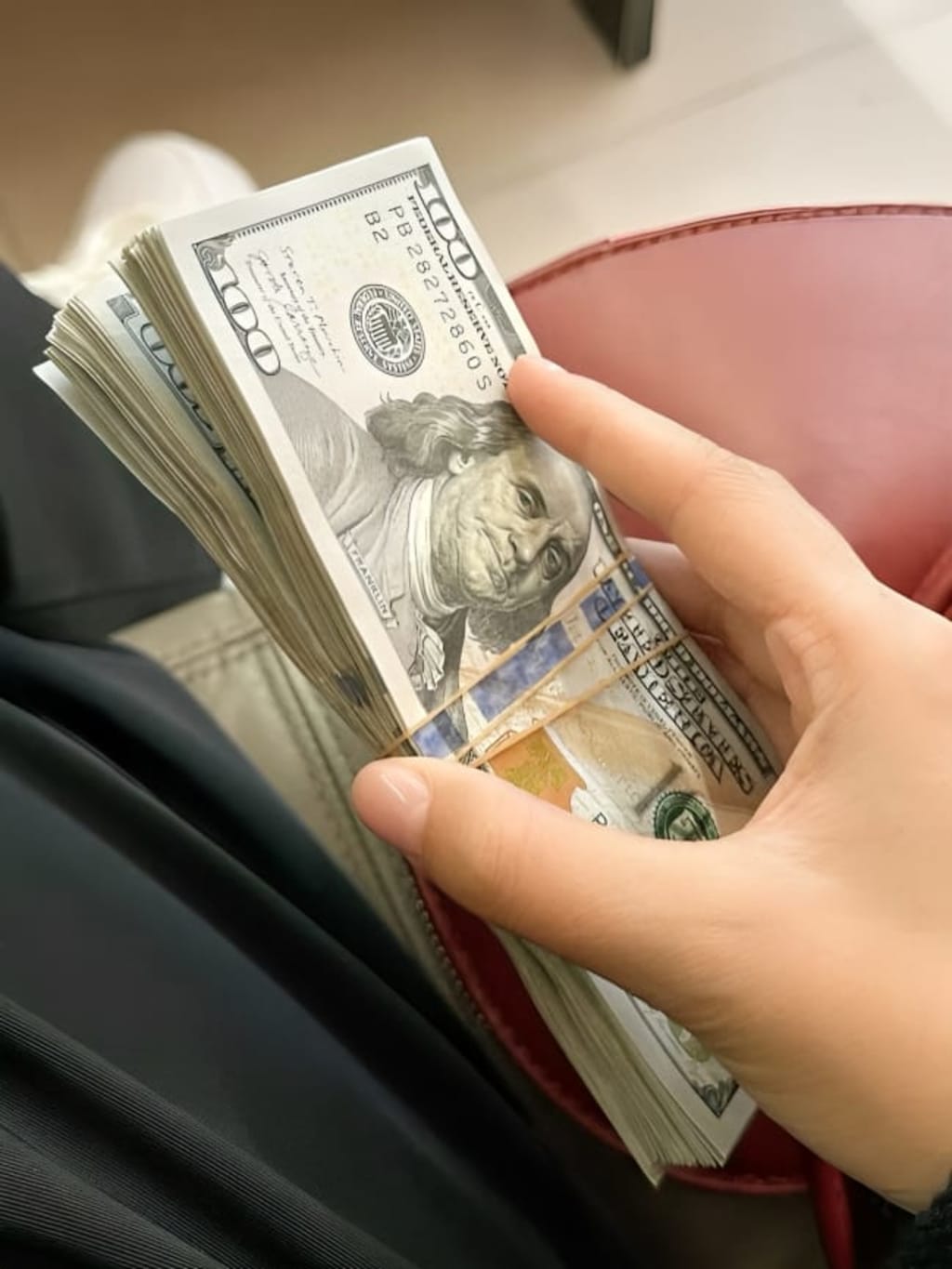
What happens when you give a chatbot real money and let it loose on Wall Street?
That’s the exact experiment I ran. And the results shocked me. While the S &P 500 crawled up just 4% in two months, ChatGPT’s little $100 portfolio shot up 29%.
Crazy, right?
I know what you’re thinking: “Wait… you actually trusted an AI with real money?”
Yep. Not thousands, not even hundreds. Just $100 I was willing to lose — the cost of a nice dinner or a couple of Uber rides. But instead of food, I fed my curiosity.
And honestly, the outcome made me question everything I thought I knew about investing.
Why I Even Tried This Crazy Idea 🤔
We’ve all seen those spammy ads: “Our AI predicts the next hot stock! Subscribe now!”
I usually roll my eyes, because scams love using AI as bait.
But then the thought stuck in my head: What if AI actually could pick winning stocks? Not some shady app, but something transparent — where I could see exactly what it was doing.
That’s when I found Nathan B. Smith’s project on GitHub. He’s been testing whether ChatGPT can identify promising micro-cap stocks — the small, risky companies most investors ignore. His setup was simple, his logic made sense, and best of all, he wasn’t promising Lamborghinis in 30 days.
So, I thought: Why not? Let’s put ChatGPT to the test.
The Rules of the Game
I started with $100. Real cash. No backtesting, no hypotheticals. Just actual trades.
The plan was simple:
1. Ask ChatGPT to analyze a list of micro-cap stocks.
2. Let it explain its reasoning.
3. Buy the ones it picked.
4. Hold for two months, no matter what happened.
If it went to zero, I’d chalk it up as the price of curiosity.
But instead, something unexpected happened.
The Numbers Don’t Lie 💰
After two months:
ChatGPT’s portfolio: +29.22%
S &P 500: +4.11%
That’s not a typo. The AI beat the market by a wide margin.
Now, before you start throwing your retirement savings at a chatbot, let me be clear: this doesn’t mean ChatGPT is the new Warren Buffett. Two months is a tiny sample size. And micro-cap stocks are extremely volatile — they can shoot up fast, but they can also crash without warning.
Still, I didn’t expect AI to hold its own, let alone crush the index.
Why It Worked (At Least This Time) 🚀
ChatGPT didn’t just throw darts at a stock list. It broke down its choices like a patient teacher:
Company growth potential
Industry trends
Risks and warnings
Even red flags it spotted in financial statements
In other words, it acted less like a gambler and more like an analyst with infinite time to research.
And here’s the weird part: because it’s not human, it had zero fear or greed. No “panic sell” when a stock dipped. No FOMO when the market spiked. It just stuck to logic.
That alone probably saved the portfolio from knee-jerk mistakes I might have made.
But Let’s Get Real ⚠
Before you run off to hand your paycheck to a chatbot, here’s the truth:
Short term ≠ long term. Two months of outperformance doesn’t prove anything. The market loves to humble investors who get cocky.
Micro-caps are dangerous. They’re cheap for a reason — low liquidity, high risk. You can win big or lose everything fast.
AI isn’t magic. ChatGPT didn’t predict the future. It just processed available data better than I could in the same time.
This was an experiment, not financial advice. If you’re thinking of trying it, only risk what you’re totally okay losing.
The Bigger Lesson 🌍
So, what’s the takeaway here?
It’s not that ChatGPT is secretly the world’s greatest investor. It’s that AI is changing the way we think about money, risk, and decision-making.
Once upon a time, only hedge funds with billions could afford algorithmic trading. Now, a regular person with Wi-Fi can hand $100 to a chatbot and test ideas that used to be out of reach.
That’s both exciting and a little scary.
Because if an experiment like this is possible now, imagine what the next 5 years of AI-driven investing will look like.
Final Thoughts ✨
Handing ChatGPT $100 to trade stocks wasn’t about making a quick profit. It was about testing an idea.
And the fact that it ended up beating the S &P 500 — even in a short time frame — is proof that AI is more than just a fun tool for writing emails or generating memes. It’s creeping into serious spaces like finance, where real money is on the line.
Will I trust it with my life savings? Absolutely not.
Will I keep experimenting with small bets? 100%.
Because sometimes, curiosity pays better than caution.
FAQs
1. Can ChatGPT actually predict stock prices?
No — it doesn’t predict the future. It just analyzes patterns and data to make educated guesses.
2. Should I let AI invest my money?
Only if you’re treating it as an experiment and willing to lose what you put in.
3. Why micro-cap stocks?
They’re riskier but offer bigger potential upside — perfect for testing whether AI can spot hidden gems.
4. Did ChatGPT really beat the S &P 500?
Yes, in this two-month window. But short-term performance doesn’t guarantee long-term success.
5. What’s the real lesson here?
AI can be a powerful research tool, but it’s not a crystal ball. Use it wisely.
About the Creator
Keep reading
More stories from Awais Qarni and writers in Trader and other communities.
Wild Card Weekend Recap: What Happens Now?
I think I figured out why I love Wild Card Weekend so much. It's because it's the first playoff anything of the calendar year. The NFL season starts in the fall, and once upon a time, the champion was crowned either on or slightly before New Year's. The evolution of the NFL schedule has resulted in the playoffs starting just into the New Year, and currently, the final week of the season falls on the first weekend of the New Year, with Wild Card Weekend coming a week after that. So yes, chronologically, the NFL's Wild Card Weekend serves as the first playoff anything of the calendar year.
By Clyde E. Dawkins6 days ago in Unbalanced



Comments
There are no comments for this story
Be the first to respond and start the conversation.