
How Will the Omicron-Variant Impact the U.S. Inflation Outlook?
What Will Happen if We Get Another Stronger Wave?


The average person is more likely to pay closer attention to a bearish rather than a bullish forecast when estimating the potential impact of the Omicron-variant on the trajectory of U.S. inflation. Still, the facts on the ground favor the more bullish view.
In our polarized economic environment, one side of the political aisle is adamantly arguing against shutting down the economy, irrespective of the level of positivity rate or the number of new daily infections reported. In contrast, the other side of the political aisle is terrified of shutting down the economy, irrespective of what happens to avoid becoming even more politically vulnerable. Since it is hard to argue that the economy is in a better place today because we previously closed the economy in early 2020, one can understand the reluctance of these same politicians that once argued in favor of shutting down the economy from doing so again. The health arguments that fewer people died because economies shut down at the outset of the pandemic no longer carry much favor on either side of our political aisles.
I am neutral when it comes to politics. Under the narrative that we will never shut down the U.S. economy again, it is easy to project that the omicron virus is likely to have a more negative impact on aggregate demand than aggregate supply.
If the omicron variant spooks individuals to travel less, stay in fewer hotels, or eat out less, the demand for goods will decline. If factories remain open while other companies operate using their almost perfected remote work alternatives, the production of goods will suffer less harshly.
Another factor to consider is how global supply chains are affected by an outsized wave of the omicron virus. We have made some progress speeding the delivery of goods through our ports. Reports that Walmart, Target, and Amazon successfully increased their inventories during the holidays are encouraging. Although we still have a long way to go before anyone can declare victory, we should not dismiss the progress we have made so far!

Some critics of this view will argue that China has a zero Covid-variant tolerance, implying that any resurgence will have a real negative impact on the availability of imported goods. But today, China has quietly vaccinated most of its population and is less vulnerable than it was a year ago. And while the vaccine used in China has a lower efficacy rate than desired, rumors are swirling that China may soon begin to import booster shots with higher efficacy rates.
Given this scenario, it may be reasonable to conclude that aggregate supply may be less impacted than aggregate demand if the Omicron variant is worse than expected.
The impact of fiscal drag (i.e., as incremental federal spending slows in 2022) should seriously restrain economic growth in 2022. With talk that Washington's "Build Back Better," Social Infrastructure package may need to be reduced to secure its passage, this drag could increase.
On the monetary policy front, the Federal Reserve has already announced that they will begin to slow their purchases of mortgage-backed securities and U.S. Treasury securities even faster than previously stated. That will open the door to raising short-term interest rates sooner during 2022.
No one can find any periods in U.S. history when reducing the pace of federal government spending and raising short-term rates more aggressively has boosted aggregate demand.
Summary and Conclusion:
With these factors working in tandem, how can any reasonable person argue that U.S. inflation risks in 2022 will be biased to the upside rather than towards the downside? The only question remaining is whether Washington legislators or the Federal Reserve blink and decide to step away from their current restrictive policy paths.
About the Creator
Anthony Chan
Chan Economics LLC, Public Speaker
Chief Global Economist & Public Speaker JPM Chase ('94-'19).
Senior Economist Barclays ('91-'94)
Economist, NY Federal Reserve ('89-'91)
Econ. Prof. (Univ. of Dayton, '86-'89)
Ph.D. Economics
Keep reading
More stories from Anthony Chan and writers in Trader and other communities.
Fleeting Leaves
Autumn leaves drift down, Beauty fades as time rushes Life, too, feels so brief.
By Anthony ChanExclusive • 6 months ago
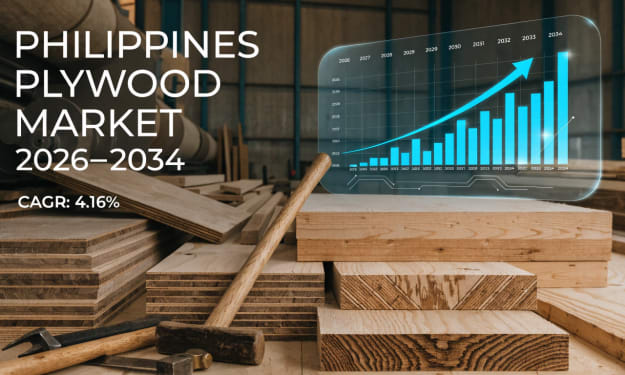
Philippines Plywood Market 2026: Construction Expansion, Furniture Manufacturing & Retail Infrastructure Growth
Philippines Plywood Market Overview The Philippines plywood market plays an essential role in supporting the country’s construction, furniture manufacturing and interior design industries. Plywood is widely used for flooring, wall panels, roofing structures, cabinets and decorative interiors due to its durability, affordability and structural flexibility. With rapid urbanization and increasing infrastructure development, demand for engineered wood products such as plywood continues to grow across residential and commercial sectors.
By Manisha Dixita day ago in Trader



Comments
There are no comments for this story
Be the first to respond and start the conversation.