
How Domino's Became The World's Biggest Pizza Chain
Automation changing the Landscape!

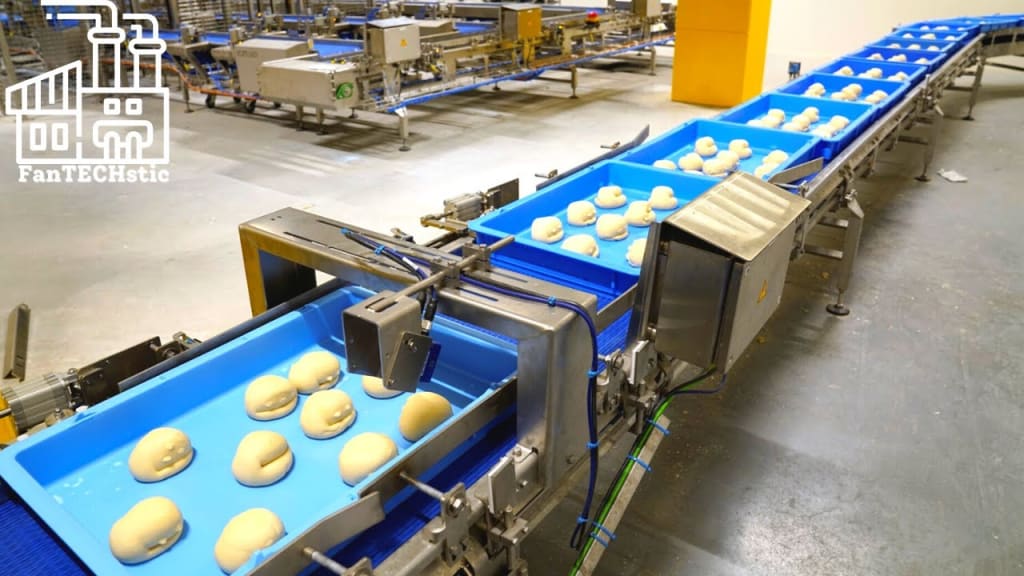
This was once the only method for making a Domino's pizza. A dozen workers handled each ball of dough as it passed along a production line. Now, in a newly constructed $50 million facility in Indiana, machines take over those tasks. They measure, move, and stack pizza dough while workers engage with buttons instead of flour. You monitor the process to ensure everything functions correctly.
This transformation follows years of fierce competition among pizza chains. Domino's also faced difficulties in finding sufficient workers for store roles. Domino's struggled to fill physically demanding positions that offered low pay. As sales surge during pizza's peak season, these machines will be rigorously tested. Super Bowl is one of the busiest days for Domino's.
The challenge remains: How does the largest pizza chain balance automation with the human touch? Each year, Domino's delivers about a billion pizzas worldwide. They have been among the most successful public companies since around 2009. The company keeps pizza prices low by managing an integrated supply chain. This encompasses everything from dough production to delivery, largely reliant on bustling production and distribution centers.
In 2018 dough making was more manual and time-consuming. Robots make the process more efficient and consistent. The recent facility spans 110,000 square feet and reportedly cost $15 million.
While some centers still require manual measurement of ingredients, at the new facilities, automated mixing machines handle flour, water, oil, salt, and sugar directly. This cutting-edge facility produces 50 batches of dough per day, equating to 88,000 pizzas for customers daily. The dough has a limited shelf life, necessitating constant production.
In this new center, employees primarily manage computer systems, conduct quality control, and resolve machine issues. They work to fix any problems swiftly to keep the line moving. Workers can program machinery for different dough ball sizes. Robots now place the dough onto trays, a task previously done by hand. Nine years ago, team members had to perform that physically demanding task. Automation has improved the work environment significantly.
Cameras oversee the process to ensure the dough balls remain separated. The system takes micro-pictures to detect issues. If errors are identified, the trays are rejected. Labels are automatically applied to each tray to indicate dough type and production date.
The spiral chiller is a remarkable feature, with 3,000 feet of conveyor belt capable of chilling 40,000 trays simultaneously. It’s the largest cooler you’ll encounter, accommodating two days’ worth of production. To preserve the yeast's rising process, dough is chilled instead of frozen. It cools in just one hour—down from four—thanks to the spiral chiller, streamlining workflows.
Dough balls travel along yet another conveyor, where sensors alert the robots to stack them. This process, involving sliding a dolly cart beneath each stack, is far more efficient than previous methods. They double-check that every tray bears its label before pushing it onward. The production line offers an assortment of dough types, all ready for orders, especially as the Super Bowl approaches.
They anticipate a 30% production increase during peak times. Production is expected to rise from 500,000 to 750,000 dough balls weekly. Automation at the center has significantly reduced dough-making time. Fewer employees are required, a crucial evolution given the labor crisis. In 2021, the U.S. restaurant industry lost 1.2 million workers, leading to heightened challenges for Domino's. Roles that pay less and are physically demanding are hard to fill.
Warehouse conditions can be tough. During summers, it can become extremely hot. System improvements have targeted warehouse jobs, making tasks easier for employees. Previously, goods were bulk-loaded into trucks, forcing drivers to individually gather supplies at franchises. With the new procedures, a picking team loads ingredients into designated cages, which streamline loading for drivers.
Each truck can accommodate supplies for about 13 stores. Loading is like playing Tetris. The center now dispatches approximately 28 trailers, supporting over 300 stores across five states. This new center alleviates capacity issues faced by older supply-chain centers. Drivers typically operate overnight to bypass traffic.
When the pandemic struck, many drivers left the field. In response, Domino's initiated a program to train employees as drivers. Ultimately, hot pizzas are delivered by human drivers, but the future holds the possibility of automated deliveries. Technology underscores the on-gong evolution of Domino's operations.
About the Creator
Tafara Sibotshiwe
A versatile authentic writer and passionate storyteller. With a background in, Journalism, Engineering, History, Health & finance, they combine profound insight with creative flair to explore the complexities of the human experience.
Keep reading
More stories from Tafara Sibotshiwe and writers in Trader and other communities.
Money Habits that KEEP you poor!
Consistently, you pursue decisions that can influence your monetary future. At times, these choices are purposeful. Different times, they are unexpected. This article gives an exhaustive comprehension of this theme. By and by, you will have a reasonable thought of what is happening and an arrangement to advance your circumstance. We should start.
By Tafara Sibotshiweabout a year ago in Trader
Anti-Venom Market Size & Forecast 2025–2033
Global Anti-Venom Market Outlook The global anti-venom market continues to gain momentum as governments, pharmaceutical companies, and public health organizations intensify efforts to address the growing threat of venomous animal bites. According to market estimates, the global anti-venom market was valued at approximately US$ 1.18 billion in 2024 and is projected to expand at a compound annual growth rate (CAGR) of 6.51% between 2025 and 2033, reaching around US$ 2.07 billion by 2033.
By shibansh kumarabout 7 hours ago in Trader




Comments
There are no comments for this story
Be the first to respond and start the conversation.