
How Digital Signage For Real Estate Is Changing The Way Properties Communicate
Digital Signage For Real Estate

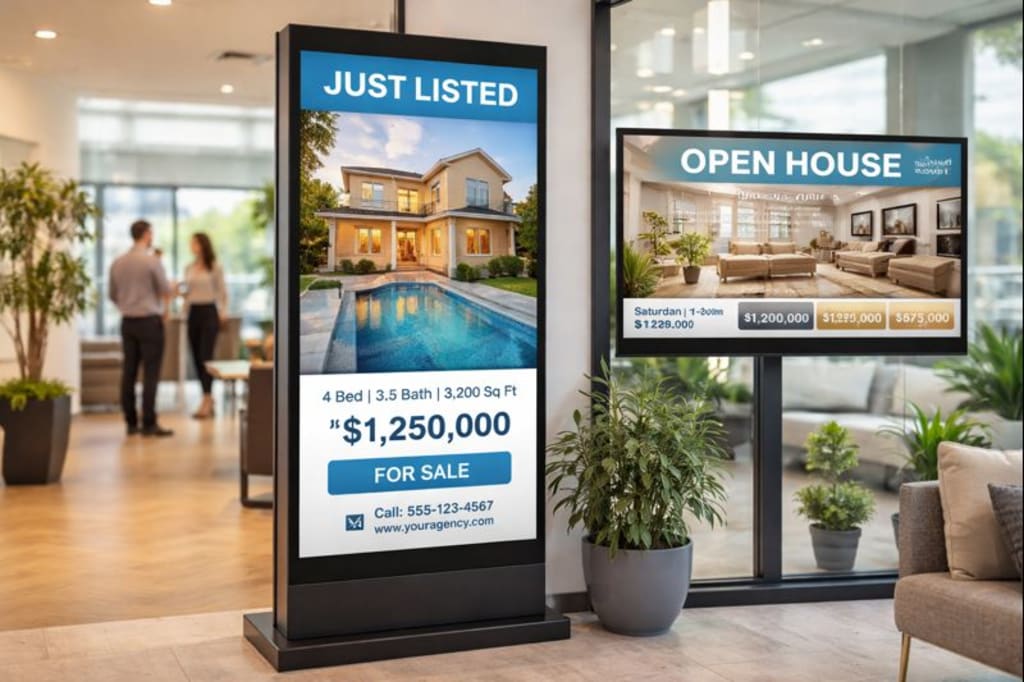
Real estate has always depended on visibility. Properties need to be seen, understood, and remembered. Traditionally, this visibility came from printed listings, window posters, brochures, and signage boards. While these methods still exist, they increasingly struggle to keep pace with how fast real estate information changes today.
Prices adjust. Listings come and go. Availability updates daily. In this environment, static signage often becomes outdated before it delivers real value. This is where digital signage for real estate is beginning to play a more central role.
Rather than replacing agents or conversations, digital signage real estate systems are being used to keep information accurate, visible, and easy to manage across offices, developments, and on-site locations.
The Limitations Of Traditional Real Estate Signage
Printed real estate signage has clear constraints. Every update requires time, reprinting, and physical replacement. When listings change quickly, this creates delays and increases the risk of displaying incorrect information.
Outdated pricing or unavailable properties can frustrate potential buyers and renters. It can also create unnecessary back-and-forth for agents who then need to clarify details that should have been clear from the start.
Digital real estate signs address this challenge by allowing information to be updated instantly. Listings can be added, removed, or modified without physical effort, ensuring that what people see reflects current availability.
Digital Signage Inside Real Estate Offices
One of the most common uses of digital signage for real estate is inside offices. Screens placed in reception areas or waiting spaces allow visitors to browse listings visually while they wait or explore options independently.
Instead of flipping through printed brochures, visitors can see rotating property images, key details, and highlights on a single screen. This creates a more organized environment while reducing paper clutter.
Digital signage real estate setups also help agents manage time more efficiently. When visitors arrive with a clearer understanding of available properties, conversations become more focused and productive.
Supporting Walk-By Visibility With Digital Real Estate Signs
Street-facing windows have always been valuable real estate themselves. Traditionally, these spaces were filled with printed listings taped or mounted behind glass. While effective in the past, they can look cluttered and are difficult to update frequently.
Digital real estate signs allow offices to showcase multiple listings on a single display. Content can rotate throughout the day, highlight new properties, or focus on specific price ranges or neighborhoods.
Because updates are digital, offices can react quickly to market changes without redesigning window displays. This keeps storefronts clean, modern, and always current.
On-Site Use At Properties And Developments
Digital signage for real estate is not limited to offices. New developments, showrooms, and on-site sales centers increasingly rely on screens to present information.
These displays can show available units, floor plans, amenities, and visual renderings in a way that printed boards cannot. As units sell or availability shifts, content can be updated without reprinting materials.
For phased developments, digital signage real estate systems provide flexibility throughout the sales lifecycle, adapting as inventory changes.
Consistency Across Multiple Locations
For brokerages operating across multiple offices or managing multiple developments, consistency becomes more difficult as scale increases. Digital signage real estate platforms help address this by allowing centralized control over content.
Branding, messaging, and visual standards can be managed from one place while still allowing local teams to highlight specific properties. This ensures a consistent experience for clients regardless of location.
Consistency builds trust, especially when clients interact with a brand across different offices or properties.
Reducing Visual Noise While Increasing Information Access
Real estate environments often struggle with visual overload. Flyers, posters, and boards can overwhelm visitors and make it harder to focus on what matters.
Digital signage for real estate consolidates information into structured, readable displays. Instead of dozens of individual signs, a single screen can present content in a clean, organized format.
This improves readability while maintaining access to essential information.
Helping Agents Focus On Relationships
Digital signage real estate systems are not designed to replace agents. Instead, they support agents by handling basic information sharing automatically.
When visitors can see listings, prices, and availability clearly, agents can spend more time on guidance, negotiation, and relationship-building. This leads to better experiences for both sides.
Real Estate Is Gradually Moving Toward Digital Displays
Across commercial and residential property markets, digital signage adoption continues to grow. As markets become more competitive, teams look for tools that reduce friction and improve clarity.
Real estate digital signage fits naturally into this shift because it aligns with how quickly information changes in property markets.
Platforms Used To Manage Digital Signage In Real Estate
Many real estate teams use digital signage platforms to manage screens across offices and properties. These platforms typically offer centralized content control, scheduling, and remote updates.
AIScreen is one example used by real estate teams looking to manage digital signage real estate setups across multiple locations without increasing operational complexity. Such platforms are usually selected for reliability and ease of management rather than promotional features.
Long-Term Value Beyond Marketing
Digital signage for real estate is often introduced as a marketing upgrade, but its long-term value is operational. It reduces manual work, minimizes outdated information, and supports scalable growth.
As portfolios expand, digital real estate signs can grow with them, adapting to new properties, offices, and market conditions.
Key Takeaways
Digital signage for real estate helps teams keep listings accurate, offices organized, and property information current in real time. It replaces static signs with flexible displays that adapt as quickly as the market changes.
When implemented thoughtfully, digital signage real estate systems become a practical communication layer that supports agents, informs clients, and scales smoothly across locations—without disrupting how real estate teams work.
About the Creator
AIScreen
AIScreen is a reliable, easy-to-use cloud-based digital signage software for managing content across industries affordable, scalable, and trusted worldwide.
Mezcal Market: Trends, Growth, and Future Outlook
The global Mezcal market is experiencing strong growth as consumers increasingly seek premium, artisanal spirits with unique flavor profiles and cultural authenticity. Fueled by rising disposable incomes, expanding cocktail culture, and a growing appreciation for craft beverages, mezcal is transitioning from a niche traditional spirit to a globally recognized product. Projections show significant market expansion over the next decade across key regions, driven by both established and emerging consumer bases.
By James Smith2 days ago in Trader
Is the Dollar Entering Its Final Era?
Is the Dollar Entering Its Final Era? For decades, the US dollar has been the backbone of the global financial system. It has been the main currency for international trade, oil sales, debt, and foreign reserves. When countries traded with each other, they usually settled payments in dollars. When crises happened, investors rushed toward the dollar as a safe haven. But today, a growing number of experts and governments are asking an uncomfortable question: are these the last dominant days of the dollar?
By Wings of Time 4 days ago in Trader
TUS NUA - ch 49
TUS NUA – ch 49 New Beginnings – Mia and Midnight (*)(*)(*) As Mia spoke on the phone to Ali’s sister, Ellen, Finola slipped quietly away and walked to the stream behind Tus Nua. Carefully, she put a block on her family so no one could know what she was about to do.
By Margaret Brennan5 days ago in Fiction



Comments
There are no comments for this story
Be the first to respond and start the conversation.