
How Can US Tariff Policy Shake Up and Benefit Crypto Trading
Benefit Crypto Trading


Tariffs on imports to the US from China, Mexico, and Canada can indirectly and directly affect the dynamics of the crypto market. What are they?
In global trade dynamics, tariff policies implemented by the United States often trigger major changes in the world economy. However, the impact is not just limited to trade in physical goods.
Digital assets like cryptocurrencies can also be affected by these policies, either directly or indirectly. With the complexity of today's global markets, understanding the relationship between tariff policies and crypto trade is becoming increasingly crucial for investors and industry players.
Donald Trump immediately implemented a 25 percent import tariff policy on Canadian and Mexican products starting February 1, 2025. Trump stated that the reasons for the tariffs include the high number of immigrants from both countries, the trade in illegal drugs such as fentanyl, and the large subsidies that the US provides to Canada and Mexico through trade deficits.
This policy will not only affect these two countries, but may also affect Indonesia. In addition, Trump emphasized that this policy will be announced for clear and strategic reasons.
“(China, Canada, and Mexico) are responsible for their promise to stop illegal immigration and stop toxic fentanyl and other drugs from flowing into our country,” added the White House, reported by Kompas.com, Sunday (2/2/2025).

1. US Tariff Policy, Opportunity or Threat for Crypto?
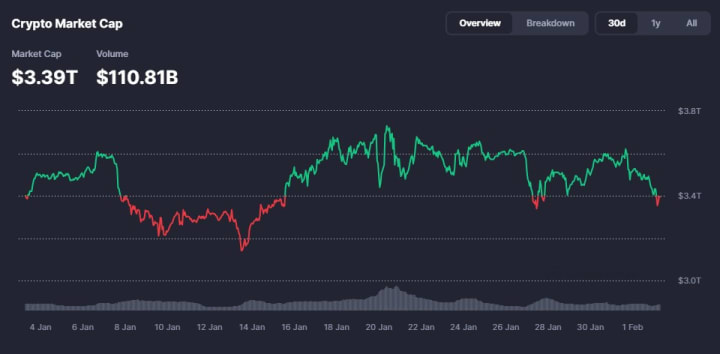
Increased import tariffs imposed by the US, especially on countries such as China, Canada and Mexico, could trigger inflation, slow economic growth and increase financial market volatility.
In situations like this, investors usually look for assets that can serve as a hedge against uncertainty. Gold has historically been the top choice, but in recent years, Bitcoin and other crypto assets have begun to be regarded as “digital gold” capable of preserving value amid economic turmoil.
However, the impact is not always favorable for crypto. If tariff policies strengthen the value of the US dollar, investors are likely to turn to more stable assets, causing selling pressure on cryptocurrencies.
Conversely, if they worsen market sentiment and weaken the dollar, cryptocurrencies could experience a surge in demand as an investment alternative. As such, the relationship between US tariffs and crypto is dynamic and dependent on the overall market response.
Mark Cuban, for example, has argued that Bitcoin (BTC) has more potential than gold as a store of value, especially in times of economic uncertainty.

According to Cuban, while gold has long been recognized as a store of value, it has disadvantages such as being heavy and prone to theft, which makes it less practical in the digital age. In contrast, BTC is more portable, easily accessible, and can be used in international transactions.
Cuban and Michael Saylor's statements reflect investors' changing view of digital assets as a more relevant and efficient alternative to gold in the face of modern economic challenges.
2. Regulasi dan Tekanan terhadap Bursa Kripto Global
In addition to impacting investor sentiment, the US tariff policy may also accelerate the implementation of stricter regulations on foreign crypto exchanges. The US has been aggressive towards crypto platforms operating outside of its jurisdiction, especially those deemed non-compliant with domestic rules.
Trade tensions triggered by tariff policies may exacerbate this situation. The US government may further restrict access to foreign crypto exchanges, reducing liquidity in the market and narrowing options for global investors.
In addition, if tariffs cover the technology sector, the cost of importing hardware such as ASIC chips and graphics cards used in Bitcoin mining could increase, contributing to higher production costs and a potential decline in miners' profitability.

3. Shifting Capital Flows and Digital Asset Adoption
Another possible impact of the US tariff policy is the change in global capital movement patterns. If trade wars intensify, investors will look for ways to secure their wealth outside of the traditional financial system. Under these conditions, stablecoins like USDT and USDC could see a surge in adoption as a more efficient means of cross-border value transfer that is free from government monetary policy control.
Amid economic uncertainty exacerbated by tariff policies, digital assets could be a key option for those looking to avoid restrictions and additional costs in international transactions. The increasing use of stablecoins and other cryptocurrencies as alternatives to value transfer could shift global capital flows and strengthen crypto's role in the world financial system.
Although seemingly unrelated at first glance, US tariff policies and crypto trading are closely linked. The impact of tariffs can spill over to other sectors, including digital asset markets, through changes in investor sentiment, increased regulation, and shifts in capital flows.
In the digital economy, trade policies no longer only affect stock or commodity markets, but also shape the landscape of the crypto industry. For investors and industry players, understanding US tariff policies is not just an additional insight, but part of a strategy in the face of major changes ahead. Crypto is no longer just a speculative asset, but a financial instrument that is increasingly integrated into the dynamics of the global economy.
About the Creator
Wira Pranata
I am a writer and digital marketer with more than 4 years of experience in digital marketing and graphic design.
Keep reading
More stories from Wira Pranata and writers in Trader and other communities.
5 Important Crypto News Today, Tokocrypto: Bitcoin Potentially Breaks US$116 Thousand
Of the 5 important crypto news today, the news that Tokocrypto predicts that the price of Bitcoin (BTC) could break US$116 thousand in the near future, is worth paying close attention to. Check this out in full!
By Wira Pranata12 months ago in Trader
Miqesia Investment Alliance’s In-Depth Exploration of Blockchain Systems
The rapid advancement of blockchain technology has fundamentally reshaped financial markets, data management, and digital asset ecosystems. Recognizing the transformative potential of blockchain, Miqesia Investment Alliance has strategically focused on exploring, researching, and integrating this technology into its investment framework. This report delves into Miqesia Investment Alliance’s research on blockchain, emphasizing technical insights, operational strategies, and potential implications for the broader investment landscape.
By Miqesia Investment Alliance3 days ago in Trader




Comments
There are no comments for this story
Be the first to respond and start the conversation.