
How Brutal Profit Pursuit Led to India’s Top Airline Unraveling
Inside the Financial Missteps and Corporate Pressures That Brought an Aviation Giant to Its Knees

Introduction
India’s aviation sector has long been a battleground of competition, low fares, and razor-thin profit margins. Over the years, several carriers have risen to national prominence only to fall spectacularly. The latest unraveling of India’s top airline—once praised for its market dominance and operational efficiency—reveals a deeper story about how aggressive profit pursuit, unchecked strategic missteps, and corporate pressure can dismantle even the strongest brands.
The fall of a leading airline is not just a business failure; it is a warning for the entire industry. When profitability becomes the only metric of success, sustainability, safety, and employee welfare often collapse in its wake. This article examines how a relentless drive for profit contributed to the downfall of one of India's largest carriers.
The Rise of an Aviation Champion
For years, India’s top airline held a commanding share of the domestic market. It introduced competitive fares, maintained a vast fleet, and expanded rapidly into both metropolitan and regional routes. Many travelers saw it as a reliable, punctual, and efficient carrier—qualities that earned it industry awards and customer loyalty.
But behind the scenes, the airline was aggressively chasing profit margins. High-capacity orders, heavy borrowing, cost-cutting in key departments, and unrealistic expansion targets were part of a strategy aimed at dominating the market. For a while, this approach worked. Investors celebrated, market share climbed, and the airline appeared unstoppable.
However, this success came at a cost—one the company would eventually be forced to confront.
The Cracks Begin to Show
The first signs of trouble emerged when operational costs surged. Aviation fuel (ATF) prices increased dramatically, currency fluctuations intensified import costs, and airport fees rose across Indian hubs. Instead of adjusting strategy, the airline doubled down on its high-volume, low-margin model.
Pilots and crew complained about longer working hours, insufficient rest periods, and stagnating salaries. Mechanics raised concerns about aircraft maintenance turnaround times. Many insiders warned that the airline’s leadership was prioritizing financial growth over sustainable operations.
Still, the pursuit of profit overshadowed these warnings. As long as the financial statements looked promising, deeper structural concerns remained overlooked.
Debt Begins to Choke the Airline
Rapid expansion required significant capital. The airline accumulated billions in debt by leasing dozens of aircraft, investing in new routes, and locking into long-term contracts. When revenue dipped, the debt burden intensified.
Creditors grew anxious. Lessors demanded timely payments. Some even threatened to repossess aircraft—a devastating sign for any airline. While the company publicly insisted operations were stable, internal documents suggested mounting financial pressure.
To sustain cash flow, the airline implemented aggressive cost cuts. This included reducing crew allowances, delaying vendor payments, and slashing essential operational budgets. Instead of restoring profitability, these decisions weakened the airline’s structural integrity even further.
Employees Pay the Heaviest Price
As financial troubles escalated, employees became the first casualties. Crew salaries were delayed for months. Ground staff protested outside offices demanding payment. Pilots reported burnout and resignations increased across departments.
Many employees described feeling “betrayed.” They had built the airline’s brand, contributed to its growth, and trusted its leadership. But when the crisis hit, they found themselves facing job insecurity, reduced benefits, and emotional exhaustion.
Morale collapsed—and with it, operational efficiency. Flights were delayed, customer service suffered, and public confidence declined sharply.
A Corporate Culture Driven by Profit at All Costs
Investigations into the airline’s downfall highlight a corporate culture shaped by profit obsession. Managers described intense pressure to cut expenses, increase flight rotations, and squeeze operations to the limit.
Some analysts argued that the airline became a victim of its own ambition. Instead of balancing growth with sustainability, it adopted strategies that were profitable in short bursts but damaging in the long run. Each time profits slipped, leadership responded not with long-term restructuring but with more aggressive expansion and cost cuts—a cycle that eventually collapsed under its own weight.
The Breaking Point
The unraveling reached its peak when the airline could no longer meet its payment obligations. Lessors grounded aircraft, banks froze credit lines, and customer bookings plummeted amid news of cancellations.
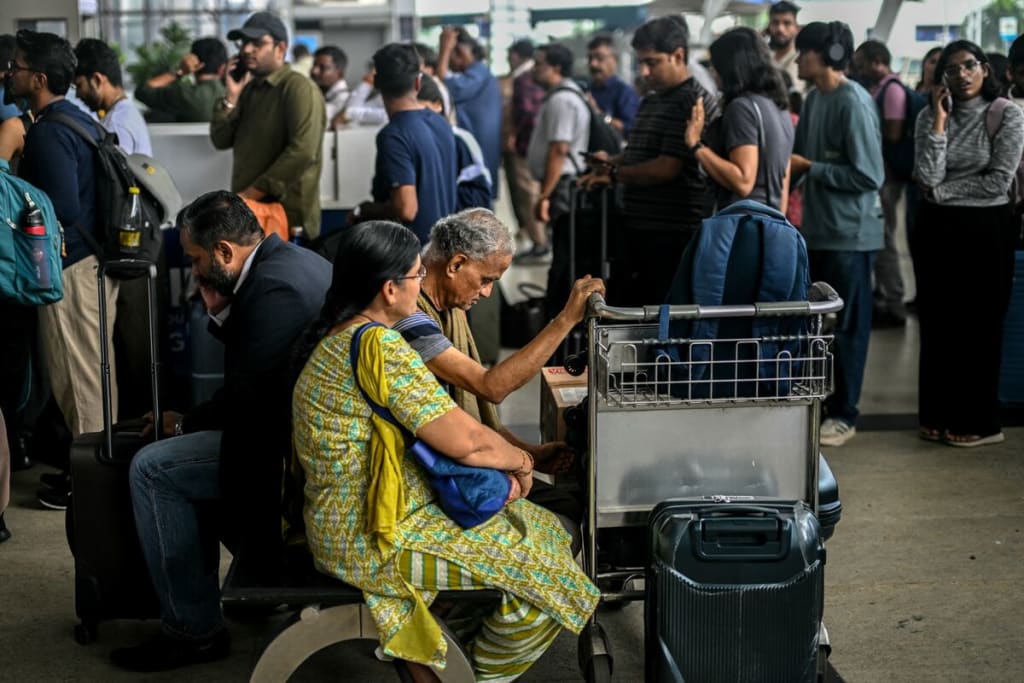
Despite emergency meetings, appeals to regulators, and attempts to secure rescue funding, operations continued to shrink. Flights were cancelled nationwide, leading to chaos for passengers and severe reputational damage.
Finally, the airline announced it could no longer sustain operations in its current form—marking the collapse of what was once India’s most successful aviation brand.
Lessons for India’s Aviation Industry
The downfall of this major airline offers critical lessons for the future:
Profitability must be balanced with sustainability—aggressive expansion often backfires.
Employee welfare is crucial—exhausted staff cannot uphold service quality or safety.
Debt-driven growth is dangerous—especially in a volatile market like aviation.
Leadership accountability matters—transparent decision-making could have averted crisis.
Customer trust must be protected—operational failures can destroy even the strongest brands.
As India’s aviation sector continues to grow, policymakers and airline leaders must examine this collapse closely.
Conclusion
The unraveling of India’s top airline stands as a stark reminder that unchecked pursuit of profit can be disastrous. Behind the glossy reports and rapid expansion lay a fragile foundation built on debt, workforce strain, and unrealistic expectations. When the pressure finally became unbearable, the airline collapsed—leaving thousands of employees, millions of passengers, and the entire aviation industry to reckon with its consequences.
About the Creator
Asad Ali
I'm Asad Ali, a passionate blogger with 3 years of experience creating engaging and informative content across various niches. I specialize in crafting SEO-friendly articles that drive traffic and deliver value to readers.




Comments
There are no comments for this story
Be the first to respond and start the conversation.