
History and Role of Money You Dont Know About
Exposing the Truth about Money

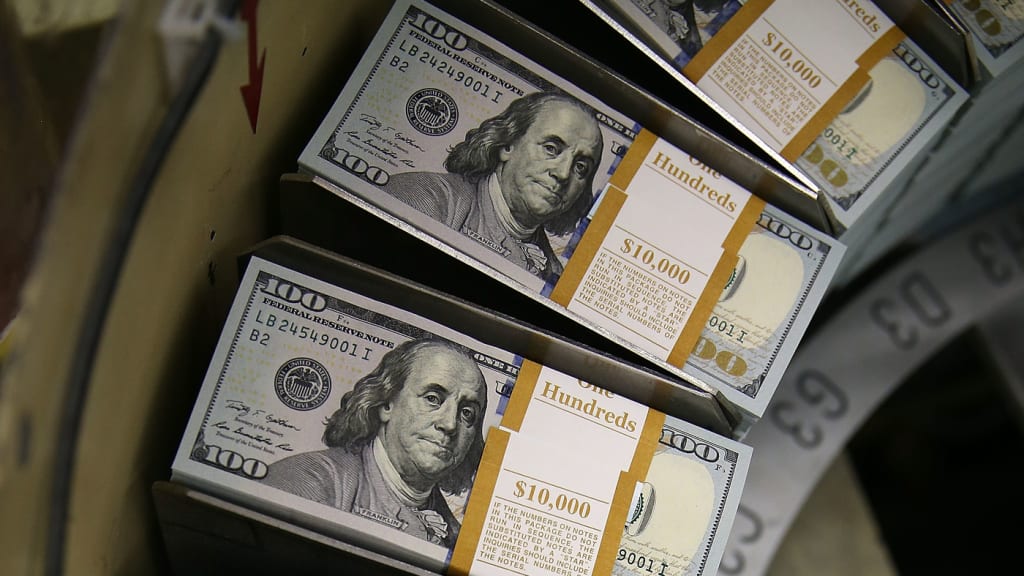
The history of money is a long and fascinating one that spans thousands of years and covers a variety of different cultures and civilizations. Money as we know it today has come a long way from its early beginnings, and has played an important role in shaping the world we live in.
The earliest forms of money were simple and relatively unsophisticated. Bartering was the primary method of exchanging goods and services, with people trading items they had in surplus for items they needed. This system was effective, but had some major limitations. For example, it was difficult to value items, and bartering could be time-consuming and complicated.
The invention of coinage marked a major turning point in the history of money. Coins were first minted in Lydia, a region in modern-day Turkey, around 600 BCE. Coins were valuable because they were made of precious metals like gold and silver, and had a standardized weight and purity. They quickly became widely accepted as a medium of exchange, and their use spread throughout the ancient world.
FIND YOUR BEST SIDE HUSTLE IDEA USING AI ONLY
As trade and commerce became more complex, paper money was introduced as a way to make transactions more efficient. The Chinese were the first to use paper money, issuing banknotes in the 7th century CE. The idea soon spread to Europe, where paper money became a popular form of currency during the Renaissance. However, paper money was often subject to inflation and devaluation, which limited its usefulness and led to widespread distrust of paper currency.
Throughout history, governments have played a major role in regulating money and the financial systems that support it. In many cases, governments have monopolized the issuance of money, and have used their control over money to influence the economy. For example, governments have often inflated their currencies to finance wars or public works projects. They have also used their control over money to stabilize the economy during times of economic uncertainty.
Today, money plays a central role in the global economy, and is used to facilitate trade, investment, and other economic activities. The dominant form of money in the modern world is fiat money, which is a currency that is issued by a government and accepted as a medium of exchange by the public. Unlike precious metal coins, fiat money has no intrinsic value, and its value is based solely on the trust people have in the government that issues it.
FIND YOUR BEST SIDE HUSTLE IDEA USING AI ONLY
In addition to traditional currency, a growing number of digital forms of money are being developed and used, such as cryptocurrencies like Bitcoin. These new forms of money are based on decentralized systems and use cryptography to secure transactions and ensure that the currency is not counterfeit or duplicated.
The role of money in society has also changed over time, and has become increasingly complex. Money is not just a medium of exchange, but also a store of value and a unit of account. It is used as a means of measuring wealth and as a tool for managing risk and facilitating investments.
In conclusion, money has been an integral part of human civilization for thousands of years, and has played a critical role in shaping the world we live in. From simple bartering to complex financial systems, the history of money is a fascinating and ongoing story, and its role in society is likely to continue to evolve in the years to come.
About the Creator
Daniel Haqeem
Hi ,Im Daniel.Im just a normal person who live and stand on this Earth ground.My purpose here is tell more about my little knowledge and also story I found based on my research.I would love to cover about
-MONEY
-WEALTH
-BUSINESS
Keep reading
More stories from Daniel Haqeem and writers in Trader and other communities.
The Ultimate Guide to Building Wealth: Strategies for Long-Term Success
Building wealth is a journey that requires patience, dedication, and a well-thought-out plan. While the idea of having a large sum of money may seem daunting, anyone can take steps towards building wealth over time. Here are some tips and strategies to help you get started:
By Daniel Haqeem3 years ago in Trader
Australia Carton Packaging Market: Sustainable Solutions, Industry Demand & Market Expansion
Australia Carton Packaging Market The Australia carton packaging market is carving out strong growth as manufacturers, retailers and consumer brands prioritise sustainability, efficiency and cost-effective packaging solutions. Carton packaging — which includes corrugated cartons, folding cartons, paperboard boxes and specialty cartons — is widely used in industries such as food and beverage, consumer goods, pharmaceuticals, e-commerce and logistics. The Australia carton packaging market size reached USD 3,987.88 Million in 2024. Looking forward, IMARC Group expects the market to reach USD 6,708.89 Million by 2033, exhibiting a growth rate (CAGR) of 5.95% during 2025-2033. This growth reflects rising domestic consumption, increasing demand for eco-friendly packaging, the shift towards online shopping, and regulatory emphasis on reducing plastic waste and enhancing recyclability.
By Amyra Singh7 days ago in Trader
Stanislav Kondrashov Explores Gold’s New Identity: Why the 2026 Surge Is More Than Just Market Panic
Gold has always had its moments. But 2026 is shaping up to be something entirely different. With prices smashing records — reaching $4,639.42 per troy ounce — and silver climbing beyond $90, global markets are buzzing. Is this just another run to safety, or is something deeper unfolding?
By Stanislav Kondrashov5 days ago in Trader




Comments
There are no comments for this story
Be the first to respond and start the conversation.