
Global Spices Market Size and Forecast 2025–2033
From Ancient Trade Routes to Modern Kitchens: Why the World’s Appetite for Spices Is Growing Faster Than Ever

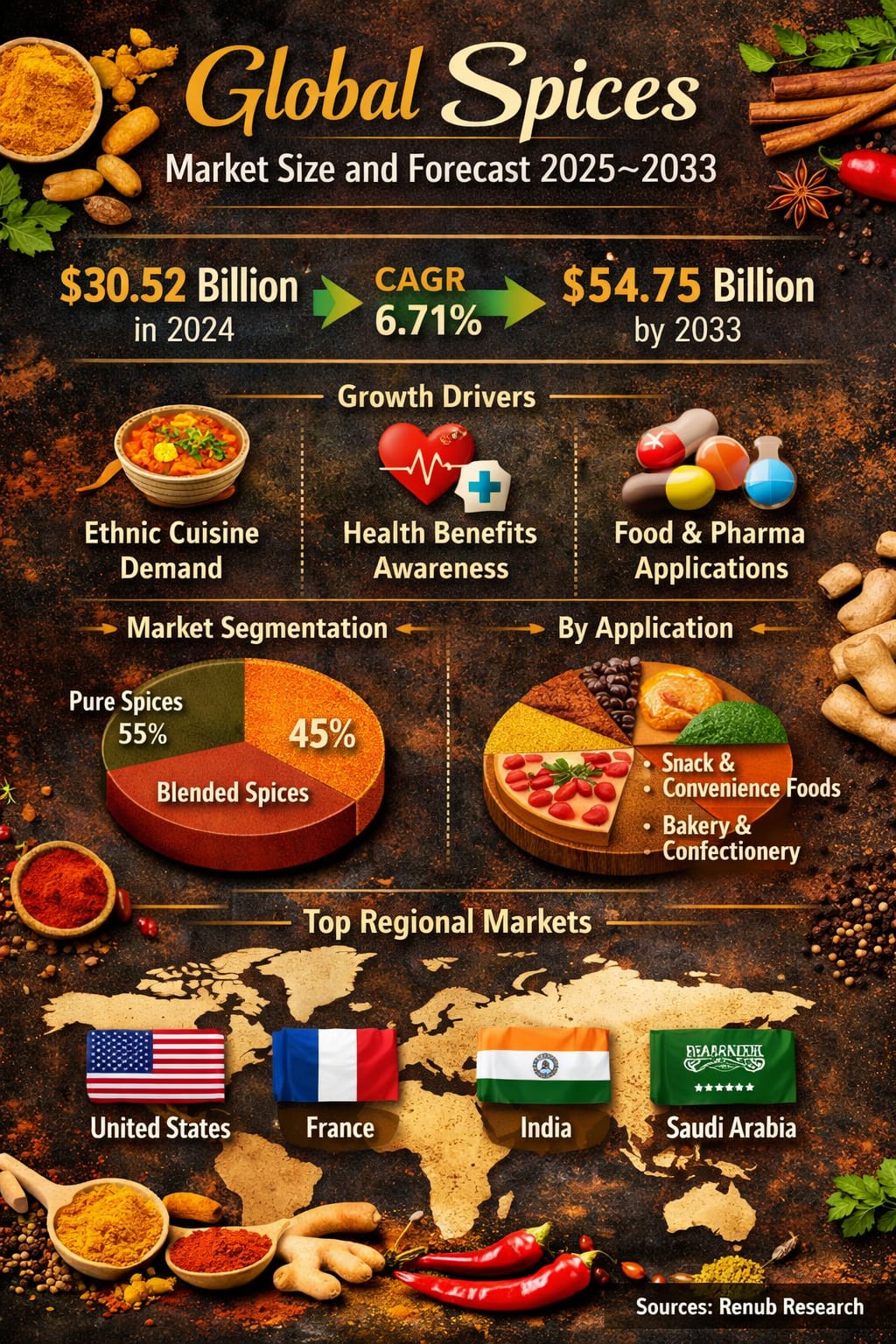
Global Spices Market Outlook
The global spices market is entering a phase of sustained and dynamic growth, supported by changing food habits, rising health awareness, and the globalization of cuisine. According to Renub Research, the Global Spices Market was valued at US$ 30.52 billion in 2024 and is projected to expand at a CAGR of 6.71% during 2025–2033, reaching an estimated US$ 54.75 billion by 2033.
Spices are natural plant materials used primarily to flavor, color, and preserve food. Common examples include turmeric, cinnamon, cumin, black pepper, cardamom, and cloves. Derived from seeds, roots, bark, fruits, and flowers, spices have been an integral part of global culinary culture for centuries. Beyond cooking, they also play important roles in traditional medicine, cosmetics, and food preservation due to their antibacterial, antioxidant, and anti-inflammatory properties.
In today’s world, spices are no longer limited to traditional kitchens or regional cuisines. The rise of global travel, food tourism, social media, and international restaurant chains has transformed spices into everyday essentials across continents. At the same time, consumers are becoming more conscious about what they eat, favoring natural ingredients over synthetic additives. This dual trend—culinary exploration and health-driven consumption—is reshaping the global spices industry and pushing it toward long-term growth.
Key Growth Drivers of the Global Spices Market
1. Growing Health Consciousness and Demand for Natural Ingredients
One of the strongest forces driving the spices market is the global shift toward healthier and more natural diets. Consumers are increasingly looking for alternatives to artificial flavors, preservatives, and additives. Spices such as turmeric, ginger, cinnamon, and garlic are widely recognized for their medicinal benefits, including anti-inflammatory, antioxidant, and immunity-boosting properties.
The rise of organic and functional foods has further accelerated spice consumption, both in households and in the food processing industry. Many spices are now marketed not just as flavor enhancers, but as wellness ingredients that support digestion, immunity, and overall health.
This trend is also reflected in corporate strategies. For example, in March 2023, VAHDAM India, a wellness-focused global brand, entered the spices segment with the launch of VAHDAM Spices, partnering with Indian farmers to offer high-quality, pure spices to health-conscious consumers. Such moves highlight how wellness positioning is becoming central to spice branding worldwide.
As consumers continue to prioritize clean labels and natural products, demand for high-quality, traceable, and minimally processed spices is expected to remain strong throughout the forecast period.
2. Globalization of Food and Cuisine
The globalization of food culture has dramatically changed what people eat and how they cook. Asian, Middle Eastern, Latin American, and African cuisines—once considered niche in many Western markets—are now mainstream. Spices are at the heart of these cuisines, making them essential ingredients for both home cooks and foodservice providers.
Restaurants, cloud kitchens, and packaged food manufacturers are constantly introducing new flavors and spice blends to cater to adventurous consumers. This trend is no longer limited to major cities; even suburban and smaller urban areas are seeing growing demand for international flavors.
The influence of cooking shows, food bloggers, and social media platforms has also played a major role in popularizing global recipes and spice blends. As a result, both common and exotic spices are seeing rising demand, supporting steady market expansion across regions.
3. Emergence of E-commerce and Branded Packaged Spices
The rapid growth of e-commerce has transformed how spices are bought and sold. Consumers now have easy access to a vast range of spices—from everyday essentials to rare and exotic varieties—through online platforms. This has also enabled small and regional spice producers to reach global audiences without relying solely on traditional distribution channels.
At the same time, there is a clear shift toward branded, packaged spices that emphasize quality, hygiene, labeling, and convenience. Urbanization and busy lifestyles are encouraging consumers to choose ready-to-use spice powders and blends in standardized packaging.
In January 2025, for instance, KRBL announced plans to enter the spices segment, leveraging its experience in consumer-driven packaging for premium rice. Such developments underline how established food companies see strong growth potential in the branded spices space.
Key Challenges in the Global Spices Market
1. Volatility of Raw Material Costs and Supply Chain Disruptions
Spice production is heavily dependent on agricultural output and weather conditions. Climate change, irregular rainfall, natural disasters, and pest infestations can significantly impact crop yields. This, in turn, leads to price volatility for key spices such as cardamom, black pepper, and saffron, affecting the margins of processors, exporters, and retailers.
Logistics and infrastructure challenges—especially in developing countries—can also disrupt supply chains, impacting both quality and timely delivery. These uncertainties pose risks to stable supply and pricing, making long-term planning more complex for market participants.
2. Adulteration and Quality Concerns
Adulteration remains a persistent issue in the global spices industry. Some low-quality producers mix fillers, artificial colors, or outdated stock to reduce costs or extend shelf life, which damages consumer trust and brand reputation.
With rising consumer awareness and stricter food safety regulations, buyers—especially in export markets—are demanding better traceability, certifications, and quality assurance. While this is positive for the industry in the long run, it also increases compliance costs, particularly for small and medium-sized producers.
Spotlight on Key Spice Segments
Pepper Spices Market
Black pepper is one of the most widely traded and consumed spices in the world. Known for its strong flavor and digestive and anti-inflammatory benefits, it is a staple in both household cooking and industrial food processing. Major producers include India, Vietnam, and Indonesia.
Pepper is extensively used in processed meats, sauces, soups, and spice blends. While demand remains strong, fluctuating crop yields can influence global prices. The growing interest in organic farming and sustainable sourcing is also shaping this segment, especially among premium food brands.
Ginger Spices Market
Ginger holds a unique position in the global spices market due to its dual role as a culinary spice and a medicinal ingredient. It is widely used in Asian, Middle Eastern, and Western cuisines, as well as in herbal teas, health drinks, and pharmaceuticals.
Its anti-inflammatory and immunity-boosting properties significantly increased its popularity during the COVID-19 pandemic, and that health-driven demand has remained strong. With the continued rise of functional foods and natural remedies, the ginger segment is expected to maintain a high growth trajectory.
Chilies Spices Market
Chilies are an essential part of many global cuisines, from Indian curries and Thai dishes to Mexican salsas. The market includes fresh, dried, powdered, and flaked chili products, catering to different heat levels and culinary uses.
The global appetite for spicy food—especially among younger consumers—is driving steady growth in this segment. Chilies are also rich in capsaicin, a compound associated with metabolic and pain-relief benefits, which aligns well with health and wellness trends. Major producing countries include India, China, and Thailand, ensuring consistent global supply.
Application-Based Insights
Meat and Poultry Spices Market
Spices used in meat and poultry products are witnessing strong demand, supported by the popularity of barbecue culture, grilled foods, and ready-to-cook meals. Blends such as tandoori masala, steak rubs, and Cajun seasoning are widely used in both restaurants and home kitchens.
This segment benefits from rising protein consumption and the growth of meal kits and convenience foods. Regional and ethnic flavor profiles are also driving innovation, particularly in North America and Europe, where consumers are eager to experiment with new tastes.
Form-Based Market Trends
Spices Powder Market
Powdered spices such as turmeric, cumin, coriander, and paprika dominate retail shelves due to their convenience, ease of use, and longer shelf life. They are widely used in both households and the foodservice industry.
As demand for ready-to-cook and convenience foods grows, powdered spices continue to gain traction. At the same time, consumers are increasingly looking for organic, additive-free options, pushing companies to focus on clean labeling and sustainable sourcing.
Whole Spices Market
Whole spices are gaining popularity due to their superior aroma, longer shelf life, and perceived purity. Many consumers prefer to grind spices fresh at home to retain maximum flavor and nutritional benefits.
This segment is particularly strong in regions with traditional cooking practices, such as India, the Middle East, and parts of Africa. Whole cloves, cinnamon sticks, cardamom pods, and star anise are commonly used, not only by households but also by restaurants and spice blenders that require high-quality base ingredients.
Regional Market Highlights
United States Spices Market
The U.S. spices market is growing rapidly, driven by multicultural influences and rising demand for global cuisines such as Mexican, Indian, Thai, and Middle Eastern. There is also increasing interest in organic and non-GMO spices.
The popularity of meal kits, gourmet cooking, and food-focused media continues to boost spice consumption. In 2023 alone, the United States imported turmeric worth over US$ 50 million, highlighting strong demand for health-oriented spices. Companies like McCormick and Kerry Group are активно innovating with new seasoning blends and healthier formulations, including sodium-reduction solutions.
France Spices Market
France’s spice market is shaped by gourmet cooking traditions, herbal blends, and premium imports. While French cuisine is known for subtle flavors, there is growing interest in both everyday and exotic spices such as saffron, peppercorns, turmeric, and curry blends.
Rising ethnic diversity and curiosity for global cuisine are expanding the consumer base. Organic and fair-trade spices are also gaining popularity among environmentally and socially conscious consumers.
India Spices Market
India is the world’s largest producer and consumer of spices, with deep cultural, culinary, and medicinal roots. Key spices include turmeric, cumin, coriander, cardamom, and chili. Domestic demand remains strong due to regional cuisines, while exports continue to grow as global demand for Indian spices rises.
Government initiatives and improved processing technologies are strengthening India’s position in the global market. In August 2024, the Spices Board of India launched the SPICED scheme with an outlay of ₹422.30 crore until FY 2025–26 to boost exports, improve post-harvest quality, promote value addition, and enhance sustainability, with a special focus on farmers, FPOs, SMEs, exporters, and the Northeast region.
Saudi Arabia Spices Market
Saudi Arabia’s spices market is expanding due to a strong food culture centered around rice, meat, and spiced dishes such as mandi and kabsa. The country relies heavily on imports, making it an important destination for global spice exporters.
Convenience foods, pre-mix spice blends, and premium seasonings are gaining popularity, especially among younger consumers and expatriates. In October 2024, Saudi Arabia announced ambitious plans to become one of the world’s leading producers of saffron, often called “red gold,” reflecting the country’s growing strategic interest in high-value spices.
Market Segmentation Overview
By Product Type:
Pure Spices: Chilies, Ginger, Cumin, Pepper, Turmeric, Coriander, Others (Cardamom, etc.)
Blended Spices
By Application:
Meat and Poultry Products
Bakery and Confectionery
Frozen Foods
Snacks and Convenience Foods
Others
By Form:
Powder
Whole
Crushed
Chopped
By Geography:
North America: United States, Canada
Europe: France, Germany, Italy, Spain, United Kingdom, Belgium, Netherlands, Turkey
Asia Pacific: China, Japan, India, South Korea, Thailand, Malaysia, Indonesia, Australia, New Zealand
Latin America: Brazil, Mexico, Argentina
Middle East & Africa: Saudi Arabia, UAE, South Africa
Competitive Landscape and Key Players
The global spices market is moderately fragmented, with a mix of multinational food companies and regional specialists. Renub Research covers companies through four key viewpoints: Overview, Key Persons, Recent Developments & Strategies, and Revenue Analysis.
Key players include:
Ajinomoto Co. Inc.
ARIAKE JAPAN Co. Ltd.
Associated British Foods plc
Baria Pepper Co. Ltd.
Döhler
EVEREST Food Products Pvt. Ltd.
The Kraft Heinz Company
Kerry Group plc
McCormick & Company
Olam International
These companies are focusing on product innovation, clean-label offerings, sustainable sourcing, and expansion into emerging markets to strengthen their competitive positions.
Final Thoughts
From ancient trade routes to modern supermarket shelves, spices have always played a central role in shaping global food culture. Today, they are no longer just flavor enhancers—they are health ingredients, lifestyle products, and symbols of culinary exploration.
With the Global Spices Market expected to grow from US$ 30.52 billion in 2024 to US$ 54.75 billion by 2033 at a CAGR of 6.71%, the industry is clearly on a strong growth path. Driven by health consciousness, globalization of cuisine, and the rise of e-commerce and branded products, spices are set to remain a vital and vibrant part of the global food economy.
While challenges such as raw material volatility and quality concerns persist, continued investment in sustainability, traceability, and innovation will likely define the next phase of growth. For producers, exporters, and brands alike, the future of the spices market looks not just flavorful—but fundamentally promising.
About the Creator
Sakshi Sharma
Content Writer with 7+ years of experience crafting SEO-driven blogs, web copy & research reports. Skilled in creating engaging, audience-focused content across diverse industries.
Keep reading
More stories from Sakshi Sharma and writers in Trader and other communities.
Dog Food Market Size, Growth & Forecast 2025–2033 | Renub Research
The Global Dog Food Market Enters a New Era of Premiumization and Personalization The global dog food market is undergoing a notable transformation, driven by shifting consumer attitudes toward pets, rapid urbanization, and a growing focus on health and nutrition. According to Renub Research, the Dog Food Market is expected to reach US$ 99.01 billion by 2033, rising from US$ 69.44 billion in 2024, and expanding at a CAGR of 4.02% from 2025 to 2033.
By Sakshi Sharmaa day ago in Trader
Google Voluntary Exit Program Highlights Shift in Big Tech Workforce Strategy
The announcement of a Google voluntary exit program has drawn attention across the technology and investment landscape. As artificial intelligence continues to reshape how companies operate, the decision signals a strategic recalibration rather than a reaction to immediate financial pressure. Google’s move reflects how major technology firms are adapting to long-term structural change in an evolving global economy.
By Hammad Nawaz7 days ago in Trader
Why “No Markup” Pricing Matters in Online Trading
In online forex and CFD trading, pricing transparency has become one of the most important concerns for retail traders. While platforms often advertise tight spreads and competitive fees, the structure behind those costs is not always obvious.
By Darren Lee4 days ago in Trader
Craft Over Catharsis Challenge Winners
Craft Over Catharsis? What the hell does that even mean? The phrase came out of a curation meeting as a genuine question. We had been noticing that many challenge entries, across prompts, naturally gravitate toward trauma, grief, and personal reckoning. That makes sense. Writing is often cathartic. It's one of the ways we process what we've lived through.
By Vocal Curation Teama day ago in Resources




Comments
There are no comments for this story
Be the first to respond and start the conversation.