
Global Hydroponics Market Size and Forecast 2025–2033
How Soilless Farming Is Reshaping the Future of Global Food Security


The global hydroponics market is entering a transformative decade. According to Renub Research, the market is projected to reach US$ 32.10 billion by 2033, rising from US$ 10.59 billion in 2024, at a CAGR of 13.11% from 2025 to 2033. This rapid growth is being fueled by the convergence of water scarcity, climate instability, urbanization, and global efforts to build more sustainable and self-reliant food systems.
Hydroponics—once an experimental farming method—has now moved to the center of future agricultural strategies. Countries facing water shortages, cities prioritizing local food production, and corporations targeting high-yield agriculture are accelerating adoption. With the world population expected to reach 9.1 billion by 2050, hydroponics is becoming a critical tool for producing more food using fewer resources.
This article explores the major forces shaping the hydroponics industry, the technology powering it, its challenges, regional highlights, and market opportunities ahead.
Hydroponics Industry Overview
Hydroponics is a soilless farming technique in which plants grow in nutrient-enriched water solutions. This controlled environment ensures optimal nutrient distribution, minimal water waste, and faster growth cycles. Hydroponics drastically reduces soil-borne diseases and unlocks farming potential in non-arable regions such as deserts, urban rooftops, and degraded lands.
Popular hydroponic systems include:
Nutrient Film Technique (NFT)
Deep Water Culture (DWC)
Aeroponics
Drip Systems
Ebb-and-Flow Systems
As climate change intensifies droughts, disrupts seasons, and damages soil fertility, hydroponics offers a stable alternative capable of year-round production. New technologies—automation, data analytics, smart sensors, and LED lighting—are also expanding scalability and reducing operational complexities.
The global appetite for fresh, pesticide-free, and locally grown produce further boosts market momentum.
Key Growth Drivers in the Global Hydroponics Market
1. Rising Focus on Global Food Security
With 200,000 new mouths to feed every day, food security has become a critical global issue. Traditional farming methods are struggling due to:
Shrinking arable land
Increasing pest infections and crop failures
Droughts, floods, and unpredictable climate patterns
Escalating production costs
Hydroponics provides a high-yield, space-efficient solution for both rural and urban populations. Governments and private investors are directing significant capital toward large-scale hydroponic projects to reduce import dependency and stabilize local food supplies.
As greenhouse gas emissions alter global ecosystems, hydroponic farming—which uses up to 90% less water than traditional agriculture—is also gaining attention as a climate-resilient food production model.
2. Technological Innovation in Indoor & Outdoor Hydroponic Systems
Hydroponics is unlocking new agricultural possibilities both indoors and outdoors. The development of highly efficient farming systems—like vertical farms, climate-controlled greenhouses, and rooftop hydroponic gardens—is revolutionizing crop cultivation.
Indoor Systems
LED grow lights optimize photosynthesis
Automated nutrient dosing systems ensure crop precision
Controlled HVAC environments enable continuous, year-round production
Smart monitoring (pH, humidity, temperature, CO₂ levels) maximizes yield
Indoor hydroponics is now the backbone of urban farming, reducing food miles and carbon footprints while ensuring consistent supply.
Outdoor Systems
New outdoor hydroponic techniques are making efficient use of:
Harsh climate zones
Contaminated or non-arable land
Areas affected by flooding or desertification
These systems increase land-use efficiency and alleviate pressure on traditional agriculture.
3. Decline in Arable Land Worldwide
One of the strongest growth triggers for hydroponics is the rapid decline of global arable land, driven by:
Industrialization
Urban expansion
Soil degradation
Deforestation
Climate change-induced erosion
Hydroponics eliminates the need for fertile soil and allows crops to grow vertically or in compact indoor spaces. Cities across Asia, Europe, and North America are adopting hydroponics to improve food access and reduce dependence on rural farmlands.
Where land is limited or contaminated, hydroponics becomes the default agricultural solution.
Challenges in the Hydroponics Market
1. Complex Water & Nutrient Management
Hydroponics requires:
Carefully-balanced nutrient solutions
Constant pH monitoring
Optimal temperature control
Precise nutrient cycles
Even small deviations can cause crop stress, nutrient burns, or low yields. This precision requirement increases reliance on skilled labor and advanced control systems. Mismanagement leads to productivity losses, making consistent oversight essential.
2. Limited Market Awareness and Adoption Barriers
Despite its benefits, hydroponics adoption remains limited due to:
Low awareness among traditional farmers
High initial setup costs
Perceived risks and technological complexity
Limited training and support
In many regions, consumers are unfamiliar with hydroponic-grown produce, slowing demand growth. Education campaigns, government incentives, and successful case studies are gradually improving acceptance.
Market Segmentation Insights
Liquid Systems Expected to Lead During 2025–2033
Hydroponics is categorized into Aggregate Systems and Liquid Systems.
Among these, liquid systems—especially NFT and DWC—are projected to dominate growth.
Why?
Direct nutrient delivery enhances plant health
Lower water usage
Lower labor requirements
Simpler design and maintenance
High suitability for leafy greens and herbs
However, closed-loop liquid systems also risk pathogen spread due to recirculated water—making system hygiene crucial.
Tomatoes to Maintain the Largest Crop Share
Tomatoes remain the backbone of global hydroponic crop production due to:
High demand
Low water requirements
Suitability for controlled environments
Strong commercial profitability
Hydroponic tomato production is especially strong in Europe and Asia-Pacific, driven by urbanization and year-round demand for fresh produce.
HVAC Systems to Capture the Largest Equipment Share
As indoor hydroponics expands, HVAC systems will dominate the equipment market.
Their role is indispensable in maintaining:
Temperature
Humidity
Clean airflow
CO₂ balance
Proper climate control directly influences crop yield, making HVAC systems a core component of hydroponic installations globally.
Regional Hydroponics Market Overview
North America
United States
The U.S. market is expanding as consumers demand pesticide-free, locally grown vegetables. Urban hydroponics—especially rooftop farms in cities like New York—is growing rapidly.
However, adoption hurdles persist due to:
High equipment costs
Limited training
Low awareness among traditional farmers
Still, the greenhouse tomatoes segment continues to drive strong commercial demand.
Europe
United Kingdom
The UK market is rapidly advancing amid rising environmental awareness and space-efficient food production needs. Smart technologies—LED lights, automation, climate systems—are boosting efficiency.
A major development includes the 2022 partnership between Vertical Future (UK) and Vertical Farm Systems (VFS) for Singapore’s SAVE Farming initiative.
Continental Europe
Europe remains a global leader in hydroponics due to:
Scarce arable land
Strong demand for year-round produce
High consumer awareness
Government support for sustainable agriculture
Countries like the Netherlands, Germany, and Spain are hydroponics hotspots.
Asia-Pacific
India
Hydroponics in India is on a fast-growth trajectory thanks to:
Water scarcity
Urban population growth
Rising demand for pesticide-free produce
Government support for modern farming
Notable initiatives include the 2024 agreement between Punjab Agricultural University and LS Industries to commercialize advanced hydroponic technology.
In 2024, researchers at Linkoping University also unveiled eSoil, which accelerates plant growth by 50%—a breakthrough poised to reshape urban hydroponics.
China, Japan, South Korea
These countries lead the region in smart agriculture adoption through automation, robotics, and vertical farms.
Middle East
Saudi Arabia
Hydroponics is expanding due to:
Severe water shortage
Government-backed food security programs
Rapid adoption of controlled-environment agriculture
Despite high initial investments, Saudi Arabia is emerging as a regional hydroponics hub.
Market Coverage
Types (2 Viewpoints):
Aggregate Systems
Liquid Systems
Crops (6 Viewpoints):
Tomatoes
Herbs
Lettuce
Cucumbers
Peppers
Others
Equipment (6 Viewpoints):
HVAC
LED Grow Lights
Irrigation Systems
Material Handling
Control Systems
Others
Countries Covered (25):
Across North America, Europe, Asia Pacific, Latin America, and the Middle East & Africa.
Major Companies in the Global Hydroponics Market
Village Farms International Inc.
Scotts-Miracle-Gro
AeroFarms
AmHydro
Argus Control Systems Limited
Emirates Hydroponics Farms
Freight Farms Inc.
BrightFarms
Each company is analyzed through:
Overview
Recent Developments
Revenue Analysis
Final Thoughts
The hydroponics market is no longer an experimental niche—it is becoming the backbone of global food resilience. With rapidly shrinking arable land, increasing water scarcity, and climate disruptions, hydroponics offers a scalable, sustainable, future-ready farming solution.
As automation, AI-driven nutrient optimization, vertical farming, and new materials emerge, hydroponics is set to revolutionize global agriculture between now and 2033. The next decade will determine how countries integrate these systems into mainstream food supply chains — and early adopters will benefit the most.
About the Creator
Ben Tom
Ben Tom is a seasoned content writer with 12+ years of experience creating SEO-friendly blogs, web copy, and marketing content that boosts visibility, engages audiences, and drives results.
Adriana Kostov and the Changing Face of Financial Leadership
The financial industry is one of the most dynamic and challenging sectors in the global economy. With constant shifts in markets, technology, regulation, and investor expectations, leadership in finance demands not only technical expertise but also adaptability, strategic vision, and ethical responsibility. Professionals who can balance these demands are increasingly rare. Among them, Adriana Kostov has emerged as a notable figure, exemplifying the qualities required for modern financial leadership.
By Financial Services Media4 days ago in Trader
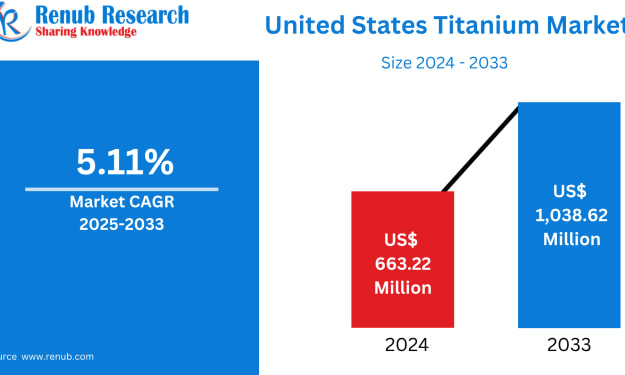
United States Titanium Market Size and Forecast 2025–2033
The titanium market within the United States is expected to grow considerably, from US$ 663.22 million in 2024 to US$ 1,038.62 million in 2033. This expansion reflects a healthy Compound Annual Growth Rate (CAGR) of 5.11% from 2025 to 2033, underscoring the increasing importance of titanium across modern industries. From aerospace engineering and defense manufacturing to medical implants and energy systems, titanium has become a cornerstone of high-performance materials.
By Aaina Oberoi5 days ago in Trader



Comments
There are no comments for this story
Be the first to respond and start the conversation.