
Global E-commerce Payment Market Size & Forecast, 2026–2034
Digital Trust, Seamless Transactions, and the Future of Online Commerce

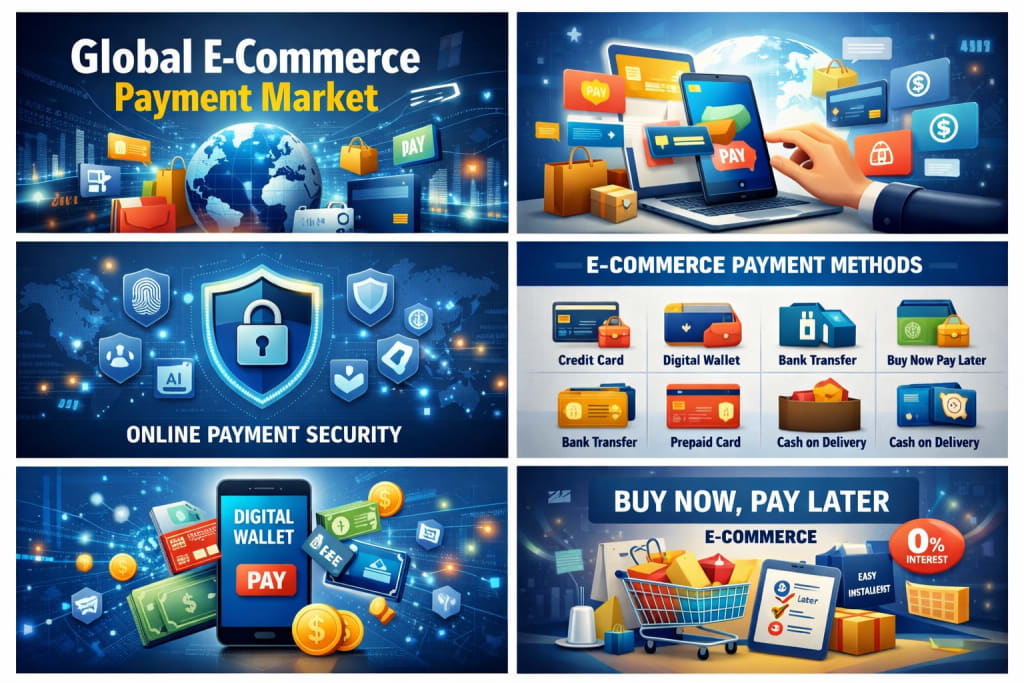
Global E-commerce Payment Market Outlook
The Global E-commerce Payment Market is entering a decisive growth phase as digital commerce becomes deeply embedded in everyday consumer behavior. According to Renub Research, the market is projected to expand rapidly from US$ 5.14 trillion in 2025 to an impressive US$ 14.63 trillion by 2034, registering a Compound Annual Growth Rate (CAGR) of 12.32% from 2026 to 2034.
This robust expansion reflects the accelerating shift toward online shopping, increasing consumer confidence in digital transactions, and the rapid adoption of advanced payment technologies worldwide. From mobile wallets and buy-now-pay-later (BNPL) solutions to real-time bank transfers and AI-driven fraud detection, e-commerce payments are evolving into a critical backbone of the global digital economy.
Understanding E-commerce Payments
E-commerce payments refer to electronic systems that enable consumers and businesses to complete transactions for goods and services purchased online. These transactions are processed through secure digital platforms using methods such as credit and debit cards, digital wallets, bank transfers, prepaid instruments, BNPL services, and real-time payment rails.
Modern e-commerce payment systems are designed to ensure speed, reliability, and security. Advanced technologies such as encryption, tokenization, biometric authentication, and AI-powered fraud prevention play a vital role in safeguarding sensitive financial data while maintaining smooth checkout experiences.
As global connectivity improves and smartphones become nearly ubiquitous, e-commerce payments are no longer a convenience—they are a necessity for participation in the modern economy.
Key Growth Drivers Shaping the Market
Rapid Expansion of Global E-commerce
The steady growth of global e-commerce remains the strongest driver of the e-commerce payment market. With billions of consumers now shopping online for electronics, groceries, healthcare products, entertainment, and digital services, the demand for fast and secure payment solutions continues to surge.
Cross-border e-commerce further amplifies this demand, requiring payment systems capable of handling multiple currencies, languages, and regulatory frameworks. Merchants increasingly rely on flexible payment infrastructures to reach international consumers and improve conversion rates.
Rising Adoption of Digital Wallets and Mobile Payments
Digital wallets and mobile payments have transformed the way consumers pay online. These solutions offer unmatched convenience through one-click payments, biometric authentication, and stored credentials, eliminating the friction associated with manual card entry.
Mobile-first shopping experiences and app-based commerce have accelerated wallet adoption, particularly among younger demographics. In addition to speed and convenience, digital wallets enhance customer engagement through loyalty programs, instant refunds, and integrated BNPL options.
Technological Advancements in Payment Security
Innovation in payment security continues to strengthen trust in e-commerce transactions. AI-driven fraud detection, real-time monitoring, and tokenized payment credentials significantly reduce the risk of unauthorized transactions.
Cloud-based payment platforms and open APIs are enabling businesses of all sizes to integrate advanced payment solutions quickly and scale operations efficiently. These advancements are particularly beneficial for small and medium-sized enterprises entering the global e-commerce ecosystem.
Challenges Facing the E-commerce Payment Market
Cybersecurity Risks and Online Fraud
Despite technological progress, cybersecurity threats remain a persistent challenge. Fraudsters continuously develop new tactics such as phishing, account takeovers, and credential theft, forcing payment providers and merchants to invest heavily in prevention tools and compliance systems.
While strong security measures are essential, overly complex authentication processes can negatively impact user experience, leading to cart abandonment and lower conversion rates. Balancing security and convenience remains a critical challenge for the industry.
Regulatory Complexity and Fragmentation
The global nature of e-commerce payments exposes providers to a complex web of regional regulations. Differences in data privacy laws, consumer protection requirements, authentication standards, and reporting obligations increase operational costs and slow market expansion.
Additionally, regional payment preferences vary significantly, requiring localized solutions such as bank transfers, wallets, or installment payments. Navigating this fragmented landscape is particularly challenging for new entrants and cross-border merchants.
Market Segmentation Insights
E-commerce Digital Wallet Payment Market
Digital wallets are among the fastest-growing payment methods in e-commerce. Their ability to offer quick checkouts, enhanced security, and integrated value-added services makes them highly attractive to both consumers and merchants.
The rise of mobile commerce and contactless payments continues to strengthen wallet adoption, positioning this segment as a key growth engine for the overall market.
E-commerce Prepaid Payment Market
Prepaid payment solutions, including prepaid cards and vouchers, play a vital role in serving unbanked and underbanked populations. These solutions are also popular for gifting, subscriptions, and controlled spending, as they are not directly linked to bank accounts.
For merchants, prepaid payments reduce chargeback risks and expand customer reach in emerging markets.
Application-Based Market Trends
Electronics & Media: High-value purchases in this segment drive demand for secure and flexible payment options such as credit cards, wallets, and installment plans.
Fashion Accessories: Fast checkouts, easy refunds, and mobile-friendly payments are critical, given the impulse-driven nature of fashion purchases.
Food & Personal Care: Speed and reliability dominate payment preferences due to frequent, essential transactions and subscription-based models.
Regional Market Analysis
United States
The U.S. e-commerce payment market is characterized by advanced technology adoption, omnichannel integration, and strong emphasis on fraud prevention. Innovations such as tokenization, biometric authentication, and emerging cryptocurrency-based solutions are shaping the future of online payments.
United Kingdom
The UK market benefits from a mature digital payments ecosystem and strong consumer trust. Debit cards, instant bank payments, and mobile wallets dominate online transactions, supported by strict authentication standards and consumer protection frameworks.
China
China leads the global e-commerce payment landscape through mobile-first platforms deeply integrated into daily life. In-app payments, QR codes, and super-app ecosystems enable seamless transactions across shopping, social commerce, and digital entertainment.
Brazil
Brazil’s e-commerce payment market is expanding rapidly, driven by mobile commerce growth and widespread use of installment-based payments. A mix of cards, instant transfers, prepaid solutions, and wallets caters to diverse consumer preferences.
Saudi Arabia
Saudi Arabia’s e-commerce payment market is benefiting from national digital transformation initiatives and rising smartphone adoption. Consumers increasingly prefer cashless and mobile payments, prompting businesses to invest in secure, localized payment solutions.
Competitive Landscape and Key Players
The global e-commerce payment market is highly competitive, with major players focusing on innovation, security, and global reach. Key companies covered with detailed viewpoints include:
Amazon.com Inc.
American Express Company
Apple Inc.
Fiserv Inc.
Mastercard Incorporated
PayPal Holdings Inc.
Visa Inc.
Each company is analyzed across overviews, key leadership, recent developments, SWOT analysis, and revenue performance, offering a comprehensive view of the competitive environment.
Final Thoughts
The Global E-commerce Payment Market is set to witness transformative growth between 2026 and 2034, fueled by expanding online commerce, rapid digital wallet adoption, and continuous innovation in payment security. While challenges such as cybersecurity risks and regulatory complexity persist, ongoing technological advancements and strategic investments are steadily strengthening market resilience.
As e-commerce continues to reshape global trade, payment solutions will remain at the center of digital trust and customer experience. Businesses that prioritize seamless, secure, and localized payment strategies will be best positioned to capitalize on the market’s remarkable growth trajectory outlined by Renub Research.
About the Creator
Dow Jones Industrial Average: How Recent Market Trends Are Shaping Investor Opportunities
The Dow Jones Industrial Average is more than just a number on a financial chart. It reflects the health of major U.S. companies and often signals the direction of the overall market. Recently, the Dow Jones Industrial Average has shown significant upward movement, drawing attention from investors and analysts alike.They will explore the factors behind this growth and how it could impact your investment decisions.
By hamza mirza6 days ago in Trader



Comments
There are no comments for this story
Be the first to respond and start the conversation.