
Five Trading And Trading-Education Trends To Watch In 2025
Five 2025 trading trends: AI copilots, regime-first playbooks, options literacy, risk-as-product, and evidence-based learning with micro sizing.

Trading is evolving quickly, and resources like trading.biz reflect that shift; the most durable edges are coming from process, not hot indicators. Markets are more fragmented, data is abundant, and attention is scarce. The winners in 2025 combine human judgment with disciplined systems and a tighter learning loop. Below are five trends shaping both trading and the way traders learn to trade.
1. AI copilots replace scattered dashboards
AI is no longer a novelty. The real shift is from multitasking across 10 tabs to asking a single copilot targeted questions and getting structured answers. Traders use AI to summarize macro drivers before the open, classify market regimes, generate alternative hypotheses, and transform raw notes into clean checklists. Educators use the same tools to turn long lectures into micro lessons, create quizzes from live market examples, and annotate student trade journals with actionable feedback.
The boundary is risk. AI should suggest, not decide. Good practice is to keep prompts and outputs inside your journal, tag the ones that led to execution, and review them weekly. Build guardrails: any AI-sourced idea must survive a quick data check, a risk gate, and a why-now catalyst. Treat the model as an analyst whose work still needs the portfolio manager’s sign-off.
2. Regime-first playbooks beat static setups
Static setups that worked in 2020 did not translate cleanly into 2024. Rates, liquidity, and dispersion changed, along with the behavior of crowd positioning. In 2025, the best traders begin with a regime diagnosis, then choose tactics. Four simple switches do the job: trend (expanding or mean-reverting), volatility (compressing or expanding), liquidity (deep or thin), and breadth (broad or narrow participation). Flip any switch and your entries, sizing, and expectations change.
Education is catching up. Instead of teaching fifty patterns, instructors collapse them into regime families. Students learn when to favor breakouts vs fades, when options structures outperform stock, and when sitting out is optimal. A practical approach is to build a small dashboard that tracks a handful of regime proxies you understand. Tie each regime to a predefined playbook with allowed instruments, time frames, stop logic, and profit-taking rules. Make the switch explicit in your journal so you can audit whether you traded the market you had, not the one you wanted.
3. Options literacy goes mainstream
Options are no longer a niche. Retail and prop learners are adopting defined-risk structures that match choppy markets and event-driven flows. Education is moving beyond covered calls into verticals, calendars, and diagonals, with emphasis on probability, skew, and term structure rather than lottery tickets. Traders who once overpaid for weeklies now learn to harvest event volatility or to finance directional views with spreads that cap risk and free mental bandwidth.
Two habits separate the serious from the hopeful. First, always sketch the payoff and identify what must happen by when. Second, translate Greek talk into trading actions: how much theta can you tolerate per day, what vega shock breaks your thesis, and where will you adjust or close. Teaching that includes post-mortems on real options tickets accelerates competence. Showing the ugly ones is vital because it inoculates students against unrealistic expectations and clarifies how to exit when volatility moves against you.
4. Risk tooling becomes the product
With wider gaps and more single-stock landmines, risk management is no longer a chapter at the end of a course. It is the product. Traders adopt portfolio heat maps, per-trade max loss, correlation caps, and volatility-based position sizing that shrinks in fast tape and expands when conditions calm. Many now run a kill switch tied to a daily drawdown or error count. This is less about fear and more about preserving decision quality when stress is high.
Educators and communities that lead with risk are winning trust. They publish the exact rules they use, track adherence, and grade students on process, not just PnL. A strong baseline includes a daily stop, a weekly max draw, a rule to de-risk on volatility spikes, and a post-lose-two protocol that enforces a cool-down and a checklist review. The point is not to remove uncertainty but to contain it so you can keep showing up with a clear head.
5. Evidence-based learning: data hygiene, micro sizing, and proof-of-skill
Backtests are easier than ever to run and easier than ever to get wrong. The counter-trend is discipline. Traders are adopting cleaner research workflows: split samples, walk-forward validation, realistic transaction costs, and explicit failure criteria. If a strategy only works with perfect fills or after removing “outliers,” it probably does not work. Educators are embracing transparency by showing the broken tests alongside the shiny equity curves so students learn what not to trust.
Live execution still matters most. Fractional shares, micro futures, and smaller options contracts let learners practice with real slippage and emotion while keeping risk sensible. A common path is simulate, then go micro with strict rules, then step up only when your metrics meet thresholds for win rate, average loss vs average win, and rule adherence. Finally, there is a shift toward proof-of-skill credentials. Instead of generic certificates, programs ask for a research notebook, a month of annotated trades, a documented drawdown recovery plan, and a risk report. Prop firms and desks increasingly care about process evidence because it predicts durability better than a single hot month.
The throughline
All five trends share one theme: compressing time-to-competence. AI removes noise, regimes frame decisions, options structures enforce defined risk, tooling protects your capital and focus, and evidence-based learning builds habits that survive the next market shift. If you adopt only one idea this quarter, build a living journal that links your regime view, your risk rules, your prompts, and your trade outcomes. Review it weekly. It will sharpen your questions, expose your blind spots, and compound your edge faster than any new indicator.
About the Creator
Keep reading
More stories from Susan Scava and writers in Trader and other communities.
Top 5 EU Countries for Simplified Crypto Authorization
When launching a Virtual Asset Service Provider (VASP) in the European Union, choosing the right jurisdiction can significantly impact the smoothness and efficiency of the authorization process. Some EU countries offer simplified regulatory frameworks, making it easier for businesses to comply with local and EU-wide requirements, including Anti-Money Laundering (AML) and Countering the Financing of Terrorism (CFT) regulations.
By Susan Scava10 months ago in Trader
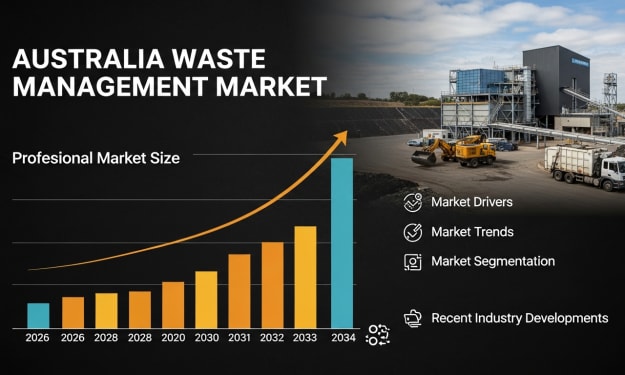
Australia Waste Management Market Growth, Forecast, and Strategic Insights
Waste management has become a critical priority for governments, businesses, and communities across Australia. With rising urbanization, expanding industrial activities, and growing environmental awareness, the need for efficient waste collection, recycling, and disposal systems has never been greater. Modern waste management strategies are no longer limited to landfill operations; they now include advanced recycling technologies, waste-to-energy systems, and smart waste monitoring solutions.
By Amélie Belle4 days ago in Trader


Comments
There are no comments for this story
Be the first to respond and start the conversation.