
Exploring the Types of Trading Signals for Smarter Market Decisions
Types of Trading Signals
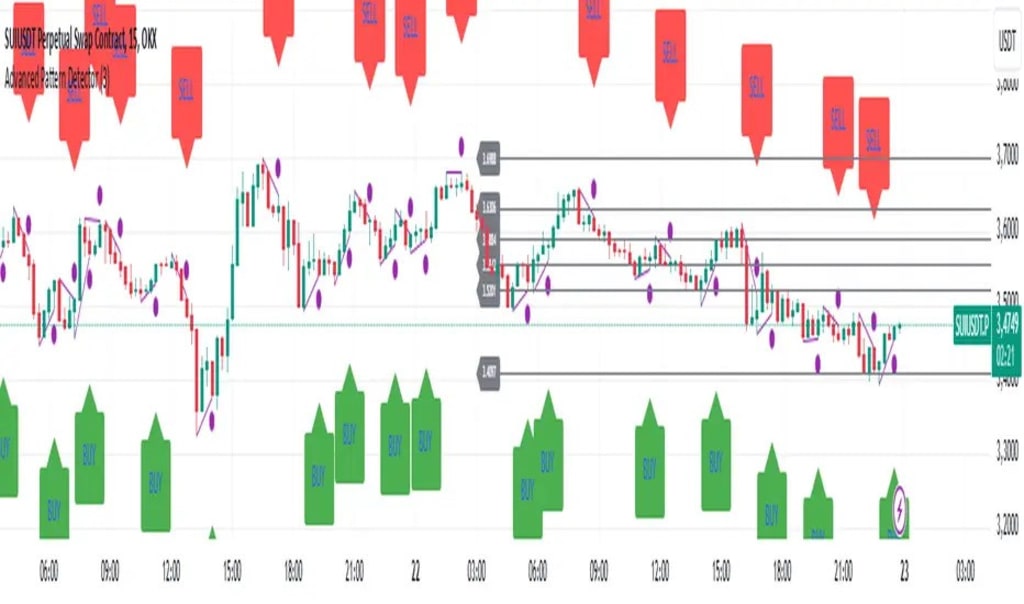
In the ever-evolving world of financial trading, understanding the tools at your disposal is crucial for success. Among these tools, trading signals stand out as invaluable guides that help traders identify opportunities and make informed decisions. This article explores the types of trading signals used across markets and highlights their significance for traders at every level. Furthermore, we will examine The technology powering trading signals in binary options: a deep dive, uncovering the innovations and systems that make these signals a cornerstone of modern trading strategies. Whether you're just starting or looking to refine your approach, this article will provide you with essential insights into trading signals and their underlying technologies.
1. Technical Analysis Signals
Technical analysis signals are derived from the study of historical price movements, volume, and chart patterns. They are widely used by traders to predict future price behavior based on past data.
Key Indicators in Technical Analysis
Moving Averages (MA): Helps smooth out price data to identify trends.
Relative Strength Index (RSI): Measures the speed and change of price movements to identify overbought or oversold conditions.
MACD (Moving Average Convergence Divergence): A momentum indicator that reveals changes in the strength, direction, and duration of a trend.
These signals are popular among day traders and swing traders who rely on precise, data-driven decisions.
2. Fundamental Analysis Signals
Fundamental analysis signals focus on economic indicators, company performance, and geopolitical events. These signals are essential for long-term investors who prioritize market fundamentals over short-term price movements.
Examples of Fundamental Signals
Earnings Reports: Indicate a company's financial health.
Economic Data Releases: Such as GDP, unemployment rates, and inflation.
Central Bank Announcements: Interest rate decisions and monetary policies significantly impact market dynamics.
For instance, a positive earnings report from a company could signal potential price growth, prompting traders to act accordingly.
3. Sentiment Analysis Signals
Sentiment analysis signals gauge the overall mood of the market. They consider factors such as social media trends, news sentiment, and crowd psychology.
How Sentiment Signals Work
Bullish Sentiment: Indicates optimism and potential upward price movement.
Bearish Sentiment: Reflects market pessimism and potential downward trends.
The rise of AI-driven sentiment analysis tools has significantly enhanced the accuracy of these signals, making them a go-to for traders looking to capture market mood swings.
4. Algorithmic Trading Signals
Algorithmic trading signals are generated by computer programs that use mathematical models and algorithms to analyze market data. These signals are typically used in high-frequency trading, where speed and accuracy are paramount.
Advantages of Algorithmic Signals
Speed: Instant execution of trades.
Accuracy: Minimizes human error.
Consistency: Executes predefined strategies without emotional bias.
With advancements in machine learning and AI, algorithmic signals are becoming increasingly sophisticated and effective.
5. Copy Trading Signals
Copy trading signals allow traders to replicate the trades of experienced professionals. These signals are particularly useful for beginners who want to leverage the expertise of seasoned traders.
Features of Copy Trading
Transparency: Access to the strategies of top-performing traders.
Automation: Trades are automatically executed in your account.
Learning Opportunity: Understand trading strategies by observing experts.
Platforms like eToro and ZuluTrade have popularized copy trading, making it accessible to a wider audience.
6. Binary Options Trading Signals
Binary options trading signals are specific to the binary options market, where traders predict whether the price of an asset will rise or fall within a set timeframe.
Types of Binary Options Signals
Manual Signals: Generated by experienced traders based on market analysis.
Automated Signals: Produced by algorithms or bots.
Subscription-Based Signals: Provided by professional services for a fee.
These signals are tailored to the unique nature of binary options trading, offering traders precise guidance in this niche market.
7. Proprietary Trading Signals
Proprietary trading signals are developed by brokers, hedge funds, or private institutions. These signals are based on exclusive research and are often available only to premium clients.
Benefits of Proprietary Signals
Access to Expert Insights: Based on in-depth analysis.
Customization: Tailored to specific trading styles.
Competitive Edge: Provides unique strategies unavailable elsewhere.
While these signals often come at a premium cost, they offer high value for serious traders.
The Technology Powering Trading Signals in Binary Options: A Deep Dive
Advancements in technology have revolutionized the way trading signals are generated and utilized, especially in the binary options market. Machine learning, big data analytics, and artificial intelligence are at the forefront of this transformation.
Key Technologies Behind Trading Signals
AI and Machine Learning: Analyze vast amounts of data to identify patterns and predict market movements.
Blockchain: Ensures transparency and reliability in the dissemination of signals.
Cloud Computing: Enables real-time signal delivery to traders across the globe.
This deep dive into the technology powering trading signals in binary options highlights how innovation is making trading more accessible, efficient, and accurate.
Conclusion
Trading signals are invaluable tools that cater to a wide range of trading styles and preferences. From technical analysis and fundamental analysis to algorithmic and sentiment-based signals, there’s a signal type for every trader. As technology continues to evolve, the accuracy and availability of trading signals are expected to improve further, empowering traders to make smarter and more confident decisions.
Whether you’re a novice exploring the basics or an experienced trader refining your strategy, understanding the types of trading signals and their underlying technology is key to navigating the complexities of modern financial markets.
About the Creator
Keep reading
More stories from Elbert Robert and writers in Trader and other communities.
Top 5 Ways Creators Can Earn on Fansly in 2025
In 2025, the creator economy has evolved into a powerful industry — and Fansly stands out as a leading platform for monetization. From models and cosplayers to adult entertainers and educators, thousands of creators are making a living on Fansly by offering exclusive content to their fanbase.
By Elbert Robert8 months ago in Trader
Commercial Satellite Imaging Market: AI, Space Technology, and the Future of Global Earth Observation
Commercial Satellite Imaging Market: Transforming Global Intelligence and Data Insights The commercial satellite imaging market has become a critical component of the modern data-driven economy. Satellite imagery provides valuable insights about Earth’s surface, enabling organizations to monitor environmental changes, manage natural resources, track infrastructure development, and improve national security.
By James Smith6 days ago in Trader




Comments
There are no comments for this story
Be the first to respond and start the conversation.