
Exploring the Advantages and Limitations of Cloud Computing in Business
Navigating the Benefits and Challenges of Moving to the Cloud
I. Introduction
Cloud computing is one of the most revolutionary technologies of the 21st century. It has changed the way businesses operate, and has made it possible for individuals to access and share data from anywhere in the world. In this blog, we will explore the basics of cloud computing, its benefits and limitations, and how it is shaping the future of technology.
The term cloud computing refers to the delivery of computing services, such as storage, processing power, and software, over the internet. Instead of buying and maintaining expensive hardware and software, businesses can now access these services through a cloud provider. This allows them to scale their resources up or down as needed, and only pay for what they use.
II. Benefits of cloud computing
One of the biggest benefits of cloud computing is cost savings. By eliminating the need for expensive hardware and software, businesses can save thousands of dollars in upfront costs. Additionally, cloud providers often offer pay-as-you-go pricing models, which allows businesses to only pay for the resources they use. This can lead to significant cost savings in the long run.
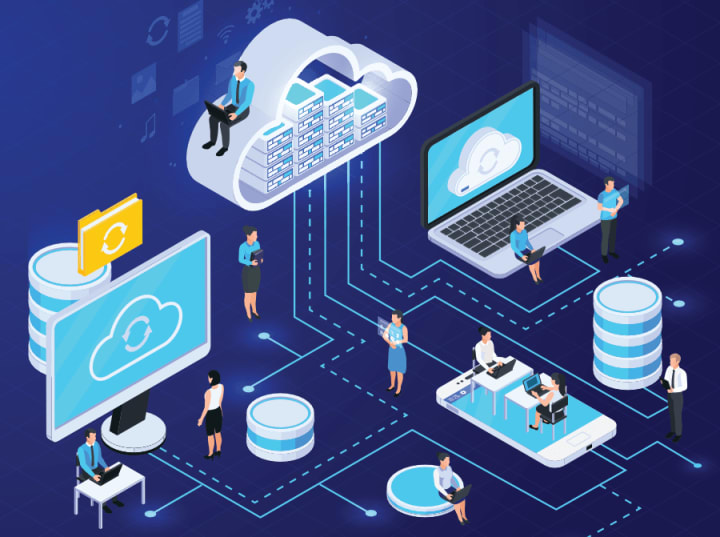
Another benefit of cloud computing is scalability. With traditional IT systems, businesses would need to purchase and maintain additional hardware and software to accommodate growth. With cloud computing, businesses can easily scale their resources up or down as needed, without the need for additional hardware or software. This allows them to respond quickly to changes in demand, and avoid the costs of maintaining excess resources.
Cloud computing also offers flexibility and mobility. With cloud computing, businesses can access their data and resources from anywhere in the world, as long as they have internet access. This allows employees to work remotely, and enables businesses to operate in multiple locations without the need for expensive IT infrastructure.
Cloud computing also offers improved security. Many cloud providers offer advanced security measures, such as encryption, to protect data. Additionally, cloud providers often have teams of security experts who monitor their systems around the clock, which can provide a level of security that many small businesses would not be able to afford on their own.
III. Limitations of cloud computing
However, cloud computing is not without its limitations. One of the biggest concerns is data privacy and security. Businesses must trust their cloud providers to keep their data safe, and there have been instances where data breaches have occurred. Additionally, businesses may also lose control over their data, as it is stored on servers owned and operated by a third party.
Another limitation of cloud computing is internet connectivity. Cloud computing relies on internet access, and if the internet goes down, businesses will lose access to their data and resources. This can be a major issue for businesses that need to operate 24/7, such as hospitals or emergency services.
IV. Impact on the future of technology
Cloud computing has had a significant impact on the way businesses operate and will continue to shape the future of technology. It allows for increased flexibility, scalability, and cost savings by allowing companies to access and manage resources remotely through the internet. This has led to the rise of remote work, collaboration, and data analysis capabilities. Additionally, advancements in cloud technology such as machine learning and artificial intelligence are expected to play a major role in driving innovation and driving future business success.
V. Conclusion
In conclusion, cloud computing is a powerful technology that has the potential to revolutionize the way businesses operate. Its benefits include cost savings, scalability, flexibility, and improved security. However, businesses must also consider the limitations of cloud computing, such as data privacy and security, and internet connectivity. As the technology continues to evolve, we can expect to see more businesses adopting cloud computing, and the future of technology is likely to be shaped by this powerful technology.
About the Creator
Keep reading
More stories from Logadheenan V M and writers in Trader and other communities.
AI and it's Future
Artificial Intelligence, or AI, is a rapidly growing field that has the potential to revolutionize the way we live and work. It is the simulation of human intelligence processes by machines, especially computer systems. These processes include learning (the acquisition of information and rules for using the information), reasoning (using the rules to reach approximate or definite conclusions), and self-correction.
By Logadheenan V M3 years ago in Futurism
Australia Cold Chain Monitoring Solutions Market 2026: Temperature Control Innovation, Food Safety Compliance and Pharma Logistics Growth
Australia Cold Chain Monitoring Solutions Market Overview Australia’s cold chain monitoring solutions market is experiencing significant growth as industries prioritise product integrity, real-time visibility and compliance across temperature-sensitive supply chains. Cold chain monitoring solutions — including IoT-enabled sensors, RFID trackers, cloud software and analytical platforms — ensure that perishable goods such as food, pharmaceuticals and biologics maintain optimal conditions from production to point of use. Rising regulatory requirements, expanding e-commerce grocery demand and increased pharmaceutical distribution activity are supporting the adoption of advanced monitoring systems that optimise quality, minimise spoilage and enhance traceability.
By Amyra Singha day ago in Trader
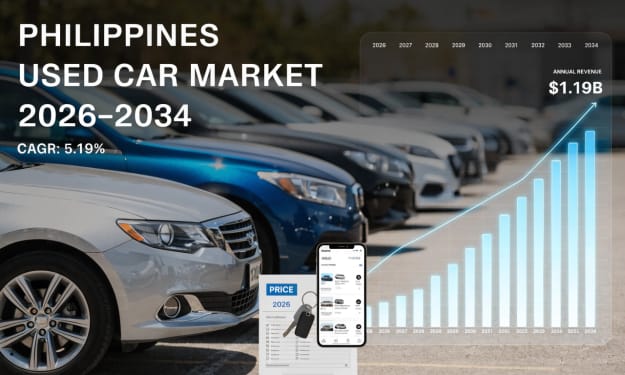
Philippines Used Car Market 2026: Affordable Mobility, Digital Marketplaces and Certified Pre-Owned Growth
Philippines Used Car Market Overview The Philippines used car market is expanding steadily as consumers increasingly turn to pre-owned vehicles to balance affordability with mobility needs. Used vehicles provide a cost-effective alternative to new car purchases while offering diverse model availability, making them attractive to first-time buyers and budget-conscious households. As urbanisation, income growth and digital marketplace adoption continue to transform automotive retail, the used car sector is emerging as a critical component of the Philippines mobility ecosystem.
By Manisha Dixit6 days ago in Trader


Comments
There are no comments for this story
Be the first to respond and start the conversation.