
Europe Meat Snacks Market Trends & Summary 2025–2033
High-Protein, On-the-Go, and Clean-Label: Why Europe’s Meat Snacks Market Is Entering a Golden Growth Phase

Introduction: A Market Built for Modern Lifestyles
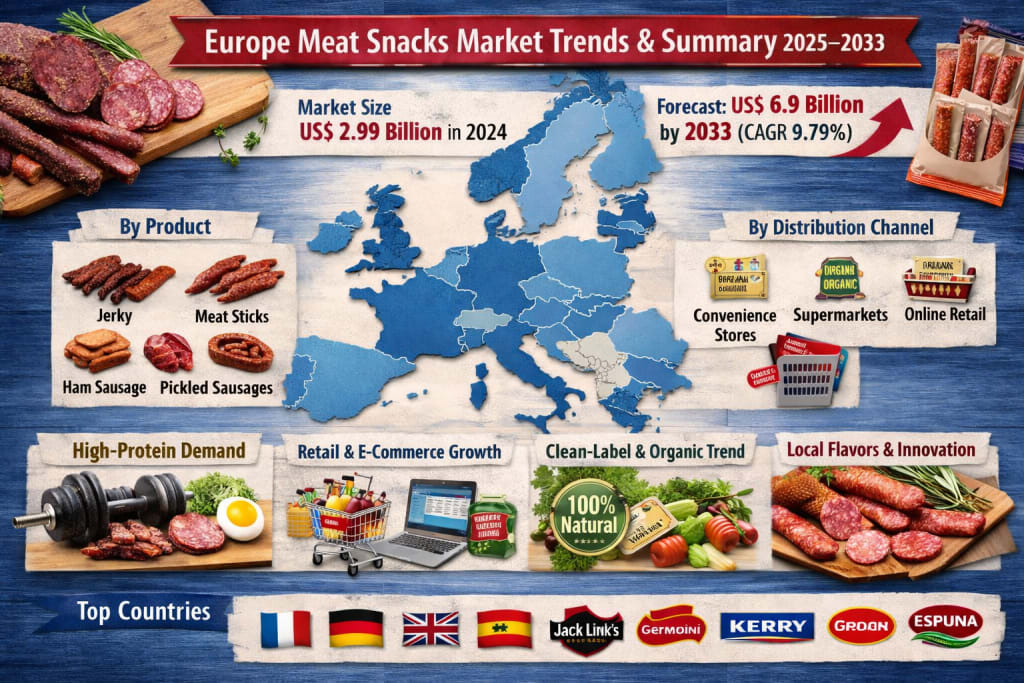
The Europe meat snacks market is undergoing a powerful transformation, shaped by changing consumer lifestyles, rising health awareness, and a growing preference for convenient, protein-rich foods. Valued at US$ 2.99 billion in 2024, the market is projected to expand at a CAGR of 9.79% between 2025 and 2033, reaching an impressive US$ 6.9 billion by 2033. This robust growth reflects not just higher consumption, but a fundamental shift in how Europeans snack, eat, and think about nutrition.
Meat snacks—ranging from jerky and meat sticks to pickled sausages and ham-based snacks—have evolved from niche, outdoor or travel foods into mainstream, everyday snack options. Once associated mainly with hiking trips or long journeys, these products are now widely consumed in offices, gyms, homes, and on-the-go settings across Europe.
The market is being propelled by two powerful forces: the demand for high-protein, functional snacks and a growing inclination toward natural, less processed, and clean-label foods. At the same time, traditional products like jerky, sausages, and salami are being reinvented with new flavors, healthier recipes, and premium ingredients to meet modern consumer expectations.
According to the Europe Meat Snacks Market Forecast, the industry is segmented by Product (Jerky, Meat Sticks, Pickled Sausages, Ham Sausage, Pickled Poultry Meat, Others), Nature (Conventional, Organic), Distribution Channel (Convenience Stores, Supermarkets & Hypermarkets, Grocery Stores, Restaurants, Others), and Countries, along with detailed company analysis for 2025–2033.
Europe Meat Snacks Market Outlook
Meat snacks are ready-to-eat, high-protein foods typically produced from beef, pork, poultry, or other meats and preserved through drying, curing, smoking, or seasoning. Popular formats include jerky, salami sticks, biltong, and meat bars. Their long shelf life, portability, and high nutritional value make them especially attractive to athletes, busy professionals, travelers, and fitness-conscious consumers.
Across Europe, shifting lifestyles and urbanization have significantly increased the demand for convenient yet nutritious snacking options. Consumers are no longer satisfied with empty-calorie snacks; instead, they are seeking foods that provide satiety, energy, and functional benefits. This has placed meat snacks in a strong position as a protein-rich alternative to chips, sweets, and baked snacks.
Diet trends such as keto, paleo, and low-carb have further accelerated adoption. At the same time, growing interest in natural ingredients, clean labels, and organic products is reshaping product portfolios across the industry. Manufacturers are responding with reduced-sodium recipes, preservative-free options, and ethically sourced meat products.
In addition, flavor innovation and regional specialties are helping brands appeal to Europe’s diverse consumer base. From Mediterranean herb-seasoned jerky to smoked paprika and teriyaki-style meat sticks, the category is becoming more sophisticated and gourmet-oriented. With expanding retail and e-commerce networks, meat snacks are now more accessible than ever, supporting sustained market growth across the region.
Key Growth Drivers in the Europe Meat Snacks Market
1. Rising Demand for High-Protein Snacks
One of the strongest drivers of the Europe meat snacks market is the surging popularity of high-protein diets. Consumers increasingly associate protein with muscle recovery, weight management, and sustained energy, making meat snacks a preferred choice over traditional carbohydrate-heavy options.
Busy lifestyles also play a major role. With more people working long hours and spending less time preparing meals, on-the-go protein solutions have become essential. Jerky, ham sausage, and meat bars offer convenience without compromising on nutrition.
Health awareness is reinforcing this trend. In recent years, Europe has seen growing concern around obesity and lifestyle-related diseases, encouraging consumers to opt for nutrient-dense, lower-sugar snack alternatives. As a result, meat snacks are being positioned not just as indulgent treats, but as functional, fitness-friendly foods.
2. Expansion of Retail and E-Commerce Channels
The widespread availability of meat snacks across supermarkets, convenience stores, grocery outlets, and online platforms has significantly boosted market penetration. E-commerce, in particular, has transformed how consumers discover and purchase these products, offering greater variety, subscription models, and direct-to-consumer options.
Retailers are also playing a crucial role by creating dedicated protein snack sections, improving product visibility and encouraging impulse purchases. Partnerships between global brands and local distributors are helping expand regional reach and tailor products to local tastes.
This omnichannel presence ensures that meat snacks are no longer a specialty item but a mainstream snack category across Europe.
3. Growing Interest in Clean-Label and Organic Products
European consumers are increasingly attentive to ingredient transparency, sourcing, and processing methods. This has led to a strong rise in demand for organic, natural, and minimally processed meat snacks.
Clean-label products—free from artificial preservatives, additives, and excessive sodium—are gaining traction, especially among health-conscious and environmentally aware consumers. Companies are responding by launching organic-certified, grass-fed, and ethically sourced meat snack options that align with Europe’s strict food quality standards.
Sustainability and animal welfare considerations are also influencing purchasing decisions, making the organic segment one of the fastest-growing areas within the market.
Challenges Facing the Europe Meat Snacks Market
Regulatory Pressure on Processed Meat Products
Europe’s stringent food safety and labeling regulations pose a significant challenge for manufacturers. Restrictions on preservatives, sodium content, and health claims often require costly reformulations and compliance investments. Frequent updates to regulatory standards can also slow down innovation and increase time-to-market for new products.
Rising Raw Material and Production Costs
Fluctuating meat prices, supply chain disruptions, and higher costs for sustainable and organic sourcing are putting pressure on profit margins. Transport, labor, and energy costs have also risen, forcing manufacturers to balance premium quality with price sensitivity, especially in competitive, value-driven markets.
Segment Insights
Europe Jerky Meat Snacks Market
Jerky remains one of the most popular meat snack categories in Europe due to its long shelf life, convenience, and high protein content. While beef jerky dominates, pork, turkey, and other variants are gaining popularity. Flavor innovation—such as smoked paprika, Mediterranean herbs, and teriyaki—continues to attract new consumers and keep the segment dynamic.
Europe Ham Sausage Meat Snacks Market
Ham sausage snacks, including dry-cured and smoked varieties, are especially popular in countries like Spain and Germany. Known for their rich flavor and satisfying texture, these products are widely consumed as quick meals or hearty snacks. Brands are increasingly offering lower-sodium and additive-free versions to cater to health-conscious buyers.
Europe Organic Meat Snacks Market
The organic segment is growing rapidly, driven by demand for grass-fed, antibiotic-free, and ethically sourced meat products. Although priced higher than conventional options, organic meat snacks appeal to consumers who prioritize quality, sustainability, and clean-label credentials.
Europe Conventional Meat Snacks Market
Conventional meat snacks continue to dominate in terms of volume due to their affordability and wide availability. However, even this segment is evolving, with manufacturers reducing artificial ingredients and improving nutritional profiles to stay relevant in a more health-aware market.
Distribution Channel Insights
Convenience Stores
Convenience stores play a critical role in driving impulse purchases of meat snacks. Single-serve packs and ready-to-eat formats make these outlets ideal for on-the-go consumers seeking quick, protein-rich snacks.
Grocery Stores and Supermarkets
Supermarkets and hypermarkets remain the largest distribution channels, offering a wide range of products from premium organic lines to budget-friendly private labels. Promotions, bundling, and in-store visibility continue to support strong sales growth in this channel.
Country-Level Market Highlights
France
France’s market is driven by demand for gourmet and artisanal meat snacks, with a strong influence from traditional charcuterie. Consumers are increasingly seeking healthier, natural ingredient-based options, pushing brands to innovate beyond classic recipes.
Germany
Germany’s strong meat culture makes it one of the most important markets in Europe. High-protein, low-carb snacks align well with the country’s growing fitness trend, supporting demand for jerky and sausage sticks.
United Kingdom
In the UK, rising interest in keto and paleo diets has boosted consumption of jerky and biltong. Online retail is a major growth driver, expanding product variety and accessibility for consumers.
Spain
Spain’s market is rooted in traditional cured meats such as chorizo and jamón-based snacks. Snack-sized portions and locally sourced products are gaining popularity, especially among urban, on-the-go consumers.
Europe Meat Snacks Market Segmentation
By Product:
Jerky
Meat Sticks
Pickled Sausages
Ham Sausage
Pickled Poultry Meat
Others
By Nature:
Conventional
Organic
By Distribution Channel:
Convenience Stores
Supermarkets & Hypermarkets
Grocery Stores
Restaurants
Others
By Countries:
France, Germany, Italy, Spain, United Kingdom, Belgium, Netherlands, Russia, Poland, Greece, Norway, Romania, Portugal
Company Analysis
Key players covered from four viewpoints—Overview, Key Persons, Recent Developments, and Revenue—include:
Meatsnacks Group
Cremonini S.p.A.
Jack Link’s EU
Kingselitesnacks
Danish Crown
Kerry Group plc
Campofrio Food Group
Espuña
Giuseppe Citterio S.p.A.
Bell Food Group AG
These companies are focusing on product innovation, clean-label reformulations, premiumization, and geographic expansion to strengthen their market positions.
Final Thoughts
The Europe meat snacks market is clearly entering a high-growth, innovation-driven phase. With revenues expected to rise from US$ 2.99 billion in 2024 to US$ 6.9 billion by 2033, the category is benefiting from powerful trends in health, convenience, and premium food consumption.
As consumers continue to seek protein-rich, clean-label, and on-the-go snack solutions, meat snacks are well-positioned to remain a core part of Europe’s evolving snack culture. Companies that successfully balance taste, nutrition, transparency, and affordability will be the ones that define the next decade of growth in this dynamic market.
About the Creator
Global Tire Market Insights: Growth Trends, Competitive Landscape, and Future Opportunities
According to IMARC Group's latest research publication, The global tire market size to reach USD 272.6 Billion by 2034, exhibiting a growth rate (CAGR) of 4.33% during 2026-2034.
By James Smith7 days ago in Trader
Europe Vitamin Fortified and Mineral Enriched Food & Beverage Market Size and Forecast 2025–2033
Europe’s Fortified Foods Boom: A Market Built on Health, Science, and Smart Consumption The Europe Vitamin Fortified and Mineral Enriched Food & Beverage Market is entering a decisive growth phase, driven by a powerful combination of health awareness, demographic change, and evolving consumer expectations. According to Renub Research, the market was valued at USD 22.8 billion in 2024 and is projected to reach USD 31.11 billion by 2033, expanding at a compound annual growth rate (CAGR) of 3.52% during the forecast period 2025–2033.
By Sakshi Sharma6 days ago in Trader



Comments
There are no comments for this story
Be the first to respond and start the conversation.