
“Economic Crossfire''
"The Global Impact of US-China Trade Tensions"

---
Economic Crossfire: The US-China Business Tariff War
Subtitle: How Rising Tariffs Between the World's Largest Economies Are Reshaping Global Trade
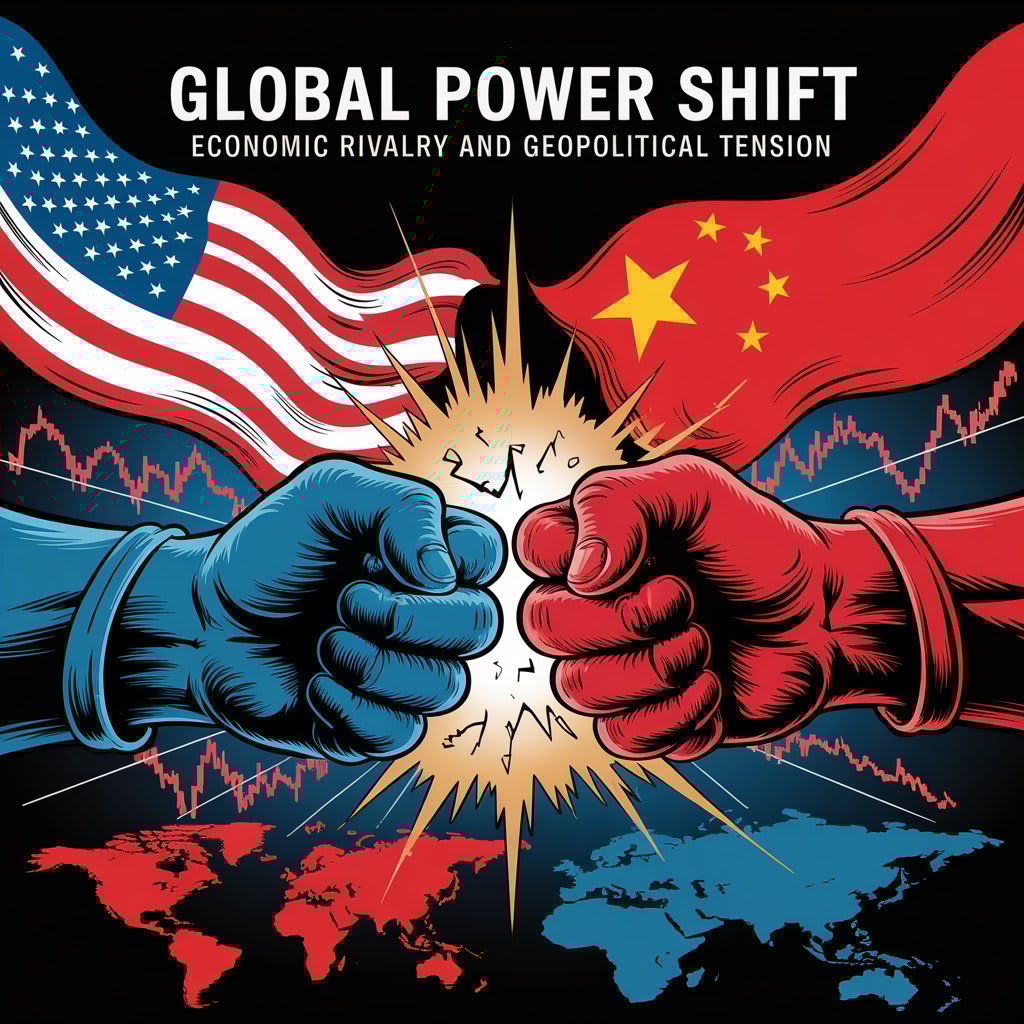
It began quietly, with warnings and whispers. But soon, the trade war between the United States and China erupted into one of the most intense economic confrontations of the 21st century. Beneath the political speeches and official statements, two global superpowers were engaged in a high-stakes battle—not with missiles or armies, but with taxes, tariffs, and business policies.
The heart of the conflict was simple: both countries accused the other of unfair practices. The United States argued that China was stealing intellectual property, manipulating its currency, and giving unfair subsidies to its companies. China, on the other hand, claimed the U.S. was using its economic power to bully and pressure it into accepting one-sided trade terms.
In 2018, tensions boiled over. The U.S. government, under President Donald Trump, announced new tariffs on hundreds of Chinese goods, including electronics, steel, and machinery. China quickly hit back with its own tariffs, targeting American products like soybeans, cars, and whiskey. What followed was a tit-for-tat escalation, with each side raising taxes on imported goods in several rounds.
For ordinary people and businesses, the effects were immediate and widespread.
In the U.S., companies that relied on Chinese parts saw their costs rise. Small business owners who imported goods from China struggled to keep prices low. Farmers in the Midwest watched their exports to China drop sharply, leaving crops unsold and profits shrinking.
In China, manufacturers faced uncertainty. Some American companies moved their factories to other countries, like Vietnam or India, to avoid tariffs. Chinese exporters, once confident in their steady flow of American customers, had to find new buyers in different regions.
Global markets also began to feel the heat. Stock prices fell. Investors worried about the stability of international trade. Countries that depended on U.S.-China commerce were caught in the middle, unsure of which side to favor or how to protect their own economies.
But the fight wasn’t just about money—it was also about power.
The U.S. wanted to maintain its position as the world’s top economic force, while China was rising fast, aiming to become a leader in technology and trade. Each tariff, each business restriction, was not only a financial move—it was a statement of strength.
In 2020, the two countries reached a partial agreement called “Phase One”, where China promised to buy more American products and both sides agreed to ease some tariffs. But the trust was already broken, and the competition continued behind the scenes.
Even as leaders changed and new talks began, the scars of the tariff war remained. Companies had already shifted supply chains. Governments had already passed laws to protect local industries. And people—business owners, workers, and consumers—had already felt the cost.
Today, the US-China trade war stands as a powerful reminder: in a globalized world, economic battles can hurt as much as traditional wars. The effects go beyond borders, reaching into factories, homes, markets, and jobs all around the globe.
And though the headlines may come and go, the struggle for economic dominance between the United States and China is far from over. The world continues to watch—carefully, cautiously—as these two giants shape the future of trade, one policy at a time.It began quietly, with warnings and whispers. But soon, the trade war between the United States and China erupted into one of the most intense economic confrontations of the 21st century. Beneath the political speeches and official statements, two global superpowers were engaged in a high-stakes battle—not with missiles or armies, but with taxes, tariffs, and business policies.
The heart of the conflict was simple: both countries accused the other of unfair practices. The United States argued that China was stealing intellectual property, manipulating its currency, and giving unfair subsidies to its companies. China, on the other hand, claimed the U.S. was using its economic power to bully and pressure it into accepting one-sided trade terms.
In 2018, tensions boiled over. The U.S. government, under President Donald Trump, announced new tariffs on hundreds of Chinese goods, including electronics, steel, and machinery. China quickly hit back with its own tariffs, targeting American products like soybeans, cars, and whiskey. What followed was a tit-for-tat escalation, with each side raising taxes on imported goods in several rounds.
For ordinary people and businesses, the effects were immediate and widespread.
In the U.S., companies that relied on Chinese parts saw their costs rise. Small business owners who imported goods from China struggled to keep prices low. Farmers in the Midwest watched their exports to China drop sharply, leaving crops unsold and profits shrinking. American consumers, too, began to feel the pinch, as everyday products—from phones to furniture—became more expensive.
In China, manufacturers faced uncertainty. Some American companies moved their factories to other countries, like Vietnam or India, to avoid tariffs. Chinese exporters, once confident in their steady flow of American customers, had to find new buyers in different regions. The trade war also slowed down China’s economic growth, affecting jobs and business investments.
Global markets also began to feel the heat. Stock prices fell. Investors worried about the stability of international trade. Countries that depended on U.S.-China commerce were caught in the middle, unsure of which side to favor or how to protect their own economies.
About the Creator
Keep reading
More stories from Tariq Pathan and writers in Trader and other communities.
The Red String of Fate"
Once upon a time, in a quiet village nestled along the banks of a winding river, there lived a young man named Leo and a young woman named Amara. Their families lived near each other, and from the moment they were born, their lives intertwined like threads in a tapestry. Leo and Amara played together as children, running through the fields of tall grass, catching fireflies at dusk, and dreaming of the future under a sky full of stars. The bond they shared was unspoken but deeply understood—a connection that seemed to surpass even the strongest of friendships.
By Tariq Pathan 9 months ago in Marriage



Comments
There are no comments for this story
Be the first to respond and start the conversation.