
Contactless Payments Reinvented: Exploring Tap On Phone Technology
Everything You Need to Know About Contactless Payment services

Tap the phone. transforms a retailer's smartphone or tablet into a contactless point-of-sale (POS) terminal instantly, allowing it to accept payments from customers' contactless cards or mobile wallets as long as both the paying and receiving devices are equipped with near-field communication (NFC) capabilities. It converts the retailer into an omni-channel company without the need for new gear.
How does it work?
The simplicity and speed of tap on phone appeals to both customers and businesses.
1. In the touch on phone app, the company inserts the purchase amount.
2. The client then touches their contactless card or device against the mobile device of the merchant.
3. Purchase completed! The company has the option of printing a digital receipt on an external printer or sending it to the client.
Who is getting behind it?
Android tablets and phones presently support the tap-on-phone feature, which can be added to third-party Android apps.
The technology will be made available to iPhones this spring, according to a recent announcement by Apple. It will use Android's enabling model rather than building a closed ecosystem like Apple Pay. According to Apple, Stripe will enable the capability for Shopify's POS app as well as other payment platforms and apps later this year. Stripe was named as Apple's US launch partner.
Why is it taking off now?
We think that tap on phone is a continuation of a bigger trend that Square and other fintechs made popular: lowering the entry barriers for accepting payments from customers for companies. The majority of firms achieve this through easier, more affordable smart devices, as well as low-friction sign-up and onboarding.
We anticipate that as American consumers become more accustomed to the quickness and simplicity of contactless payments solutions, they will favour companies that provide this choice. This will encourage businesses aiming to keep and attract customers to use technology more frequently.
Where will it have an impact?
Cashless societies: Countries that are implementing a cashless society will benefit from a tap on the phone. For instance, Danish regulators will mandate that some business types begin utilizing digital cash registers (such as POS systems) to run their operations by 2024.
Emerging markets: In emerging nations, micro-businesses account for over 40% of the GDP, but 90% of them do not accept any kind of digital payment (Pymnts.com). It could be most feasible to enable these establishments to take digital payments if tap on phone becomes available locally.
Card-not-present businesses: Businesses who operate mostly online (such as e-commerce) but occasionally need to collect payments in person should see a significant uptake of tap on phone.
What might hold it back?
Tap on phone needs to get over a few hurdles before it's commonly accepted as a payment option. We think the following are some of the most important ones:
* Expanding consumer and business awareness and embracing technology are both required.
* Businesses still require a contract for payment processing and processing software, both of which have a developed, competitive market.
* There must be a wider adoption of contactless payments in important markets (like the US).
* A PIN must be entered in the merchant's personal phone or tablet for transactions that call for one. The client must have enough faith in the system to do this. When entering a PIN on someone else's smartphone or tablet, there should ideally be a private manner to accomplish so and a mechanism to address hygiene issues.
These kinds of obstacles are typical of new technology. A compelling reason to remove the obstacles to widespread use is the fact that tapping on a phone decreases friction for both businesses and consumers. We will be closely monitoring events this year, which should give us some early cues as to whether the technology will actually take off as the next big thing in payments.
About the Creator
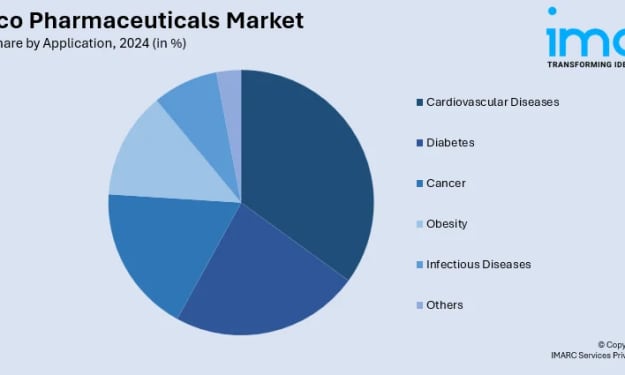
Mexico Pharmaceuticals Market Size, Growth, Latest Trends and Forecast to 2033
Mexico Pharmaceuticals Market Overview The Mexico pharmaceuticals market is one of the most important healthcare sectors in Latin America. The industry plays a vital role in ensuring access to essential medicines, supporting healthcare systems, and improving public health outcomes. With a large population, expanding healthcare infrastructure, and increasing awareness about disease prevention and treatment, the pharmaceutical sector continues to grow steadily.
By Jackson Watson6 days ago in Trader


Comments
There are no comments for this story
Be the first to respond and start the conversation.