
Confectionery Market Size and Forecast 2025–2033 | Renub Research
Global Confectionery Market to Reach US$ 263.38 Billion by 2033 as Premiumization, Health-Conscious Innovation, and Digital Retail Redefine Sweet Consumption

Confectionery Market Overview
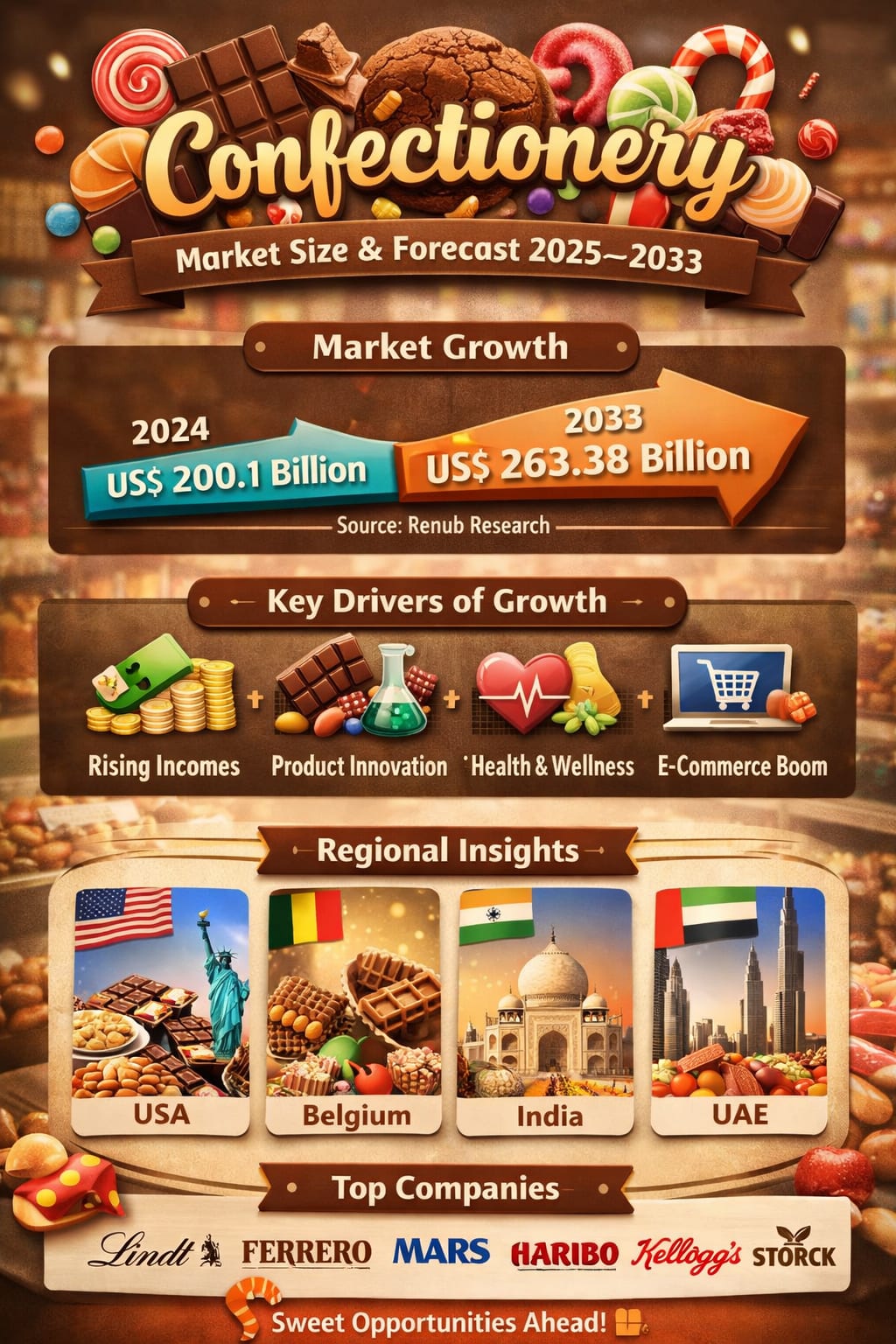
According to Renub Research, the Global Confectionery Market was valued at US$ 200.1 billion in 2024 and is expected to reach US$ 263.38 billion by 2033, growing at a compound annual growth rate (CAGR) of 3.1% from 2025 to 2033.
This steady growth reflects the industry’s unique position at the intersection of emotional consumption, gifting culture, impulse buying, and lifestyle-driven snacking. Confectionery products—ranging from chocolates and sugar candies to cookies and ice cream—continue to be deeply embedded in everyday life, celebrations, and social rituals across cultures.
While the category has traditionally been associated with indulgence, the modern confectionery market is being reshaped by health awareness, premiumization, sustainability, and digital retail expansion. Consumers are no longer just buying sweets; they are buying stories, experiences, and values—whether that means ethically sourced cocoa, reduced-sugar formulations, or beautifully packaged premium treats.
Global Confectionery Industry Outlook
The global confectionery industry is one of the most dynamic segments within the broader food and beverage sector. It combines mass-market appeal with high-margin premium niches, making it attractive for both multinational giants and regional specialists.
Key trends shaping the industry include:
Premium and artisanal products gaining popularity among urban and younger consumers
Health-oriented reformulation, including sugar-free, low-calorie, organic, and functional confections
Seasonal and gifting-driven demand, especially during festivals, holidays, and special occasions
Eye-catching packaging and brand storytelling as tools to stand out in crowded retail spaces
Digital marketing and e-commerce growth, expanding reach beyond traditional retail channels
Asia-Pacific and Latin America are emerging as high-growth regions due to rising incomes and urbanization, while Europe and North America continue to dominate in terms of premium, seasonal, and branded confectionery consumption.
Sustainability is also becoming a strategic priority. From eco-friendly packaging to responsible cocoa sourcing, environmental and social considerations are increasingly influencing both corporate strategies and consumer purchasing decisions.
Retail and Distribution: A Changing Landscape
Supermarkets and hypermarkets remain the primary distribution channels for confectionery products worldwide. Their ability to combine wide product variety, strong visibility, and impulse-driven placement—especially at checkout counters—continues to make them critical sales drivers.
Major retail chains have aggressively expanded their footprints. For instance, Carrefour operates thousands of supermarkets across Europe, while Lidl maintains a massive presence in countries like Germany and France. Convenience stores also play a vital role, particularly in urban areas and for on-the-go consumption. Brands like 7-Eleven, with tens of thousands of outlets globally, have turned confectionery into a cornerstone of impulse purchases.
At the same time, e-commerce and digital platforms are transforming how consumers discover and buy sweets. Online channels offer broader assortments, personalized recommendations, and the convenience of home delivery. Data analytics and artificial intelligence are increasingly being used to understand consumer preferences, optimize product assortments, and improve targeted marketing.
The rapid growth of online confectionery sales reflects a broader shift toward digital-first retail behavior, especially among younger, tech-savvy consumers. This digital transformation is expected to remain a key growth engine for the market through 2033.
Key Factors Driving Confectionery Market Growth
1. Rising Disposable Incomes
One of the most important drivers of global confectionery market growth is the increase in disposable income, particularly in emerging economies. As consumers gain greater spending power, they are more willing to allocate a portion of their income to snacks, treats, and affordable indulgences.
Confectionery products benefit from being perceived as small, accessible luxuries—items that provide emotional satisfaction without requiring a large financial commitment. This “affordable pleasure” positioning makes confectionery especially resilient during periods of moderate economic uncertainty.
In many developing markets, economic growth is also expanding the middle class, creating a larger consumer base with both the desire and the ability to spend on branded and premium confectionery products.
2. Innovation in Product Development and Marketing
Innovation is at the heart of competitiveness in the confectionery industry. Manufacturers are constantly introducing new flavors, textures, formulations, and packaging concepts to capture consumer attention and differentiate themselves from rivals.
Recent innovation trends include:
Reduced-sugar and sugar-free alternatives
Use of natural sweeteners and functional ingredients
Premium ingredients such as single-origin cocoa and exotic flavors
Limited-edition and seasonal product launches
Sustainable and visually appealing packaging designs
Equally important are modern marketing strategies. Social media campaigns, influencer partnerships, and strategic in-store placements are now essential tools for building brand awareness and driving impulse purchases. Companies that successfully combine product innovation with smart marketing are better positioned to expand their market share in an increasingly crowded landscape.
3. Changing Consumer Preferences and Lifestyles
Global lifestyles are changing, and so are eating habits. Urbanization, busier schedules, and the rise of snacking culture have increased demand for convenient, ready-to-eat treats. Confectionery products fit perfectly into this lifestyle, offering quick moments of enjoyment throughout the day.
At the same time, cultural diversity and globalization are encouraging experimentation with new flavors and formats. Consumers are more open than ever to trying international tastes, fusion products, and innovative combinations.
To stay relevant, leading players are investing heavily in research and development (R&D) to better understand consumer behavior, anticipate trends, and launch products that align with evolving preferences.
Challenges Facing the Confectionery Market
1. Health and Wellness Concerns
Health and wellness trends are significantly reshaping the confectionery sector. Growing awareness about obesity, diabetes, and excessive sugar consumption is pushing consumers to seek healthier alternatives.
This has created pressure on traditional confectionery manufacturers to:
Reduce sugar content
Introduce sugar-free or low-calorie variants
Use natural and plant-based ingredients
Add functional benefits such as fiber or probiotics
While these changes open new opportunities, they also require significant investment in reformulation, testing, and marketing. Brands that fail to adapt risk losing relevance among health-conscious consumers.
2. Volatile Raw Material Costs
Fluctuating prices of key raw materials such as cocoa, sugar, and dairy products remain a major challenge for the industry. These price swings are influenced by factors like climate conditions, geopolitical issues, and global supply-demand imbalances.
Cocoa production, for example, is highly sensitive to weather disruptions, while sugar and dairy prices can be affected by agricultural policies and trade dynamics. Rising input costs can squeeze profit margins, forcing companies to either absorb the costs or pass them on to consumers.
Effective supply chain management, long-term sourcing strategies, and cost optimization are therefore critical for maintaining profitability in this environment.
Regional Market Overview
United States Confectionery Market
The United States remains one of the world’s largest and most diverse confectionery markets. Consumer preferences are evolving, with growing demand for healthier, plant-based, and reduced-sugar options alongside traditional indulgent treats.
Premium products, limited-edition launches, and innovative packaging are particularly popular among younger consumers seeking unique experiences. E-commerce is also playing a larger role in reaching customers beyond traditional retail channels.
Despite challenges such as regulatory pressures and raw material cost volatility, the U.S. market continues to demonstrate strong adaptability and long-term growth potential.
Belgium Confectionery Market
Belgium is globally renowned for its chocolate heritage and artisanal craftsmanship. Home to iconic brands such as Neuhaus, Guylian, and Vanparys, the country has built a strong reputation for quality and premium products.
Today, Belgian manufacturers are increasingly focusing on organic ingredients, reduced sugar content, and sustainable packaging to align with modern consumer values. Personalized and luxury confectionery items are also gaining traction, reinforcing Belgium’s position as a premium confectionery hub in the global market.
India Confectionery Market
India’s confectionery market is experiencing rapid growth, driven by urbanization, rising disposable incomes, and a large young population. Traditional sweets coexist with modern chocolates, candies, and cookies, creating a uniquely diverse market landscape.
Health-conscious consumers are fueling demand for sugar-free, low-calorie, and functional products, while festive gifting during occasions like Diwali and Raksha Bandhan continues to boost seasonal sales.
The expansion of e-commerce and digital platforms is further improving accessibility, especially in smaller cities and rural areas, positioning India as one of the most promising growth markets for the coming decade.
United Arab Emirates Confectionery Market
The UAE confectionery market reflects a blend of cultural traditions and modern consumption trends. Gifting during religious and social occasions such as Eid and Ramadan plays a significant role in driving demand.
At the same time, rising health awareness is increasing interest in sugar-free, organic, and functional confections. Premium and artisanal products with elegant packaging are also gaining popularity among both local consumers and tourists.
With strong retail infrastructure and growing digital adoption, the UAE market is well-positioned for sustained growth despite challenges related to costs and regulation.
Market Segmentation
By Type
Chocolate
Sugar Confectionery
Cookies
Ice Cream
By Distribution Channel
Supermarkets and Hypermarkets
Convenience Stores
Pharmaceuticals and Drug Stores
Specialty Stores
Online
Others
By Region
North America: United States, Canada
Europe: France, Germany, Italy, Spain, United Kingdom, Belgium, Netherlands, Turkey
Asia-Pacific: China, Japan, India, Australia, South Korea, Thailand, Malaysia, Indonesia, New Zealand
Latin America: Brazil, Mexico, Argentina
Middle East & Africa: South Africa, Saudi Arabia, United Arab Emirates
Competitive Landscape
The global confectionery market is highly competitive, with leading players focusing on innovation, brand strength, geographic expansion, and strategic partnerships. Key companies covered in the market include:
August Storck KG
Chocoladefabriken Lindt & Sprüngli AG
Ferrero International SA
General Mills Inc.
HARIBO Holding GmbH & Co. KG
Kellogg Company
Lotte Corporation
Mars Incorporated
These companies are actively investing in new product development, sustainability initiatives, and digital marketing strategies to strengthen their positions in the global market.
Conclusion
The global confectionery market is set to grow steadily from US$ 200.1 billion in 2024 to US$ 263.38 billion by 2033, driven by evolving consumer preferences, rising incomes, innovation, and the expansion of modern retail channels. While health concerns and raw material price volatility present challenges, they also create opportunities for brands that can successfully adapt.
In the years ahead, the winners in this market will be those who can balance indulgence with wellness, tradition with innovation, and scale with sustainability—proving that even in a changing world, the demand for a little sweetness is here to stay.
About the Creator
Keep reading
More stories from shibansh kumar and writers in Trader and other communities.
Air Brake System Market Size, Growth & Forecast 2025–2033 | Renub Research
Air Brake System Market Overview The Global Air Brake System Market is entering a phase of consistent and technology-driven expansion. According to Renub Research, the market is expected to grow from US$ 7.1 billion in 2024 to US$ 13.54 billion by 2033, registering a CAGR of 7.44% from 2025 to 2033. This steady rise reflects the increasing importance of vehicle safety, regulatory compliance, and performance efficiency across commercial transportation and rail networks worldwide.
By shibansh kumara day ago in Trader
Understanding REITs: A Beginner’s Guide to Real Estate Investing
Introduction Real Estate Investment Trusts (REITs) are companies that own, operate, or finance income-generating real estate. They provide an opportunity for investors to earn passive income from real estate without directly owning property.
By Hammad Nawaz5 days ago in Trader



Comments
There are no comments for this story
Be the first to respond and start the conversation.