
Black Monday causes loom and doom for investors as Japan raises their Interest rates by 25 basis points
Courtesy of Print Media.co
ChatGPT
On Monday, August 6th, 2024, stock markets around the globe took a massive hit, leaving investors and analysts scrambling to make sense of what felt like financial chaos. The S&P 500 opened down nearly 3.5%, the NASDAQ plunged 4%, and Asian markets were even worse off. Japan's Nikkei 225 saw a staggering drop of over 12%, while Taiwan's main stock index had its worst day in history. This wasn’t just a one-off event either—this crash followed a trend that had already wiped trillions of dollars off the global markets in just a week.
Naturally, everyone started looking for someone to blame. Japan’s economic policies? The U.S. Federal Reserve? Greedy Wall Street traders? When things go south this dramatically, people are quick to point fingers in every direction. But what made the situation even more confusing was that the very next day, markets across the world rallied, almost erasing the previous day's catastrophic losses. It was as if the market itself couldn’t make up its mind. One minute we were in the middle of a financial meltdown, and the next, it was like nothing had happened. It’s no wonder people are feeling whiplash.
To make sense of this rollercoaster, it helps to understand a bit about a theory called reflexivity, pioneered by the legendary investor George Soros. Reflexivity suggests that markets are not always rational—they can be driven by feedback loops that push prices far beyond their true value. Take the recent hype around artificial intelligence (AI) as an example. Over the past year, the stock prices of a small group of tech giants—sometimes called the "Magnificent Seven"—have skyrocketed, largely because investors are betting big on the potential of AI. These companies’ soaring valuations have essentially carried the entire market, while most other companies have remained flat.
But here’s where things get tricky: these inflated prices are based on high expectations, not necessarily on current realities. As excitement around AI has begun to wane and consumers grow skeptical, the bubble started to show signs of bursting. Investors are now worried about how these companies will justify their sky-high valuations, especially as AI tools face increasing pushback. People are starting to question whether these technologies will really deliver on their promises, and that uncertainty is shaking the markets.
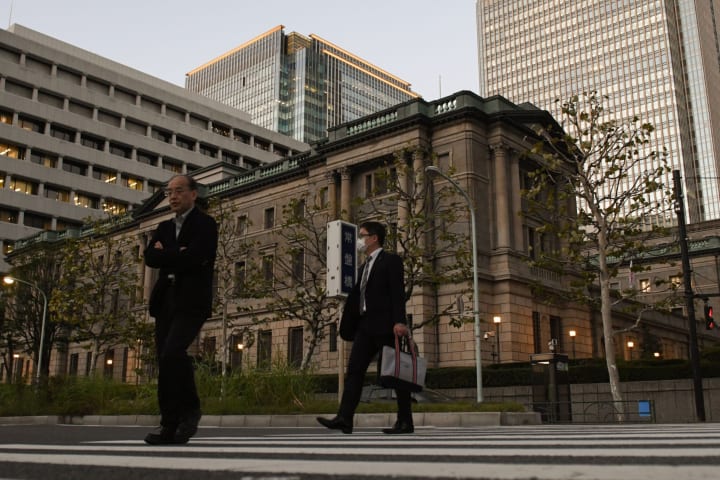
Now, let's talk about Japan, which has been dealing with its own economic struggles for decades. The Japanese government and its central bank have kept interest rates extremely low, even dipping into negative territory from 2016 until early 2024, in a bid to spur economic growth. The idea was that cheap borrowing would encourage spending and investment within Japan. However, that didn’t pan out as hoped, and Japan found itself stuck with these low rates. Meanwhile, investors around the world saw an opportunity: they could borrow yen at these low rates, convert it into dollars or other currencies, and invest in higher-yielding assets abroad. This strategy, known as a carry trade, worked beautifully—until it didn’t.
The problem started when the yen dropped in value, making this trade even more profitable. But as the yen fell too far, the Bank of Japan decided to step in and raise interest rates slightly, hoping to stabilize the currency. That tiny rate increase caused the yen to surge by more than 11% in less than a month, catching investors completely off guard. Suddenly, those who had borrowed in yen were facing massive losses as the value of their debt skyrocketed. This panic triggered a wave of selling, which only drove markets down further, creating a domino effect across the globe.
As the dust settled, smaller, everyday investors also began to panic, selling off their positions out of fear that this could be the start of a major recession. This reaction could end up making things worse, especially as alarming headlines and sensationalized YouTube videos fan the flames of fear. Even though the markets bounced back quickly, the volatility has left everyone feeling uneasy.
The big takeaway here is that no one really knows what’s going to happen next—not even the experts. The stock market is notoriously unpredictable, and what we’re seeing now is a reminder of just how volatile things can get. It’s crucial for individual investors not to make rash decisions based on the noise. Instead, focus on your personal financial situation and make choices that align with your long-term goals. Panic selling might seem like the safe move in the short term, but it could end up costing you more in the long run.
In the end, this recent market turmoil is a stark reminder that the stock market doesn’t always reflect the real economy, and that sudden swings can happen without much warning. While the markets may have recovered quickly this time, there’s no guarantee that we’re out of the woods yet. As always, stay informed, but be cautious about reacting too quickly to the latest headlines.
About the Creator
Keep reading
More stories from writers in Trader and other communities.
Gaming Market: The Rise of Digital Entertainment Worldwide
Overview The global gaming market stands as one of the largest and most dynamic entertainment industries worldwide, spanning video games on consoles, PCs, mobile devices, cloud gaming, and esports. Fueled by technological innovation, expanding internet access, and a diverse global audience, revenue continues to rise year after year. In 2025 alone, industry estimates suggest the gaming market could approach near $200 billion in annual revenue, with mobile games accounting for more than half of that total.
By James Smith4 days ago in Trader



Comments (3)
So so amazing .i love your content and subscribed. Kindly reciprocate by subscribing to me also . thank you and keep it up
Thanks for sharing
Really liked it.