

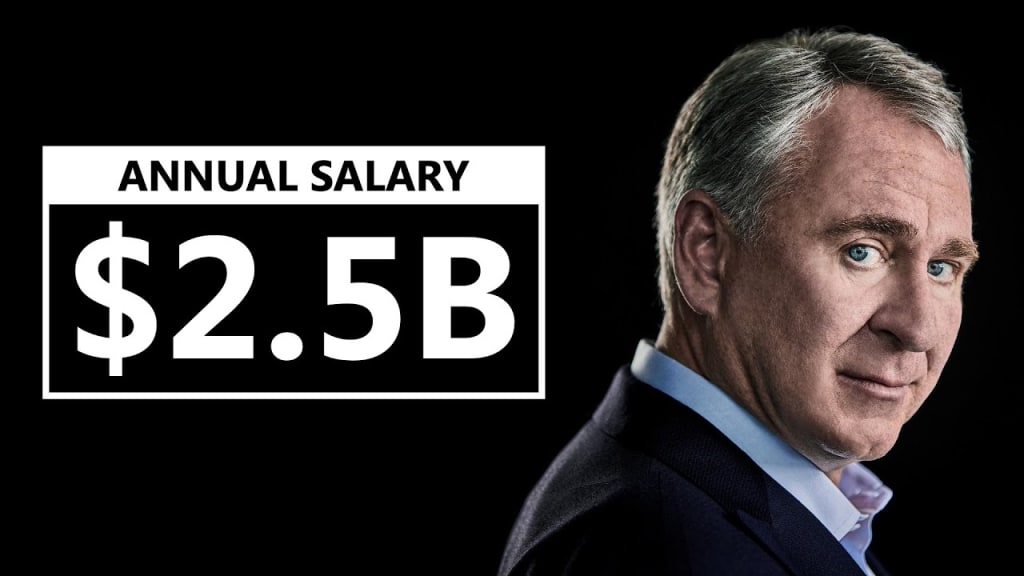
Hedge fund managers occupy some of the highest-paid positions in the financial world. While executives like Tim Cook or Sundar Pichai command impressive salaries, top hedge fund managers can out-earn even these industry giants. But how exactly do hedge fund managers make such substantial money, and what’s the secret to their financial success?
What Are Hedge Funds
Hedge funds are investment vehicles that pool capital from high-net-worth individuals and institutional investors to pursue returns using aggressive strategies across various assets. Unlike traditional mutual funds, hedge funds are structured to seek "absolute returns," meaning they aim to make profits regardless of market conditions. To do this, hedge funds often employ complex tactics like short selling, leverage, and trading in derivatives—techniques that allow them to bet on both rising and falling asset prices. These high-risk, high-reward strategies make hedge funds distinct and potentially very profitable, but they also come with significant risks that may result in substantial losses if market conditions shift unfavorably.
Access to hedge funds is typically limited to accredited investors who meet certain income or net worth criteria, such as having a net worth of over $1 million or an annual income above a specified threshold. This exclusivity reflects both the higher risks involved and the regulatory environment that governs hedge funds less rigorously than more traditional investment funds. Hedge funds often follow a "2 and 20" fee structure, where they charge a 2% annual management fee on the total assets under management and an additional 20% of any profits. This structure incentivizes fund managers to pursue high returns but also means that investors pay premium fees.
Despite the name "hedge fund," not all hedge funds prioritize risk management or hedging strategies; instead, many prioritize maximizing returns. Some hedge funds balance risk through diversified investments or by hedging, which involves making offsetting investments to mitigate potential losses. However, they are known for limited transparency as they are not required to disclose detailed information about their holdings or strategies. While this opacity may appeal to investors seeking proprietary, cutting-edge investment approaches, it can be a drawback for those who prefer visibility into where their money is invested.
What Do Hedge Fund Managers Do?
Hedge fund managers oversee pooled funds from wealthy individuals and institutional investors. Unlike regular mutual funds, hedge funds aim to secure profits by leveraging high-risk strategies, including short selling, derivatives, and hedging. These funds operate with a high level of secrecy and are often restricted to accredited investors—individuals or entities meeting certain income or net worth requirements.
Because hedge funds take significant risks, they have the potential for immense returns. And if things go wrong, managers employ strategies like “hedging” to minimize losses, ensuring that even in downturns, clients don’t lose everything. Hedge fund managers are rewarded handsomely for their ability to navigate these complex strategies, which also attracts high-net-worth clients willing to pay top dollar for such expertise.
Understanding the 2 and 20 Fee Structure
Hedge fund managers make most of their income through the “2 and 20” fee structure. Here’s a breakdown:
2% Management Fee: Managers typically receive an annual fee of 2% of total assets under management, regardless of the fund’s performance. This incentivizes managers to grow the fund size since the larger the pool, the higher the fee.
20% Performance Fee: In addition to the management fee, hedge fund managers take 20% of any profits earned. This motivates managers to achieve high returns, as a bigger profit means a larger payday.
For example, if a hedge fund manages $1 billion in assets and generates $100 million in profits, the fund manager would take home $2 million from the management fee plus $20 million as a performance bonus, totaling $22 million.
Clientele - The Key to Hedge Fund Success
Hedge fund clients aren’t the average investor. Generally, hedge funds require high minimum investments—Citadel, for instance, often demands at least $10 million in investable assets. Clients typically include billionaires, institutional investors, banks, and pension funds.
Interestingly, many of these clients aren’t necessarily seeking massive returns but rather prioritize risk minimization. Hedge funds use strategies to hedge or “insure” against market downturns, making them attractive for clients who want to preserve wealth rather than grow it aggressively.
Risk Management Through Hedging
The term “hedge” in hedge funds is literal: managers employ hedging strategies to protect against market declines. A classic example of hedging involves balancing positions with opposite bets. For instance, a manager might invest heavily in a particular stock while also taking a small short position on the same stock as insurance. If the stock rises, the initial investment profits; if it falls, the short position gains. This reduces losses without eliminating the chance for gains.
This approach allows hedge fund managers to promise a degree of stability, even in volatile markets. When the broader market faces downturns, hedge funds are often able to shield their investors from the worst of the losses, further enhancing their appeal.
Measuring Success: Beta and Alpha
Unlike traditional investments, hedge fund performance isn’t always compared directly with the market (e.g., the S&P 500). Instead, they are assessed based on two metrics:
Beta measures a fund’s correlation to market movements. A beta of 1 means the fund moves in line with the market, while a beta below 1 suggests lower volatility. Most hedge funds maintain a beta between 0 and 1, aiming for more stability.
Alpha is the fund’s risk-adjusted return, which measures how much value the manager adds relative to risk. A positive alpha indicates that the fund has outperformed its risk level, and a high alpha is often the goal for hedge fund managers.
Since many clients prioritize risk management, hedge funds don’t need to outperform the S&P 500. Instead, they strive for a strong alpha, which reflects their ability to achieve higher returns relative to the fund’s risk.
The Reality of Hedge Fund Performance
While hedge funds sometimes underperform the stock market in bull years, their value shines during downturns. For instance, during the 2008 financial crisis, the S&P 500 lost around 37%, whereas hedge funds collectively only fell by about 22%. This lower loss makes them attractive to high-net-worth investors who prefer steady returns over volatile gains.
Hedge funds typically have more flexibility to navigate uncertain economic conditions, which can help minimize investor losses during market crashes. This ability to protect wealth, rather than chase high gains, sets hedge funds apart from other types of investments.
The Appeal and Drawbacks of Hedge Fund Investments
The combination of risk minimization, alpha generation, and strategic hedging makes hedge funds attractive for certain investors, even if they don’t always beat the stock market. By prioritizing wealth preservation over risky gains, hedge funds offer value that appeals to wealthy individuals and institutions looking to diversify their portfolios with lower volatility.
However, hedge fund investments come with notable drawbacks, including high fees and limited transparency, which can deter investors seeking more direct control over their assets.
Conclusion
Hedge fund managers make big money by offering specialized services that focus on wealth preservation and strategic returns. Through unique fee structures, advanced risk management techniques, and a focus on alpha, they provide an investment vehicle that prioritizes stability. Although hedge funds may not outperform the stock market consistently, they play a crucial role for investors aiming to protect and grow their wealth in a controlled manner. For those managing billions, hedge funds offer the reassurance of protection in the face of market fluctuations—making hedge fund managers indispensable and highly rewarded.
About the Creator
Horace Was
Essay Writer, Aviation and Technology Expert
Keep reading
More stories from Horace Was and writers in Trader and other communities.
PC Jeweller Share Price Analysis 2026: Stocks, Gains, and Volatility Guide
The stock market can be confusing, especially for investors looking to track specific companies like PC Jeweller. If you are searching for pc jeweller share price today, this guide will give you a clear understanding of its market trends, performance, and factors affecting its share value.
By Safdar meyka7 days ago in Trader
Philippines Steel Market: Infrastructure Demand, Industrial Growth & Strategic Expansion
Philippines Steel Market Overview The Philippines steel market is a cornerstone of the nation's industrial and infrastructure development, playing a pivotal role in construction, manufacturing, transport, energy and other key economic segments. The Philippines steel market size reached USD 19,488.00 Million in 2024. The market is projected to reach USD 25,695.28 Million by 2033, exhibiting a growth rate (CAGR) of 3.12% during 2025-2033. This growth reflects rising investment in infrastructure projects, urbanisation, industrial expansion and demand from residential and non-residential construction activities — all of which rely heavily on steel products for durability, safety and performance.
By Manisha Dixit4 days ago in Trader
📢 Raise Your Voice Thread: 01/08/2026
Our “Raise Your Voice Threads” are hosted most alternating Thursdays at 12PM ET to offer creators more avenues to uncover exceptional stories on Vocal. As we are continuously searching for fresh creators and inspiring stories, this thread provides an opportunity to exchange and discuss the stories that have moved and motivated us on Vocal.
By Raise Your Voice by Vocal7 days ago in Resources



Comments
There are no comments for this story
Be the first to respond and start the conversation.