
Beyond the Charts: Mastering the Mental Game of Trading
Why your psychological resilience, not your technical analysis, is the ultimate key to consistent profitability.
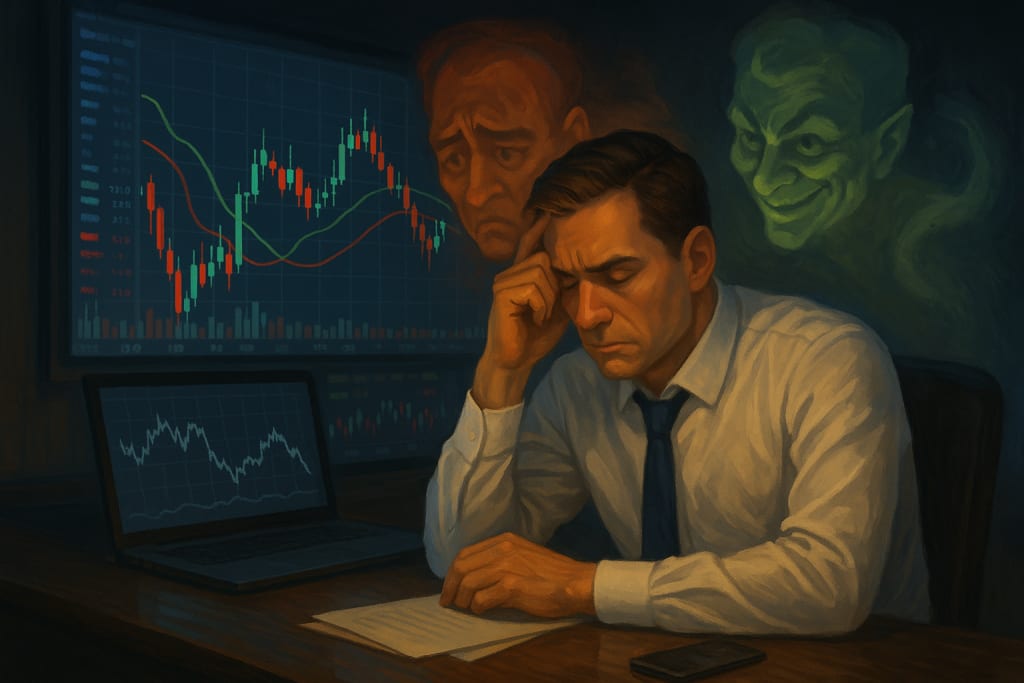
The flickering lights of the charts, the endless stream of financial news, the intricate patterns of technical indicators – for many aspiring traders, this is the entire battlefield. We spend countless hours memorizing candlestick formations, backtesting strategies, and seeking the holy grail of a perfect entry and exit signal. While this technical knowledge is undeniably crucial, it represents only one piece of a much larger and more complex puzzle. The uncomfortable truth that many traders learn the hard way is that the greatest obstacle to consistent profitability isn't a faulty algorithm or a missed indicator; it's the six inches of real estate between their ears.
Welcome to the mental game of trading, the unseen arena where fortunes are truly made and lost. In this space, fear, greed, hope, and regret wage a constant war, and the trader who fails to recognize and manage these powerful emotions is destined to become a casualty of the market. This isn't about esoteric philosophy; it's about the practical, actionable steps you can take to build the psychological resilience necessary to not only survive but thrive in the high-stakes world of trading.
The Twin Demons: Fear and Greed
At the heart of most trading errors lie two primal emotions: fear and greed. They are the puppet masters pulling the strings of inexperienced and even seasoned traders, leading them to make irrational decisions that sabotage their carefully laid plans.
Greed is the intoxicating whisper that tells you to hold onto a winning trade for just a little longer, even when your strategy dictates it's time to take profit. It's the siren call that encourages you to over-leverage your position, dreaming of a life-changing windfall from a single trade. Greed blinds you to risk, causing you to abandon your risk management rules in pursuit of an ever-larger prize. The result? A winning trade turns into a loser, or a single catastrophic loss wipes out weeks of patient gains.
Fear, on the other hand, is the chilling voice of doubt that paralyzes you. It's the hesitation that prevents you from pulling the trigger on a perfectly valid trade setup because of a previous loss. It's the panic that forces you to exit a trade prematurely at the first sign of a minor pullback, only to watch it reverse and hit your original profit target. Fear of missing out (FOMO) can also be a powerful motivator, compelling you to chase a market that has already made its significant move, leaving you vulnerable to a sharp reversal.
The first step to conquering these demons is to acknowledge their existence. Every trader, from the novice to the hedge fund manager, experiences fear and greed. The difference lies in how they respond. The professional trader has developed a trading plan that acts as a bulwark against these emotional tides. This plan, a meticulously crafted set of rules governing every aspect of their trading, is their objective guide in the heat of the moment. When greed tempts them to deviate, the plan reminds them of their profit targets. When fear tries to take hold, the plan reinforces the validity of their entry signal and stop-loss placement.
The Architect of Success: Your Trading Plan
A trading plan is more than just a vague idea of how you want to trade; it is a formal, written document that outlines your trading strategy in excruciating detail. It is your business plan, your roadmap to profitability. A comprehensive trading plan should include:
- Your Trading Goals: What are you trying to achieve? Be specific, measurable, achievable, relevant, and time-bound (SMART).
- Your Risk Tolerance: How much are you willing to risk per trade, per day, and overall? This is non-negotiable. A common rule is to risk no more than 1-2% of your trading capital on a single trade.
- Your Trading Strategy: What specific market conditions will you trade? What indicators will you use to identify entry and exit points? What is your rationale for taking a trade?
- Your Position Sizing Rules: How will you determine the size of your position for each trade based on your risk tolerance and the specific trade setup?
- Your Trade Management Rules: Once you are in a trade, how will you manage it? Will you trail your stop-loss? Will you take partial profits at certain levels?
- A Post-Trade Analysis Routine: How will you review your trades, both winners and losers, to identify areas for improvement?
By externalizing your decision-making process into a written plan, you are creating a framework for disciplined trading. The act of trading then becomes a matter of execution, not emotional deliberation.
The Power of Patience and the Virtue of Discipline
In a world of instant gratification, the market rewards patience. The desire to be constantly in the market is a significant pitfall for many traders. They feel that if they are not actively trading, they are not making money. This often leads to forcing trades that do not meet their strategic criteria, resulting in unnecessary losses.
Successful trading is not about being right all the time; it's about being profitable over the long term. This means waiting patiently for high-probability setups that align with your trading plan. It might mean sitting on your hands for hours, or even days, until the right opportunity presents itself. This "boredom" is the sign of a professional at work.
Discipline is the engine that drives your trading plan. It's the unwavering commitment to follow your rules, even when your emotions are screaming at you to do the opposite. It's cutting your losses without hesitation when a trade goes against you. It's taking your profits when your target is hit, without succumbing to greed. It's the consistent application of your strategy, day in and day out, regardless of the previous trade's outcome.
Embracing the Journey: The Trader's Mindset
Ultimately, mastering the mental game of trading is a journey of self-discovery. It requires you to be brutally honest with yourself about your weaknesses and to actively work on strengthening your psychological fortitude. Here are some final thoughts to guide you on this path:
- View Losses as Learning Opportunities: Every trader has losing trades. Instead of viewing them as failures, treat them as tuition paid to the market. Analyze what went wrong and how you can improve.
- Keep a Trading Journal: Document every trade, including your reasons for taking it, your emotional state at the time, and the outcome. This will provide invaluable insights into your trading patterns and psychological biases.
- Focus on the Process, Not the Profits: If you consistently execute your well-defined trading plan, the profits will follow. Obsessing over your P&L on a trade-by-trade basis will only lead to emotional decision-making.
- Practice Mindfulness and Self-Care: Trading can be a stressful profession. Engage in activities outside of trading that help you de-stress and maintain a balanced perspective, such as exercise, meditation, or spending time in nature.
The path to becoming a consistently profitable trader is not paved with secret indicators or complex algorithms. It is built on a foundation of psychological resilience, unwavering discipline, and a deep understanding of your own mental landscape. By dedicating as much effort to mastering your mind as you do to analyzing the markets, you will unlock your true potential as a trader and navigate the challenging yet rewarding world of financial markets with confidence and clarity.
About the Creator
Keep reading
More stories from CyberMacro and writers in Trader and other communities.
SRQCGX analysis on the decline in cryptocurrency trading volume
SRQCGX has observed a clear and measurable decline in cryptocurrency trading volume in recent months, and this shift reflects a deeper structural adjustment rather than a temporary fluctuation. The contraction in trading activity is closely tied to declining leverage, weakening investor sentiment, thinner liquidity conditions, and macroeconomic uncertainty. Together, these factors have created an environment where both retail and institutional participation has slowed significantly, leading to lower transaction throughput across the crypto ecosystem.
By CyberMacro21 days ago in Trader
China Ice Cream Market Size and Forecast 2026–2034
China Ice Cream Market Outlook The China ice cream market is experiencing remarkable growth as changing consumer lifestyles, rising disposable incomes, and evolving food preferences reshape the country’s dessert industry. According to Renub Research, the China Ice Cream Market is projected to grow from US$ 20.57 billion in 2025 to US$ 35.44 billion by 2034, expanding at a compound annual growth rate (CAGR) of 6.23% from 2026 to 2034. This growth reflects increasing consumer interest in indulgent desserts, premium frozen treats, and innovative flavors that combine local and global culinary influences.
By Sakshi Sharmaa day ago in Trader



Comments
There are no comments for this story
Be the first to respond and start the conversation.